One-Pan Smash Zucchini Pasta for Healthy Weeknights
A practical one-pan zucchini pasta guide: smash soft squash, burst cherry tomatoes, simmer pasta, and chill leftovers with calm food-safety habits.
Jump to recipe ↓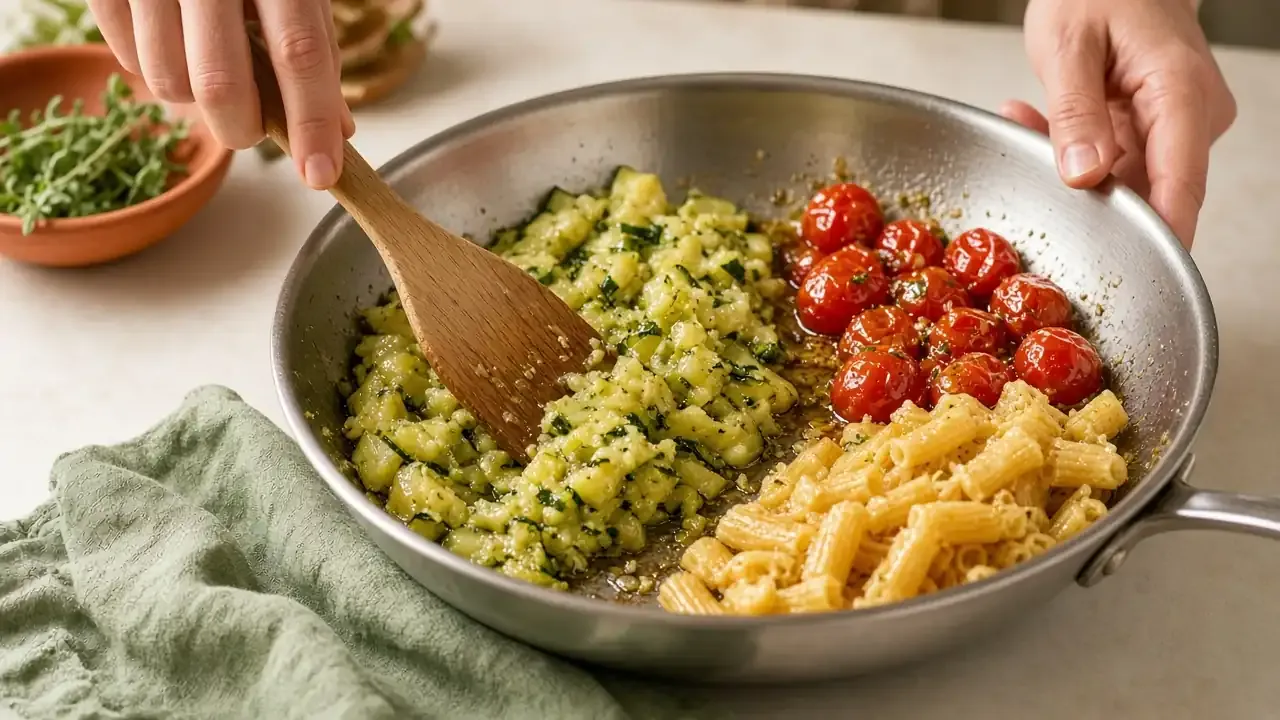
In this article
- Why One-Pan Zucchini Pasta Fits Busy Nights
- What You Need for Smash Tomato-Zucchini Pasta
- How to Smash Zucchini and Burst Cherry Tomatoes
- Full One-Pan Method Step by Step
- Timing, Servings, and Make-Ahead Notes
- Nutrient Notes You Can Trust
- Smart Swaps for Cherry Tomato Pasta Nights
- Food Safety for Produce and Leftovers
- Who Should Be Careful
- When to See a Doctor
- Serving Ideas for Adult Weeknight Tables
- Zucchini Pasta FAQ
- Keep This Skillet Dinner in Your Rotation
You can cook zucchini pasta on a weeknight without stacking pots in the sink. This zucchini pasta method smashes soft squash and bursts cherry tomatoes. Then it simmers noodles in one pan so starch thickens a light sauce. You learn a clear sequence, a shopping list, and calm food-safety habits that fit adult weeknight cooking.
You also see cautious nutrient notes drawn from official public pages, not hype. The steps stay practical. Wash produce, smash zucchini, and burst tomatoes. Then cook pasta in the same pan until the sauce turns glossy. You finish with herbs, chili, or cheese to match adult tastes at the table. If you like simple kitchen projects, you can also start an indoor herb garden.
What you will get from this guide:
- A practical smash-and-burst technique for tomato-zucchini sauce.
- A complete one-pan ingredient list, steps, timing, and adult servings.
- Cautious nutrient notes tied to official public pages.
- Produce-washing and leftover-chill habits drawn from FDA guidance.
- Allergy, choking, and when-to-seek-care reminders for adults.
- FAQ answers on pasta types, swaps, reheating, and leftovers.
From Our Garden
It took an hour, it was very easy, and I find it delicious for a good dinner.
That is one person's experience, not proof, and your results may vary.
Why One-Pan Zucchini Pasta Fits Busy Nights
Busy nights need flavor with fewer dishes.
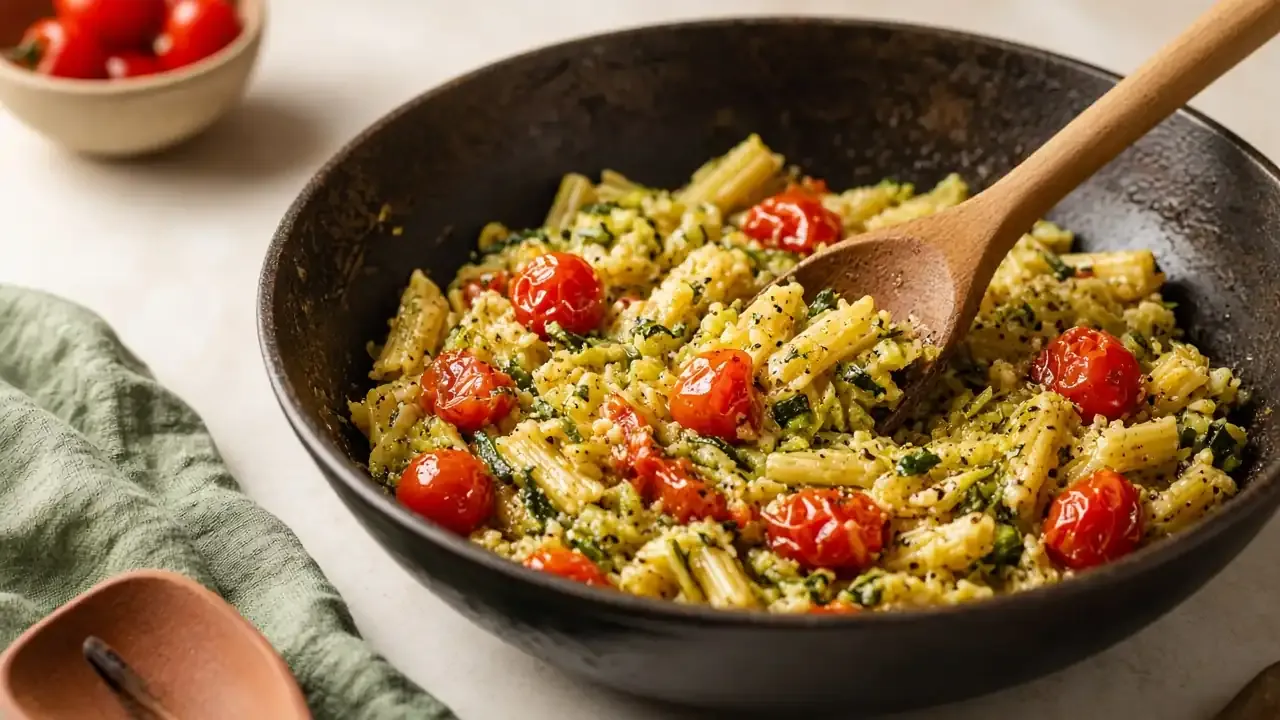
This zucchini pasta keeps prep calm and cleanup short. You warm olive oil, soften garlic, then smash zucchini right in the skillet. Cherry tomatoes wrinkle and burst. Then you add dry pasta plus broth or water so everything cooks together. Starch from the noodles thickens the sauce without cream.
A one pan pasta recipe like this saves time and sink space. You still get vegetables, pasta, and a bright tomato-zucchini base in one vessel. Adults can plate generous bowls for dinner and pack leftovers for lunch the next day.
Keep the heat steady and stir often so pasta cooks evenly. Taste salt near the end. Finish with basil, chili flakes, or a little grated Parmesan if you enjoy cheese. Overall, the smash step gives zucchini pasta a saucy body. It feels satisfying without a second saucepan. You move from raw produce to plated bowls with one main tool and a steady rhythm.
What You Need for Smash Tomato-Zucchini Pasta
Gather a short list of fresh staples.
Use medium zucchini, cherry or grape tomatoes, garlic, olive oil, and dry pasta. Vegetable broth or water covers the pasta while it softens. Optional add-ins include basil, chili flakes, black pepper, and Parmesan.
Ingredients for four adult servings
Measure once so the skillet stays balanced.
| Ingredient | Amount | Notes |
|---|---|---|
| Zucchini | 2 medium (about 1 lb) | Trim ends; leave skin on |
| Cherry tomatoes | 2 cups (about 12 oz) | Grape tomatoes also work |
| Garlic | 3–4 cloves | Thinly sliced or minced |
| Olive oil | 2–3 Tbsp | Measured, not poured freely |
| Dry pasta | 12 oz | Long or short shapes both work |
| Broth or water | 3–3½ cups | Start with 3; add as needed |
| Salt and pepper | To taste | Season in layers |
| Fresh basil | 1 handful | Tear at the end |
| Chili flakes | 1 pinch | Optional heat |
| Parmesan | ¼–½ cup grated | Optional; skip for dairy-free |
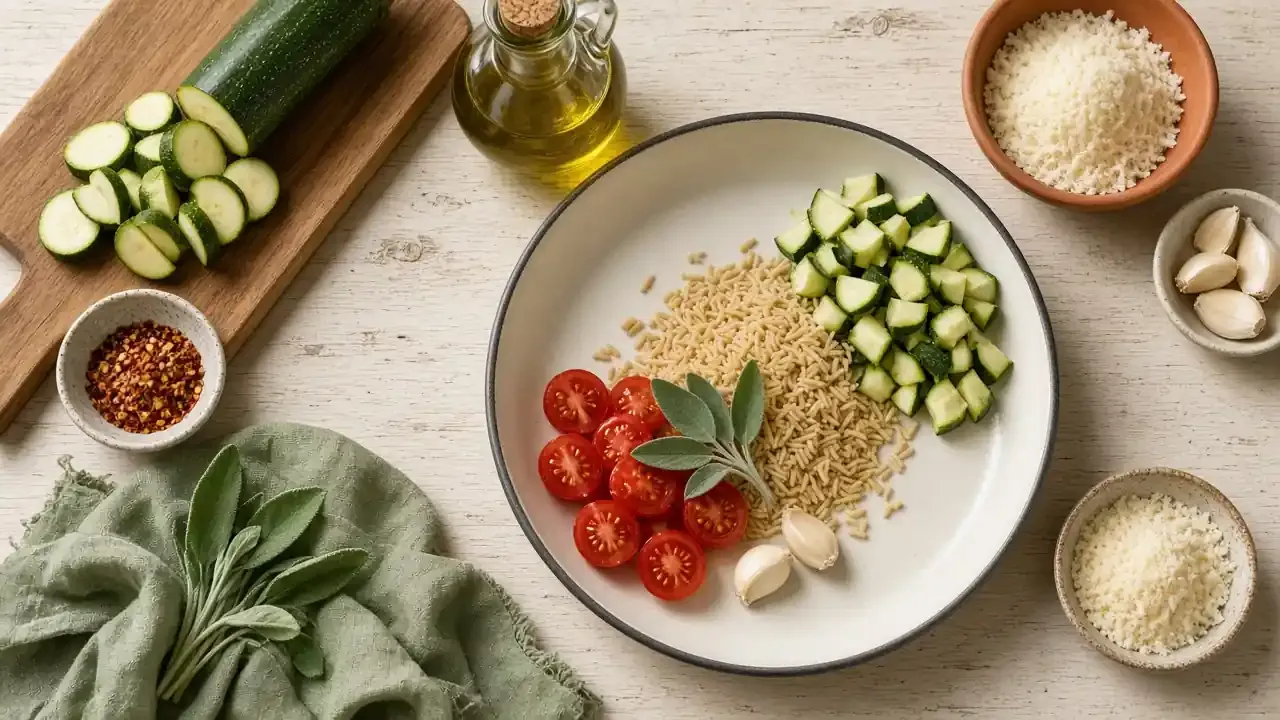
Whole-wheat pasta works as a whole-grain option when you want more fiber from grains. Package cook times often run longer than refined pasta. So plan a few extra minutes and keep liquid nearby. FDA materials note that MyPlate goals include grains with vegetables, fruits, protein foods, and dairy. The Nutrition Facts label also helps you compare fiber and other nutrients when you shop (FDA Nutrition Facts and MyPlate).
Shop for firm zucchini without soft spots. Also, choose plump cherry tomatoes for a reliable zucchini pasta texture once you smash and simmer.
How to Smash Zucchini and Burst Cherry Tomatoes
Smash zucchini after it softens in hot oil.
Gentle pressure builds a saucy texture. Warm olive oil over medium heat. Add garlic and stir until fragrant, about 30–60 seconds. Slide in sliced or chunked zucchini with a pinch of salt. Cook until the pieces look glossy and yield when you press them.
Use a wooden spoon or potato masher to smash zucchini into soft ribbons and bits. Aim for crushed pieces that melt into the sauce, not a smooth puree. Add cherry tomatoes next. Cook until skins wrinkle and several burst. Stir so juice coats the pan and mingles with the smashed squash.
This smash step builds body for zucchini pasta without heavy cream. Burst tomatoes bring brightness and natural sweetness. Together they form a tomato-zucchini base that clings to noodles once pasta joins the pan. If some tomatoes stay whole, press them lightly so more juice releases. Leave a few intact bursts for texture if you like contrast in each bite.
Full One-Pan Method Step by Step
Follow this sequence for classic one-pan pasta technique.
Keep extra liquid within reach. These 8 steps turn raw produce into plated bowls:
- Wash zucchini and tomatoes under running water, then dry them.
- Slice zucchini into half-moons or thick coins; leave tomatoes whole.
- Heat olive oil in a wide, deep skillet or saute pan.
- Soften garlic, then cook zucchini until tender enough to smash.
- Smash zucchini gently; add tomatoes and cook until several burst.
- Add dry pasta in an even layer; pour in broth or water to just cover.
- Simmer and stir often until pasta reaches al dente and liquid thickens.
- Season, fold in basil, and finish with chili flakes or Parmesan if desired.
A one pan pasta recipe succeeds when you stir so noodles do not stick. Add a splash of liquid if the pan looks dry before pasta softens. If the sauce looks thin, simmer uncovered for a minute or two. Taste for salt after the liquid reduces.
This method turns zucchini pasta into a complete meal. Starch released from pasta helps smashed vegetables and tomato juices cling. Aim for a glossy finish rather than a watery pool before you serve. Wide pans help long noodles settle in a single layer at the start. Break very long strands in half only if your pan runs narrow. Many cooks prefer full length for classic twirls.
Timing, Servings, and Make-Ahead Notes
Plan 35–45 minutes from first chop to plated bowls.
Active stirring fills most of that window. Prep produce in about 10 minutes. Cook garlic, smash zucchini, and burst tomatoes in roughly 12–15 minutes. Simmer pasta in the same pan for about 10–14 minutes. Time depends on shape and whether you choose whole-wheat pasta.
This batch serves four adults as a main dish. Scale ingredients up for guests, but use a wider pan so pasta cooks evenly. For two people, halve the pasta and liquid while keeping enough vegetables for a generous sauce.
Cooked zucchini pasta stores well for next-day lunches. Cool leftovers quickly in shallow containers. Reheat gently with a splash of water so the sauce loosens. Do not leave cooked pasta on the counter for long stretches; chill promptly after serving.
Label containers with the cook date so you use them while quality stays high. A quick lunch bowl with greens on the side turns last night's skillet into tomorrow's easy meal. If you cook for guests, hold the basil until serving so the herbs stay fragrant. Warm bowls at the table, then pass chili flakes for anyone who wants more heat.
Nutrient Notes You Can Trust
Read these notes as general nutrition education.
Official pages support each cautious claim below. Tomatoes provide vitamin C among other nutrients. The NIH Office of Dietary Supplements lists tomatoes among foods that supply vitamin C. See the NIH ODS Vitamin C fact sheet for details. Cooking can reduce some vitamin C, so enjoy raw and cooked produce across the week.
Harvard T.H. Chan School of Public Health notes that tomatoes contain lycopene, a carotenoid pigment that gives many tomatoes their red color. It also discusses tomato products within a broader vegetables-and-fruits review (Harvard Nutrition Source vegetables and fruits). That discussion supports informed food choices. It does not turn this skillet into disease care.
Olive oil ranks among plant oils with high monounsaturated fat. Harvard's Nutrition Source lists olive oil among foods rich in monounsaturated fats. See Harvard Nutrition Source types of fat for context. Measure the oil so calories match your needs.
Zucchini pasta with vegetables and olive oil can fit an adult plate that also includes protein foods and other groups. Pair bowls with beans, fish, eggs, or poultry when you want more protein. Cook animal proteins to safe temperatures when you add them. Keep claims modest and tied to sources rather than hype. Variety across the week matters more than any single dinner.
Smart Swaps for Cherry Tomato Pasta Nights
Swap shapes without losing the one-pan flow.
Keep liquid ratios similar as you adapt. Short pasta such as penne or fusilli works when you prefer fork-friendly bites. Spaghetti or linguine feels classic for zucchini pasta. Whole-wheat versions need a watchful eye and sometimes extra liquid or time.
No cherry tomatoes on hand? Use grape tomatoes or chopped ripe plum tomatoes. Keep the bright cherry tomato pasta profile with juicy bursts and gentle sweetness. Yellow summer squash can replace some zucchini when your garden runs mixed.
Dairy-free adults can skip Parmesan and finish with lemon zest, toasted nuts, or extra basil. Chili flakes add heat without much salt. A one pan pasta recipe stays flexible when you keep the smash-and-burst core intact. For a lighter bowl, use a bit less pasta and more smashed squash. For a heartier bowl, add cooked white beans in the last few minutes so they warm through. Tangy sides also pair well, and you can make easy fall ferments at home.
Food Safety for Produce and Leftovers
Wash produce and chill leftovers the way agencies advise.
Clean hands start every cooking session. The FDA recommends washing all produce thoroughly under running water before you prepare or eat it, including home-grown items. Skip soap and detergent on produce. Scrub firm produce with a clean brush when needed (FDA selecting and serving produce safely).
FDA safe-handling guidance also says to chill perishable foods within 2 hours of cooking. Use a 1-hour limit if outdoor heat exceeds 90°F. Keep the fridge at 40°F or below. Divide leftovers into shallow containers for faster cooling. Reheat leftovers and casseroles to 165°F when you check with a food thermometer (FDA safe food handling).
If you add meat, poultry, or seafood to this zucchini pasta, cook those proteins fully. Use the safe minimum internal temperatures listed on that FDA page. Keep raw proteins separate from ready-to-eat produce during prep. Wipe boards and knives between tasks. Dry washed produce with a clean towel before you cut. FDA produce guidance notes that drying can further reduce surface bacteria.
Who Should Be Careful
Some adults need extra care with allergens and textures.
Read labels when ingredients raise questions. Tomato allergy or oral allergy symptoms can appear with fresh tomatoes. Wheat and gluten matter for celiac disease or wheat allergy. Choose gluten-free pasta if needed. Avoid cross-contact in shared kitchens. Garlic can bother people with allium sensitivity or digestive discomfort after large amounts.
Small children face choking risks with whole cherry tomatoes and long noodles. This guide frames adult weeknight cooking. If kids share the meal, cut food into age-appropriate pieces and supervise closely. Adults can smash tomatoes further and shorten pasta strands for anyone who prefers softer bites.
People who are pregnant, older, or living with weakened immune systems should follow strict produce washing and leftover rules. When you feel unsure about ingredients or symptoms, ask a qualified clinician before you rely on any single recipe. Zucchini pasta remains everyday food, not a substitute for personalized advice from your care team.
When to See a Doctor
Seek clinical care for severe symptoms after eating.
Do not wait out anaphylaxis at home. Call emergency services for signs of a severe allergic reaction. Watch for trouble breathing, swelling of the lips or throat, widespread hives, or feeling faint. Those signs need urgent emergency care right away.
Foodborne illness can bring vomiting, diarrhea, abdominal pain, fever, headache, or body aches. The FDA notes that illness may start within 1 to 3 days after eating contaminated food. Timing can also vary from minutes to weeks (FDA selecting and serving produce safely). Contact a healthcare provider promptly if symptoms worry you, worsen, or affect someone at higher risk.
This section offers safety orientation only. It does not replace personalized medical care. Persistent digestive pain, unexplained weight change, or ongoing food reactions deserve a clinician's evaluation. Bring a list of what you ate if that helps the visit. Early contact beats waiting when symptoms escalate.
Serving Ideas for Adult Weeknight Tables
Plate zucchini pasta hot with one simple side.
Keep the table relaxed and practical. A green salad with a light vinaigrette balances the warm skillet. Grilled chicken, seared shrimp, or white beans add protein for a heartier plate. Cook seafood and poultry thoroughly. A sprinkle of basil and black pepper finishes most bowls.
Leftover cherry tomato pasta makes a solid lunch when you reheat it gently. Add a handful of fresh greens on the side. For guests, set chili flakes and cheese on the table so everyone seasons their own portion of zucchini pasta.
You can turn this one pan pasta recipe into a meal-prep base for two nights. Cook once, chill half quickly, and reheat with a splash of water. Fresh basil at serving keeps flavors bright. Offer lemon wedges for adults who like more acidity over the tomato-zucchini sauce.
A drizzle of measured olive oil at the table adds richness without cooking another pan. Set out a small bowl of extra smashed tomato-zucchini bits for guests who want more vegetables over pasta. That small touch keeps plates flexible without a second recipe. For a sweet finish after dinner, you can also try high protein desserts next.
Zucchini Pasta FAQ
Common questions get short, practical answers here.
Adjust details to your kitchen and tastes.
Can I make zucchini pasta without cherry tomatoes?
Yes. Use chopped ripe tomatoes or a mix of grape tomatoes. You still want juicy fruit that softens and sweetens the pan. Aim for the same bright profile people seek in cherry tomato pasta.
Does whole-wheat pasta change the method?
The method stays the same. Watch cook time and liquid because whole-wheat pasta often needs a bit longer. Stir more often so the noodles soften evenly in the sauce.
How do I keep zucchini pasta from turning watery?
Smash well, then simmer until the sauce looks glossy. Burst enough tomatoes so juice thickens with the squash. Avoid flooding the pan at the start. Add liquid in small amounts if pasta still feels firm.
Is a one pan pasta recipe safe for leftovers?
Yes, when you chill and reheat leftovers carefully. Use shallow containers and follow FDA timing for refrigeration after cooking. Discard food left out too long at room temperature.
Can I freeze this dish?
Texture softens after freezing. Many adults prefer refrigerated leftovers within a few days instead. If you freeze portions, expect softer squash and noodles after thawing and reheating.
How salty should zucchini pasta taste?
Season lightly early, then adjust after the liquid reduces. Broth already contains sodium, so taste before you add more salt. Fresh basil and chili flakes can lift flavor without a heavy hand.
Keep This Skillet Dinner in Your Rotation
Repeat this zucchini pasta when markets fill with summer squash.
Practice builds weeknight speed. You now have a smash technique, a burst-tomato step, and a true one-pan simmer. Nutrient notes stay cautious and tied to official sources. Safety sections remind you to wash produce, chill leftovers, and seek care for severe symptoms.
Rotate in whole-wheat pasta some nights for a whole-grain option. Keep a one pan pasta recipe card near the stove so busy evenings stay simple. Share bowls with adults at your table, season to taste, and enjoy the tomato-zucchini sauce you built from scratch.
Fresh cherry tomato pasta energy returns every time you smash, burst, and simmer in one pan. Return to the same rhythm next week with a new basil bunch and another pint of tomatoes. Keep olive oil, garlic, and a box of pasta on hand so you can start whenever zucchini looks good. Small prep habits—washed produce, measured oil, and a wide pan—make the next batch faster than the first.
One-Pan Smash Zucchini Pasta with Cherry Tomatoes
Smashed zucchini and burst cherry tomatoes simmer with dry pasta in one pan until the starch makes a light, glossy sauce.
Ingredients
- 2 medium zucchini (about 1 lb), ends trimmed
- 2 cups cherry or grape tomatoes (about 12 oz)
- 3 to 4 garlic cloves, thinly sliced or minced
- 2 to 3 tablespoons olive oil
- 12 oz dry pasta
- 3 to 3 1/2 cups broth or water
- Salt and pepper to taste
- 1 handful fresh basil
- 1 pinch chili flakes (optional)
- 1/4 to 1/2 cup grated Parmesan (optional)
Steps
- Wash the zucchini and tomatoes under running water, then dry them.
- Slice the zucchini into half-moons or thick coins; leave the tomatoes whole.
- Heat the olive oil in a wide, deep skillet or sauté pan.
- Soften the garlic for 30 to 60 seconds, then cook the zucchini with a pinch of salt until tender enough to smash.
- Smash the zucchini gently, add the tomatoes and cook until several burst.
- Add the dry pasta in an even layer and pour in broth or water to just cover.
- Simmer and stir often until the pasta is al dente and the liquid thickens into a glossy sauce, about 10 to 14 minutes.
- Season, fold in the basil and finish with chili flakes or Parmesan if you like.
Notes: Cool leftovers quickly in shallow containers, refrigerate promptly and reheat gently with a splash of water. Whole-wheat pasta needs a few extra minutes and a little more liquid.
You may also like

3 Easy Cabbage Recipes for Cozy Winter Dinners
Try three cabbage recipes for cozy winter dinners: roasted steaks, cabbage dumplings, and unstuffed cabbage soup, plus s…
What Is Astaxanthin? The Pink Antioxidant in Salmon and Algae
What is astaxanthin? Explore astaxanthin foods, the algae-to-salmon food chain, natural and synthetic forms, the researc…
How to Make Pumpkin Pie Spice (and 4 More Fall Spice Blends)
Here is how to make pumpkin pie spice at home with exact ratios, plus an apple pie spice recipe, chai, gingerbread, mull…