Plant Garlic in Fall: Softneck vs Hardneck by Zone
Cool soil and short days help cloves root before winter. This guide compares softneck and hardneck types, maps Oct–Nov planting windows by USDA zone, and walks through depth, mulch, and spring care.
In this article
- Why You Plant Garlic in Fall for Bigger Bulbs
- Softneck vs Hardneck Garlic: Choose for Your Climate
- Garlic Planting by Zone: Oct–Nov Windows
- Soil, Beds, and Drainage Before You Plant
- How to Plant Garlic in Fall Step by Step
- Mulch That Tames Freeze-Thaw Heave
- Grocery-Clove Pitfalls and Better Seed Garlic
- Watering and Winter Watch
- Spring Signs After a Fall Planting
- Common Mistakes and Quick Fixes
- Plant Garlic in Fall FAQ
- Get Cloves in the Ground Before the Ground Locks
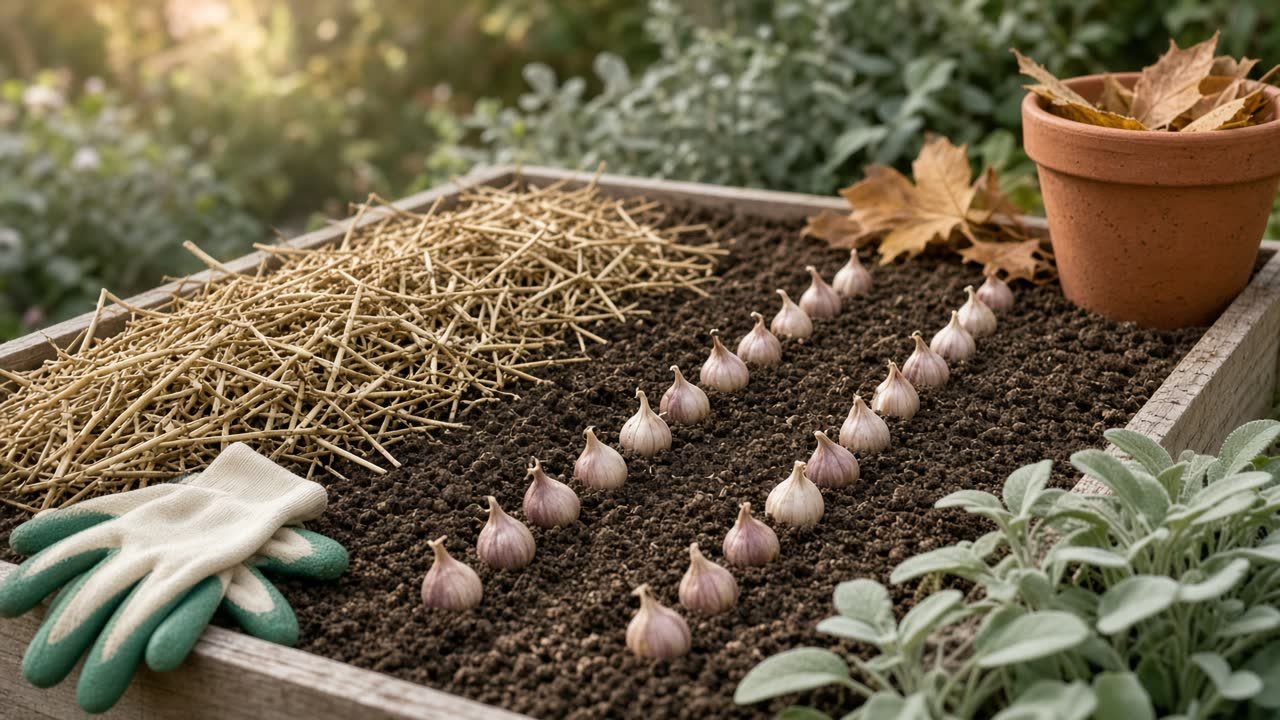
You should plant garlic in fall if you want fat bulbs next summer. Cool soil and short days push cloves to root hard before winter. That early root network fuels a strong spring surge. Gardeners who wait until April often harvest smaller heads and fewer cloves per bulb.
Fall planting also spreads your workload when beds sit empty after tomatoes and beans. You reclaim idle space, cut spring rush, and give garlic the chill rhythm it loves. A little planning in October or November pays off at midsummer harvest. This guide keeps the steps practical for busy home growers.
What you will get from this guide:
- Clear softneck vs hardneck picks for your climate.
- Typical Oct–Nov windows for garlic planting by zone.
- Soil, depth, spacing, and mulch steps that limit heave.
- Grocery-clove pitfalls and smarter seed-garlic choices.
- Spring care cues after you plant garlic in fall.
- A tight FAQ for last-minute planting questions.
Why You Plant Garlic in Fall for Bigger Bulbs
Fall clocks give garlic a head start. Cloves root while soil stays cool and workable. Roots keep growing through mild winter spells. When spring green shoots rise, the plant already owns a deep network. That network pulls water and nutrients for bulb swell.
You also dodge summer heat at the wrong stage. Garlic needs cool days for leaf growth, then a longer warm stretch for bulb fill. A late spring start shortens that leaf phase. Fewer leaves mean weaker bulbs. Many gardeners report a full size class gain when they plant garlic in fall instead of spring.
Frost helps hardneck types set their biological calendar. Softneck types still benefit from cool rooting time. Either way, you plant into firm soil, mulch well, and let winter do quiet work. Think of fall as the foundation season. Spring only finishes what October and November begin.
That is why so many extension guides urge you to plant garlic in fall. Neighbors who plant garlic in fall often share bigger bulbs at midsummer swaps. For a wider bed plan that fits garlic beside greens and roots, see our start organic vegetable garden guide.
Softneck vs Hardneck Garlic: Choose for Your Climate
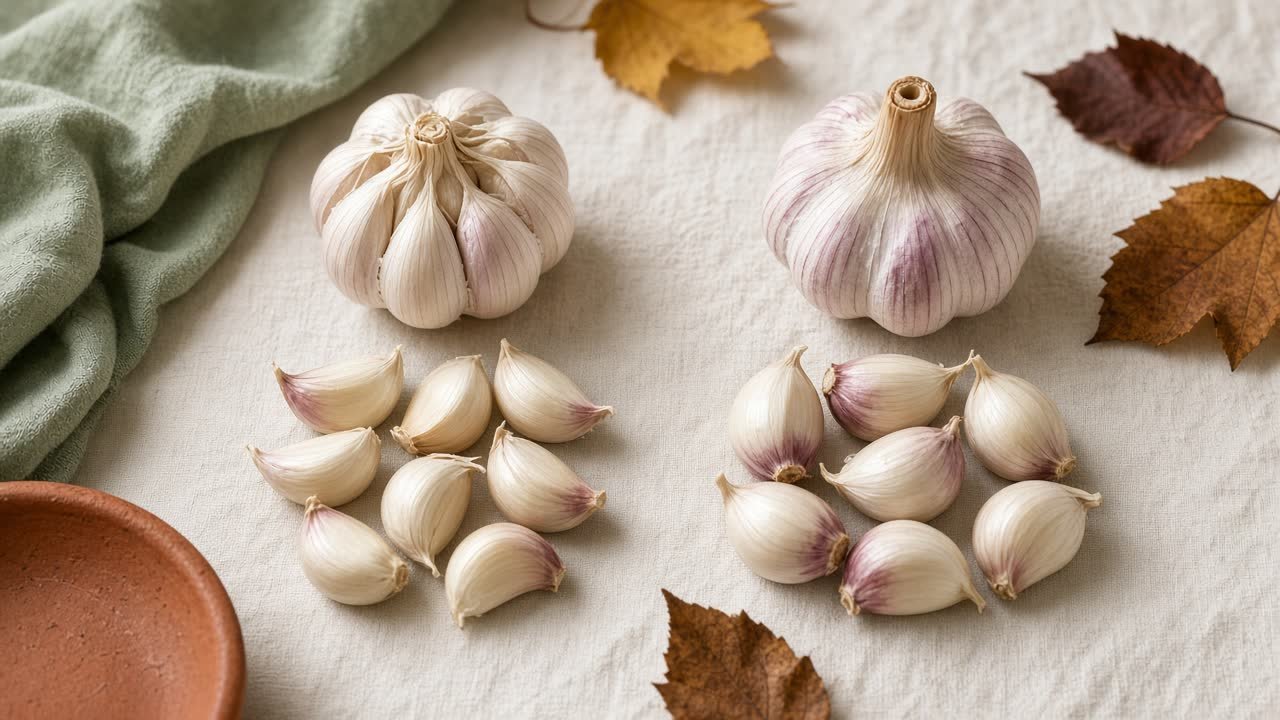
Pick type before you buy seed garlic. Softneck vs hardneck garlic is the first fork in the road. Softneck varieties suit milder winters and longer growing seasons. They store well and braid easily for kitchen hanging. Cloves run smaller and more numerous inside each bulb. Softneck braids look great in a pantry and often keep flavor for many months when you cure them well.
Hardneck varieties thrive in colder regions. They send up curly scapes in late spring. You can harvest those scapes for a mild garlic flavor. Hardnecks often form fewer, larger cloves that peel fast. Flavor tends to run sharper and more complex. Many northern cooks prize that punch for roasting and sauces.
Match type to your USDA zone pattern. Zones 3–6 usually favor hardneck for winter toughness. Zones 7–10 often lean softneck, especially where winters stay mild. Border zones can grow both if you mulch and watch freeze-thaw. When you weigh softneck vs hardneck garlic, prioritize winter survival over braid looks alone.
Seed catalogs list day-length and cold needs. Read those notes before you order. Local growers and extension trials also point you toward winners for your county. Ask neighbors which cultivars survive your typical winter. A short trial row of two types teaches more than a catalog page alone. Decide softneck vs hardneck garlic first, then plant garlic in fall on the right date for your bed.
Garlic Planting by Zone: Oct–Nov Windows
Timing beats fancy tools. Garlic planting by zone follows soil temperature and frost patterns more than calendar myths. Aim for cool soil that still digs easily. Many gardeners target roughly 4–6 weeks before the ground freezes hard. That window often lands in October or November across much of the United States.
Use this table as typical guidance, not a hard law. Local microclimates, elevation, and raised beds shift dates. Check your extension service when frost history looks odd.
| USDA zones (typical) | Typical Oct–Nov planting window | Notes |
|---|---|---|
| 3–4 | Early to mid October | Mulch thick soon after planting. |
| 5–6 | Mid to late October | Watch early hard freezes. |
| 7–8 | Late October to mid November | Softneck often thrives here. |
| 9–10 | November into early December | Chill may stay mild; choose adapted types. |
Warmer zones still plant garlic in fall for rooting cool-down, even when hard freezes stay rare. Garlic planting by zone also means reading your soil, not only the map. Heavy clay that stays wet after rain needs raised beds. Sandy soil drains fast and may need more compost and steadier moisture after planting.
When in doubt, plant garlic in fall a little earlier in cold zones and a little later in warm ones. Garlic planting by zone still starts with diggable soil, not a fixed holiday date. Coastal fog belts and mountain valleys can sit a half-zone off the county average. Trust your shovel and recent frost memory instead.
Soil, Beds, and Drainage Before You Plant
Garlic hates wet feet. Choose a sunny bed with loose, well-drained soil. Raised beds help in clay regions and improve spring thaw. Work in finished compost before you open the rows. Skip fresh manure that can burn cloves or invite excess leafy growth. Compost builds structure without drowning the basal plate in rank nitrogen.
Aim for friable texture to about eight inches deep. Pull rocks and leftover tomato roots. A light sprinkle of balanced organic fertilizer suits many beds. Avoid dumping high nitrogen right on cloves. Excessive lush tops can weaken bulb quality later. A soil test removes guesswork if last year’s crop looked pale or stalled.
Rotate away from last year’s alliums when you can. Onions, leeks, and garlic share some disease pressure. A two-to-three-year gap reduces risk. If space is tight, at least refresh compost and improve drainage. Good drainage matters more than perfect fertility when you plant garlic in fall. Wet clay after an early freeze can ruin cloves that looked fine on planting day.
Mark rows now so you avoid stomping the bed after mulch goes down. Firm paths, soft planting strips. That habit protects soil structure through freeze-thaw cycles. Edge the bed if runoff from a roof or driveway pools after storms. Sheet water in winter ruins more cloves than light frost ever does. For dried kitchen herbs that pair with later harvest meals, browse our kitchen herbal apothecary spice tips.
How to Plant Garlic in Fall Step by Step
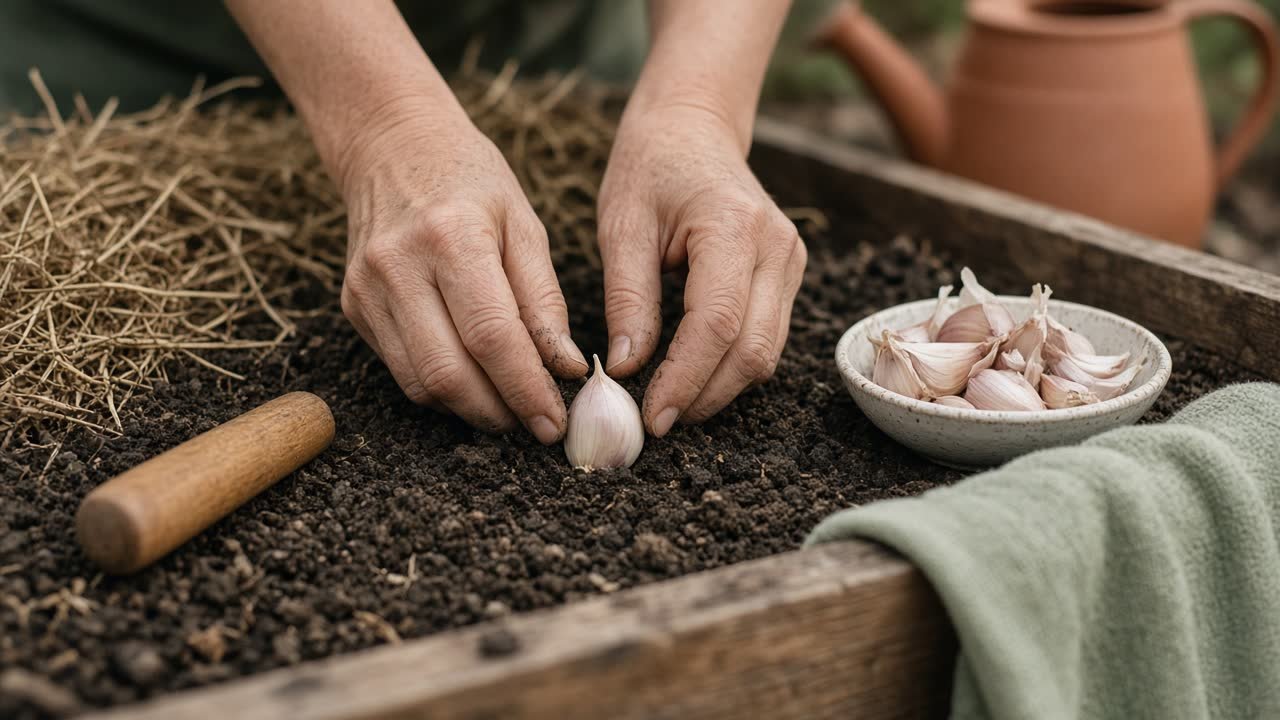
Break bulbs into cloves only when you plant. Keep the papery skins on each clove. Choose the largest, firmest cloves for the best return. Discard soft, moldy, or damaged pieces. Small cloves can fill a kitchen-row trial, yet they rarely match seed-size heads.
Follow these steps when you plant garlic in fall:
- Rake the bed smooth and mark rows 12–18 inches apart.
- Set cloves pointy tip up, flat basal plate down.
- Plant 2–3 inches deep in milder zones; go closer to 3–4 inches where winters bite hard.
- Space cloves 4–6 inches apart in the row for full-size bulbs.
- Cover with soil, tamp lightly, and water to settle air pockets.
- Mulch right away so freeze-thaw heave cannot lift cloves.
Depth and spacing trade size against yield count. Closer spacing makes more bulbs that stay smaller. Wider spacing favors showpiece heads. For braiding softneck, keep spacing honest so necks stay sturdy. Leave walk space between beds so you can weed and snip scapes without crushing shoots.
Label varieties with durable markers. Winter erases memory faster than you expect. If you plant two types, separate them by a clear path so spring scapes do not confuse you. Snap a quick phone photo of the bed map before snow covers it. That map helps when you plant garlic in fall across more than one variety row. Come spring, you will thank yourself when scapes appear and rows look alike.
Mulch That Tames Freeze-Thaw Heave
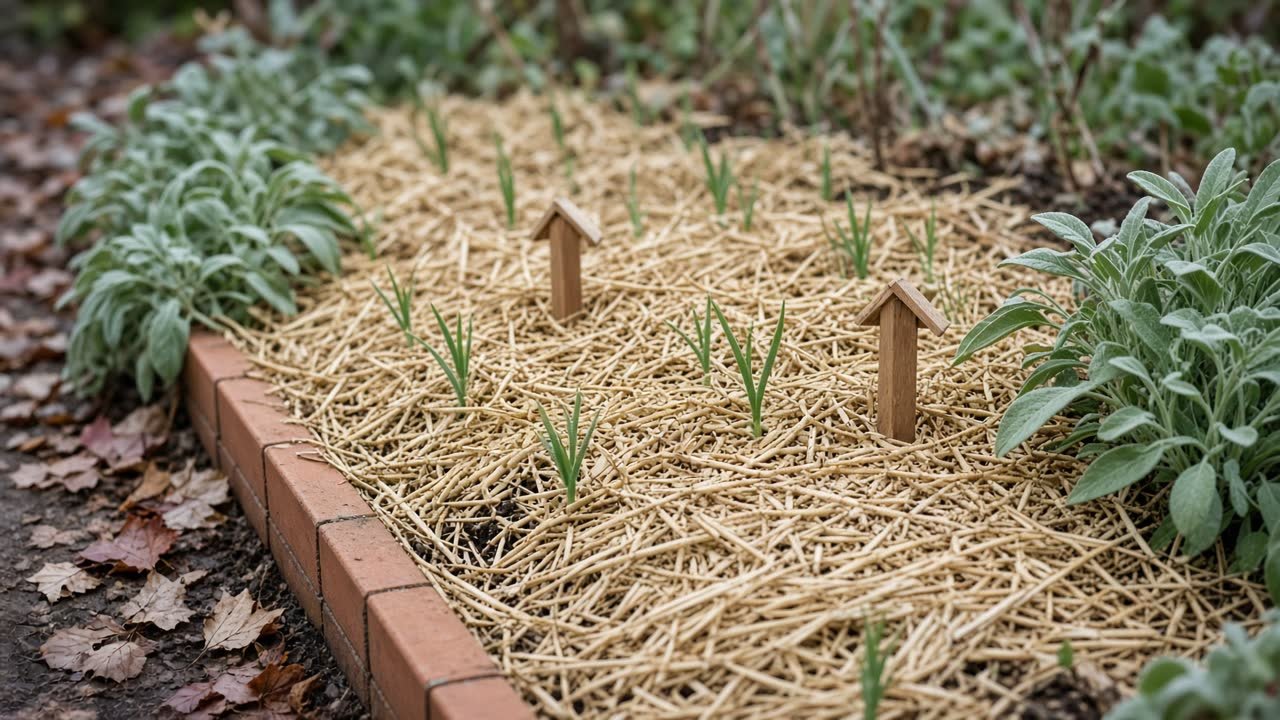
Mulch protects more than looks suggest. Freeze-thaw cycles push cloves upward when bare soil expands and settles. A thick mulch blanket buffers those swings. It also slows weed seeds and holds winter moisture. Without cover, shallow cloves can sit half exposed by February.
Use clean straw, shredded leaves, or coarse unfinished compost. Many gardeners aim for 3–6 inches after planting. Colder zones lean toward the thicker end. Mild zones can stay closer to three inches so shoots push through in spring. Avoid hay heavy with seed heads if you dread a weed flush later.
Keep mulch fluffy, not packed into a wet mat. Wet mats can smother emerging tips and invite rot. If wind strips the bed, pin mulch with a light layer of brush or a second thin pass of leaves. After ice storms, check corners where meltwater concentrates.
In spring, pull mulch back slightly once green shoots show. Leave enough cover to cool the soil and block weeds. Re-mulch bare spots after heavy rain. Good mulch work turns a risky freeze-thaw bed into a stable winter home for garlic. That single step saves more cloves than any fancy fertilizer blend. Treat mulch as part of the job when you plant garlic in fall, not an optional weekend chore. Bare soil invites heave before the first real freeze.
Grocery-Clove Pitfalls and Better Seed Garlic
Grocery store garlic looks tempting and cheap. It often fails in the garden. Produce cloves may come from mild climates that mismatch your zone. Suppliers sometimes treat bulbs to slow sprouting. Treated cloves root poorly or unevenly. Variety labels rarely travel with supermarket bulbs, so you guess on softneck vs hardneck garlic traits. You may plant a softneck in a zone that rewards hardneck toughness, or the reverse.
Disease risk also rises with unknown lots. White rot and viruses hitchhike on infected material. Once white rot hits soil, it can linger for years. That risk steers many growers toward certified seed garlic.
Buy seed garlic from reputable growers or local farms. Ask about variety, cold hardiness, and any disease testing. Order early because popular strains sell out by late summer. Store seed bulbs in a cool, dry, airy spot until planting day. Never refrigerate them like grocery leftovers if condensation will soak the skins.
If you must trial a grocery bulb, plant only a small test row far from your main bed. Watch for weak sprouts and odd leaf symptoms. Treat it as an experiment, not your full crop plan. Keep notes so next fall you invest in proven seed stock instead.
Your future self will prefer labeled seed garlic over another grocery gamble. Strong seed stock lets you plant garlic in fall with confidence. See the UMN Extension growing garlic guide for local timing notes.
Watering and Winter Watch
Water thoroughly after planting so soil settles around each clove. Then ease off. Cool fall weather usually supplies enough moisture. Only water again if the top few inches stay bone dry for a long stretch. Overwatering in cold soil invites rot faster than drought does in fall. A light finger test beats a fixed calendar.
After the ground freezes, stop routine watering in cold climates. Snow and mulch handle most winter needs. In mild zones without a hard freeze, check monthly for dust-dry beds and give a light soak when needed. Containers and raised beds dry faster than in-ground plots, so watch those first.
Watch for heaved cloves after warm spells and sudden freezes. Press any lifted cloves back and refresh mulch. Animal digging needs the same fix plus a light barrier if squirrels treat your bed like a snack bar. Keep notes on wet spots so you can improve drainage next season.
A quick midwinter walk after a thaw tells you more than a forecast app. Carry a spare bag of leaves for thin spots you find on that walk. A ten-minute check prevents spring surprises after you plant garlic in fall. Fix heave early and the bed stays put through March.
Spring Signs After a Fall Planting
Green shoots signal that fall work paid off. Softneck and hardneck tips often appear as soil warms. Timing varies by zone and mulch depth. Do not panic if neighbors see shoots first. Thick mulch can delay emergence by a week or two. Patience beats digging up cloves to check them.
Once shoots stand a few inches tall, feed lightly if your soil tests low. Keep weeds pulled so young leaves get full sun. Water when spring turns dry, aiming for steady moisture without soggy pockets. Side-dress with compost along the rows if growth looks thin and soil feels spent.
Hardneck plants send scapes later in spring. Snip scapes when they curl to redirect energy into bulbs. Softneck types skip true scapes and focus on leaf and bulb growth. Either way, stop heavy nitrogen once bulbing starts so you do not delay maturity. Your goal shifts from leaf push to bulb fill.
Yellow tips in late spring can mean natural aging or drainage stress. Dig a sample bulb only if growth looks stalled. Healthy plants stay upright with firm green leaves through the main growth push. Count leaves as a rough vigor check; strong plants build more wrappers for storage.
Steady spring care turns the work you did when you plant garlic in fall into a reliable summer harvest. Green shoots are the receipt for October effort. For cooler-season kitchen projects while bulbs wait underground, try our fall ferments for comfort meals.
Common Mistakes and Quick Fixes
Mistakes repeat every fall. Catch them early and your crop still recovers.
- Planting too late after the ground locks: Prep beds early and use your zone window, not a busy weekend.
- Planting too shallow in cold zones: Set cloves deeper and add more mulch against heave.
- Skipping mulch: Cover the bed the same day you plant.
- Using grocery cloves as the whole crop: Limit trials and buy seed garlic for your main rows.
- Crowding cloves at two-inch spacing: Thin to 4–6 inches if you want full-size bulbs.
- Waterlogging clay beds: Shift to raised beds and add compost for drainage.
- Breaking bulbs weeks early: Separate cloves on planting day so they stay plump.
- Forgetting labels: Mark softneck and hardneck rows before mulch hides everything.
Quick fixes stay simple. Re-set heaved cloves. Add mulch. Improve drainage before spring rains. Replace a failed grocery row with true seed garlic next season. Small corrections beat a full replant in April. Write the fix on your garden calendar so next October starts cleaner. Review those notes before you order seed garlic next season. Clear notes make it easier to plant garlic in fall on time the next year.
Plant Garlic in Fall FAQ
When should I plant garlic in fall by zone?
Use your USDA zone as a starting map. Colder zones often plant in early to mid October. Mid zones lean mid to late October. Warmer zones often wait until late October or November. Aim for cool, diggable soil before hard freeze.
How do I choose softneck vs hardneck garlic?
Choose hardneck for cold winters, larger cloves, and edible scapes. Choose softneck for milder climates, long storage, and braids. Border gardens can trial both under thick mulch. Match catalog cold ratings to your zone. Local farm stands often stock cultivars that succeed nearby.
Can I plant grocery store garlic cloves successfully?
Sometimes a grocery clove sprouts, yet results stay inconsistent. Produce bulbs may carry treatment, climate mismatch, or disease. Keep grocery trials small and separate from your main seed rows. Invest in seed garlic for reliable softneck vs hardneck garlic performance.
How deep should mulch sit after planting?
Many gardeners spread 3–6 inches of straw or shredded leaves. Colder sites favor the thicker range to blunt freeze-thaw heave. Keep mulch loose so shoots can pierce it in spring. Refresh thin spots after wind or heavy rain.
What spacing and planting depth work best?
Plant cloves tip up, 2–4 inches deep. Use deeper sets in colder zones. Space cloves 4–6 inches apart in rows 12–18 inches apart. Wider spacing grows larger bulbs; closer spacing raises count. Tamp gently after covering so air gaps disappear.
What spring care follows a fall planting?
Watch for green shoots, then ease matted mulch. Water during dry spells and weed early. Snip hardneck scapes when they curl. Ease off late nitrogen so bulbs can mature. Harvest when lower leaves brown and a few upper leaves stay green.
Get Cloves in the Ground Before the Ground Locks
Fall rewards decisive gardeners. Choose softneck or hardneck for your climate, then honor garlic planting by zone with a realistic Oct–Nov window. Prep drainage, plant firm cloves tip up, and mulch against heave. Skip a full bed of mystery grocery garlic and lean on seed stock instead. For harvest and curing cues, see the RHS grow your own garlic advice.
If your soil still digs cleanly this week, plant garlic in fall now and mulch the same day. Softneck vs hardneck garlic rows both need that cover before freeze-thaw starts. Label the rows, water once, and let winter root the crop while you rest. Next summer’s braids and scapes start with that quiet October or November afternoon.
Share a few seed cloves with a neighbor and grow your local stock together. Community seed swaps beat mystery grocery bins every time you plan next year’s rows. Start small, plant with care, and trust the fall rhythm.
This article is for general gardening education. Local frost dates and soil conditions vary—check your extension service when unsure.
You may also like
Clover Lawn: How to Overseed in Fall for a Low-Mow Yard
This clover lawn guide covers fall overseeding timing, microclover vs white clover, six planting steps, watering, mowing…
Plant Propagation for Beginners: 8 Easy Houseplants From Cuttings
New to plant propagation? Learn water and soil rooting, eight easy houseplants to grow from cuttings, an indoor fall set…
Fall Foraging for Beginners: Wild Plant IDs, Ethics & October
A beginner fall foraging guide: build field guides, learn edible wild plants, spot poisonous berries, follow land rules,…