Kitchen Herbal Apothecary: 12 Fall Jars You'll Use
A practical fall pantry shelf: twelve dried-herb jars, restock cues, amber-or-mason storage tips, and weekly brew habits you will keep.

In this article
- Why a Kitchen Herbal Apothecary Beats Random Tea Bags
- How to Start a Fall Herbal Apothecary in One Afternoon
- Choosing Herbal Apothecary Jars That Protect Flavor
- The 12 Jars Overview: What Belongs on Your Shelf
- Immune-Season Jars: Elderberry, Rosehips, and Ginger
- Warming Spice Jars: Cinnamon, Cloves, and Turmeric
- Calm and Digestion Jars: Lemon Balm, Chamomile, and Peppermint
- Kitchen Bridge Jars: Thyme, Orange Peel, and Hibiscus
- How You Store Dried Herbs Long Term
- Weekly Ways to Use Your Kitchen Herbal Apothecary
- Common Mistakes and Quick Fixes
- Kitchen Herbal Apothecary FAQ
- Keep Your Fall Shelf Working All Season
You open the cupboard in October and reach for tea bags again. A kitchen herbal apothecary sits empty while sniffles and dry air show up. So you want jars you open weekly, not dusty props on a styled shelf.
Yet that gap between good intentions and real use frustrates many home cooks. You buy one pretty tin, forget it, then buy another blend in November. A small, labeled set of dried herbs on one pantry shelf breaks that cycle. You see the jars every time you cook.
A kitchen herbal apothecary also saves money over fancy boxes. Indeed, bulk herbs, mason jars, and simple labels cover most fall needs. Above all, warming spices, immune support plants, and gentle evening teas earn their space when you brew them on purpose.
What you will get from this guide:
- A clear plan to start a fall herbal apothecary on one pantry shelf.
- Twelve herbal apothecary jars you will actually open this season.
- A simple table for amounts, uses, and restock timing.
- Storage rules for dried herbs in mason jars or amber glass.
- Labeling, rotation, and weekly use ideas that stick.
- Answers to the questions beginners ask most.

Why a Kitchen Herbal Apothecary Beats Random Tea Bags
A kitchen herbal apothecary puts useful plants where you cook. You see them. Then you use them. Therefore that visibility matters more than a perfect catalogue.
Store-bought mixes often hide weak herbs behind strong flavor. Bulk herbs in clear or amber jars let you smell freshness yourself. Thus you control strength, cost, and blends without mystery ingredients.
Fall brings cooler air, school germs, and heavier meals. A fall herbal apothecary matches that season on purpose. For instance, think elderberry, ginger, cinnamon, lemon balm, and rosehips before rare plants.
Also, a kitchen shelf trains your hands. You reach for thyme while soup simmers. You steep peppermint after a rich dinner. In short, habits beat wish lists. That is the quiet power of a kitchen herbal apothecary built for daily cooking.
How to Start a Fall Herbal Apothecary in One Afternoon
First, clear one pantry shelf or a sturdy tray. Next, pick twelve jars, not fifty. After all, beginners thrive with a short list they can finish.
Then, buy small amounts of dried herbs from a shop with good turnover. Smell each bag. Meanwhile, skip anything flat, musty, or oddly damp.
Finally, label every jar the same day. Include the herb name and the fill date. As a result, you rotate stock without guessing games.
A simple starter shopping list
Buy these first if your budget feels tight.
- Elderberry (dried berries).
- Ginger (dried slices or pieces).
- Cinnamon (chips or sticks).
- Lemon balm (dried leaf).
- Rosehips (cut and sifted).
- Peppermint (dried leaf).
In addition, grab thyme, chamomile, turmeric, cloves, orange peel, and hibiscus for the full set of twelve. That second run can wait a week if money feels tight.
Tools you already own
You need almost nothing fancy:
- A kettle or small pot.
- A fine strainer or tea basket.
- A permanent marker or label maker.
- A cool, dark shelf away from the stove.
Of course, a kitchen scale helps for syrups later. Still, spoons work fine while you learn. Set the jars in a row, fill them, and brew one cup before the afternoon ends.
Choosing Herbal Apothecary Jars That Protect Flavor
Herbal apothecary jars should block light, seal tight, and open easily. Consequently, amber glass wins for bright kitchens. Mason jars work well inside a dark cupboard.
Do herbs need amber glass jars? Not always. However, light fades color and aroma over months. So amber glass helps on open shelves. Likewise, clear glass still works in a closed pantry.
Jar sizes that match real use
Use this size guide:
- Choose 4 oz jars for pricey or rare herbs.
- Choose 8 oz jars for weekly tea herbs.
- Choose 16 oz jars for ginger, cinnamon, or elderberry if you brew often.
- Keep one spare empty jar for new finds.
Also, buy lids that seal. Plastic lids crack over time. Furthermore, metal lids with liners last longer when you wipe rims dry before closing.
Labels that survive steam
Write the common name, the plant part, and the fill month. For example, write Elderberry, dried berries, and Oct 2026. Afterwards, add a tiny open-first sticker on older jars when you refill.
The 12 Jars Overview: What Belongs on Your Shelf
Here is the full set at a glance. Keep this table near your bulk herbs order list.
| Jar | Herb | Main fall use | Starter amount | Restock cue |
|---|---|---|---|---|
| 1 | Elderberry | Syrups and decoctions | 4–8 oz | Color fades or scent weakens |
| 2 | Ginger | Teas and cooking | 4–8 oz | Pieces smell dull |
| 3 | Cinnamon | Warming drinks and oats | 4 oz sticks or chips | Aroma softens |
| 4 | Lemon balm | Calming evening tea | 2–4 oz | Leaves look dusty gray |
| 5 | Rosehips | Bright, tart tea | 4 oz | Soft or bland scent |
| 6 | Peppermint | Digestion and fresh tea | 2–4 oz | Weak mint smell |
| 7 | Chamomile | Wind-down cups | 2–4 oz | Flowers look brown and flat |
| 8 | Thyme | Savory broths and steam | 2 oz | Little scent left |
| 9 | Turmeric | Golden drinks and soups | 4 oz | Color looks chalky |
| 10 | Cloves | Mulling and tiny doses | 1–2 oz | Spice smell fades |
| 11 | Orange peel | Bright citrus teas | 2–4 oz | Peel smells stale |
| 12 | Hibiscus | Tart ruby tea | 2–4 oz | Color washes out |
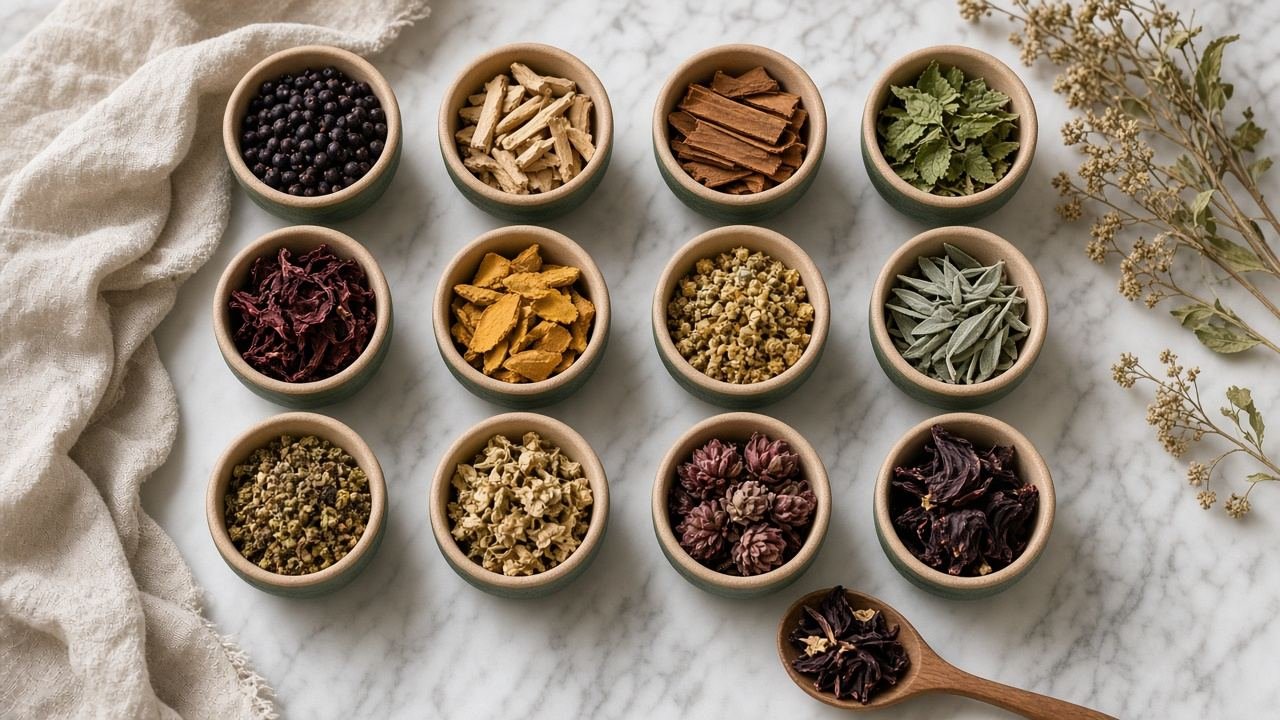
Overall, these twelve cover immune support, digestion, sleep, and flavor. In other words, you do not need fifty jars to feel prepared for autumn. A focused kitchen herbal apothecary beats a crowded shelf of unused botanicals every time.
Immune-Season Jars: Elderberry, Rosehips, and Ginger
These three jars carry most cool-weather rituals. You simmer, steep, and sip them when the air turns sharp.
Elderberry for cool-weather cups
Elderberry leads many fall herbal apothecary shelves. People simmer the dried berries into syrups and decoctions. Above all, quality matters more than pretty packaging.
Use clean, food-grade dried elderberries from a trusted supplier. Then simmer gently. Strain well. Afterwards, refrigerate syrups and finish them within the window your recipe states. For safety notes on elderberry products, see the NIH elderberry safety overview.
Try this weekday rhythm:
- Simmer 1 tablespoon dried elderberries in 2 cups water for 15–20 minutes.
- Strain into a mug.
- Add honey after the liquid cools slightly if you use honey.
- Drink while warm on chilly evenings.
Still, skip honey-sweetened syrups for infants under one year. Talk with a clinician if you take medications or manage chronic illness. When a scratchy throat shows up, pair a simple cup with ideas from grandma's sore throat remedies.
Rosehips for tart, ruby teas
Rosehips bring tart flavor and a classic winter tea color. Cut-and-sifted rosehips brew faster than whole hips. Similarly, crush lightly if you buy whole ones.
Simmer rosehips 10–15 minutes for a deeper cup. Or steep them with hibiscus. Either way, strain well, since tiny hairs can irritate.
Also, rosehips pair well with cinnamon and orange peel. Indeed, that blend tastes like fall in a mug without much effort.
Ginger as your warming workhorse
Dried ginger earns space because you cook with it and brew it. As a result, the jar empties instead of collecting dust.
Crush dried slices before brewing. Hence hot water pulls more flavor that way. Pair ginger with lemon and honey for a simple throat-soothing cup. The NCCIH ginger usefulness guide summarizes what research supports for everyday kitchen use.
For example, keep a small tin of candied ginger for travel days. Meanwhile, your dried jar still covers teas and soups at home. Grate a pinch into carrot soup or stir-fry sauce so the jar works twice.
Warming Spice Jars: Cinnamon, Cloves, and Turmeric
Warming spices make a kitchen herbal apothecary smell like October. Besides, they season breakfast and dessert, so you finish them.
Cinnamon for sweet heat
Cinnamon chips or sticks beat ground powder for long storage. However, ground spice loses aroma faster. So store sticks, then grind small amounts as needed.
Stir cinnamon into oatmeal, stewed apples, or warm milk drinks. In addition, pair it with ginger and orange peel for a mulled scent without wine. For more morning ideas, browse healthy breakfast ideas with spices.
While Ceylon and cassia differ, both work in a home kitchen when you buy food-grade stock. Therefore note the type on the label so future you remembers.
Cloves for tiny doses and big aroma
Cloves pack power. You need only a few buds for mulled cider scent or a strong tisane. Consequently, keep the jar small so you finish it while fragrant.
Crush one clove before brewing. Yet whole buds release slower. Pair cloves with cinnamon and orange peel for a classic warming mix.
But do not chew large amounts of cloves for toothache as a long-term plan. In other words, short kitchen use differs from dental care. See a dentist for real tooth pain.
Turmeric for color and kitchen rituals
Turmeric stains everything, so use a dedicated spoon. Store it away from steam. Otherwise moisture clumps the powder fast.
Many people stir turmeric into warm milk drinks with black pepper and a little fat. Likewise, others add it to soups. Either habit uses the jar weekly.
Of course, turmeric supplements differ from kitchen amounts. This jar covers food and drink use, not high-dose capsules. Finally, wipe the rim every time so the lid does not glue shut.
Calm and Digestion Jars: Lemon Balm, Chamomile, and Peppermint
Evening and after-meal cups keep these jars rotating. Overall, soft flavors make daily tea feel kind instead of medicinal.
Lemon balm for soft evenings
Lemon balm smells bright and soft. Many people brew it after dinner. Additionally, it fits a calm evening shelf next to chamomile.
Steep 1–2 teaspoons in hot water for 5–10 minutes. Then cover the cup so the aroma stays in. Then sip slowly.
However, if you take thyroid medication or sedatives, ask a clinician before daily use. Gentle herbs still interact in some bodies.
Chamomile for wind-down cups
Chamomile belongs in almost every beginner set. The flowers look pretty in herbal apothecary jars. Moreover, you will brew them on weeknights.
Use 1–2 teaspoons per cup. Cover while steeping. Afterwards, add a little honey if you like sweetness.
Especially at night, keep the blend simple. Chamomile alone often works. Later, you can add lemon balm if you want a softer citrus note.
Peppermint for digestion and fresh air
Peppermint clears a heavy meal feeling for many people. Additionally, it freshens a stuffy kitchen after cooking fish or onions.
Steep 1 teaspoon dried leaf for 5–7 minutes. However, do not boil it hard. High heat can make mint taste harsh.
On the other hand, skip strong peppermint tea if reflux flares for you. Some people feel worse with mint. Instead, trust your body and adjust the jar size next season.
Kitchen Bridge Jars: Thyme, Orange Peel, and Hibiscus
These three jars jump between tea kettle and cutting board. In fact, dual use keeps your shelf honest.
Thyme for broths and steam bowls
Thyme bridges tea shelf and soup pot. Therefore that dual role keeps the jar active. Crumble dried thyme into broths, bean pots, and roasted vegetables.
For a simple steam, pour hot water over a pinch of thyme in a bowl. Inhale carefully with a towel tent if that ritual helps you. Meanwhile, keep water warm, not scalding.
Since thyme tastes strong, start small. You can always add more to the pot. Besides, a pinch in scrambled eggs empties the jar faster than tea alone. If you grow herbs later, organic vegetable garden basics help you plan a small plot beside the kitchen door.
Orange peel for brightness on dark days
Dried orange peel lifts heavy spice blends. Save peels from organic oranges when you can. Otherwise, buy food-grade dried peel in bulk.
Dry peels fully before jarring. Any soft spot invites mold. Thus store only crisp pieces.
Then, add a pinch to ginger cups or hibiscus tea. As a result, the citrus note makes daily drinks feel special without extra sugar.
Hibiscus for tart color and cold brews
Hibiscus makes a ruby drink hot or cold. In fall, serve it warm with cinnamon. Afterwards, cold-brew it for lunch bottles.
Steep 1 teaspoon in hot water for 5–10 minutes. Indeed, it turns tart fast. Sweeten lightly if needed.
While hibiscus suits many adults, people who watch blood pressure or pregnancy status should ask a clinician first. Even so, kitchen tea amounts still deserve respect.
How You Store Dried Herbs Long Term
Dried herbs last longest in cool, dark, dry places. Otherwise heat above the stove ruins them. So choose a pantry shelf away from the oven.
Use airtight lids every time. Then keep moisture out. Above all, never scoop with a wet spoon.
Storage checklist
Follow this list each refill day:
- Confirm the herb feels fully dry and crisp.
- Fill clean, dry jars only.
- Wipe the rim before sealing.
- Write the herb name and fill date on the label.
- Place older jars in front for first use.
- Recheck scent every few months.
Labeled jars beat mystery bags. In fact, a faded label wastes more herbs than gentle kitchen light does. Whole leaves and berries usually keep aroma longer than fine powders.
How long dried herbs stay pleasant
Many leafy herbs taste best within a year. Roots, barks, and berries often hold longer when sealed well. In short, trust your nose. If the smell fades, then compost the rest and refill with fresh stock.
Weekly Ways to Use Your Kitchen Herbal Apothecary
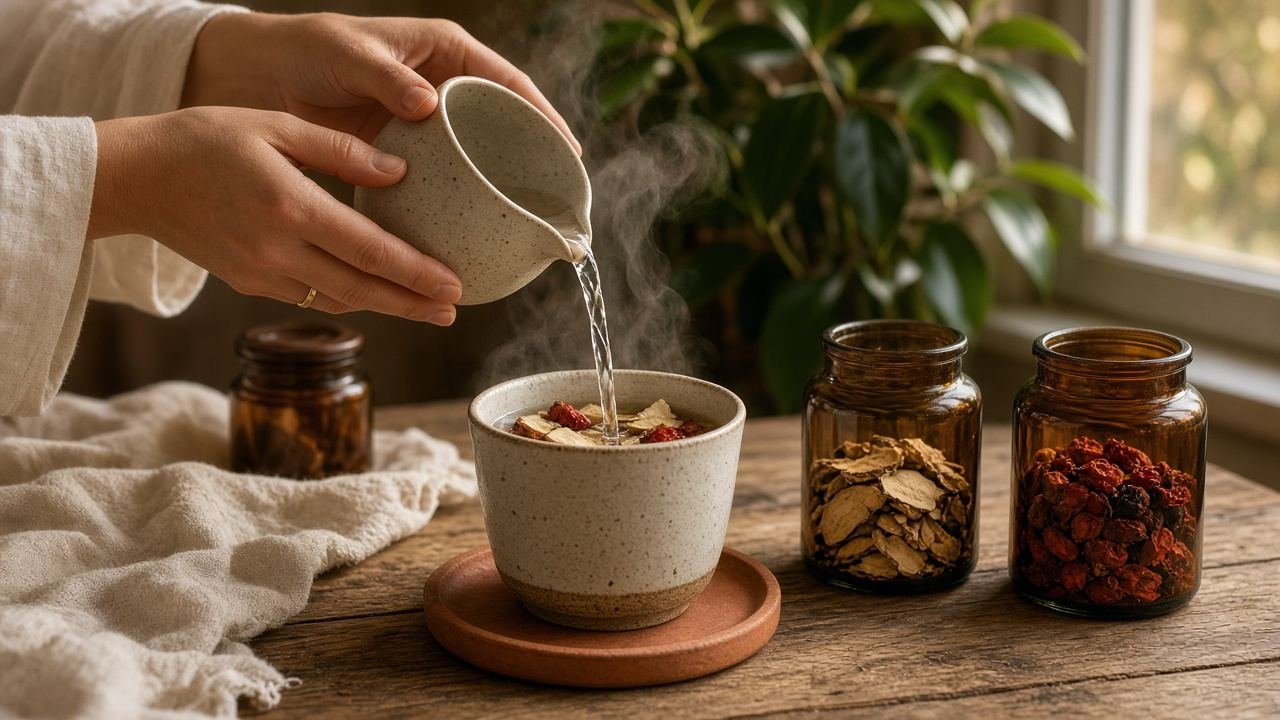
A kitchen herbal apothecary works when rituals stay small. First, pick two weeknight habits and one weekend project. After all, consistency beats elaborate formulas in any home setup.
Three habits that empty jars on purpose
Try this weekly pattern:
- Brew one ginger or peppermint cup after dinner three nights.
- Simmer an elderberry or rosehip decoction every Sunday.
- Cook one thyme-seasoned soup or stew midweek.
As a result, your shelf stays alive. Additionally, you learn which herbs you love before you buy more bulk.
A mini-scenario from a busy Thursday
Sam works late and wants something warm before bed. Sam boils water and steeps chamomile and lemon balm for eight minutes. Then Sam adds a thin slice of dried ginger from the jar. Ten minutes later, Sam feels settled enough to sleep. In other words, no special trip to the store. Indeed, the shelf already held the answer.
Common Mistakes and Quick Fixes
Buying too many herbs at once overwhelms you. Instead, start with six, then add the rest of the twelve.
Storing jars over the stove kills aroma. Instead, move them to a cool cupboard the same day you notice faded scent.
Skipping labels hides fill dates. Consequently, you keep tired stock. Therefore label everything before the first brew.
Using dusty bulk bins wastes money. Old bins smell like cardboard. Instead, choose shops with fast turnover or sealed bags from known growers.
Expecting medicine cabinet miracles sets you up wrong. Kitchen herbs support comfort and flavor. In short, they do not replace care for serious illness.
Ignoring the calendar dulls your blends. Fall blends differ from summer coolers. So rotate lemon balm and peppermint amounts as your needs shift with the weather.
Grinding everything on day one ages spice faster. Instead, grind cinnamon sticks only when you need them. A living kitchen herbal apothecary grows from small, repeatable moves.
Kitchen Herbal Apothecary FAQ
How do I start a kitchen herbal apothecary?
Clear one shelf. Then buy six to twelve dried herbs you already like in food. Next, add matching jars, labels, and a dark storage spot. Start brewing within a week so the habit sticks and the jars earn their place.
What herbs should I put in apothecary jars?
Choose herbs you will taste often. Elderberry, ginger, cinnamon, lemon balm, rosehips, peppermint, chamomile, thyme, turmeric, cloves, orange peel, and hibiscus cover most fall needs. Meanwhile, skip rare plants until the basics run low.
How do you store dried herbs long term?
Keep dried herbs in airtight jars away from heat, light, and steam. Use amber glass on open shelves. Use clear mason jars inside dark cupboards. Finally, label dates and rotate older stock first so nothing hides in the back.
What herbs belong in a fall herbal apothecary?
Warming spices and immune-season favorites lead the list. Ginger, cinnamon, cloves, elderberry, rosehips, thyme, and turmeric fit October through December. Additionally, add lemon balm and chamomile for evening calm when nights stretch longer.
Do herbs need amber glass jars?
Amber glass helps when jars sit in light. Clear glass still works in a closed pantry. In fact, the seal and the storage place matter as much as glass color.
How many herbs do beginners need for a home apothecary?
Six solid jars beat twenty untouched ones. Many beginners thrive with eight to twelve. Afterwards, add new herbs only after you finish or truly love the first set on your shelf.
Keep Your Fall Shelf Working All Season
Your fall herbal apothecary succeeds when jars earn weekly openings. First, start with the twelve above. Label them. Store them well. Above all, brew simple cups before you chase complex formulas.
Then notice which jars empty first. Then restock those. Meanwhile, leave the slow ones smaller next time. That feedback loop builds a kitchen herbal apothecary that serves your real life, not a catalogue fantasy.
So pick three jars this weekend. Fill them. Brew one cup tonight. After all, small steps fill a shelf that actually works through the cold months.
This article is for general education and does not replace medical advice. Talk to your doctor before you start new herbal routines. Do this especially if you are pregnant, nursing, giving herbs to children, or taking medication.
You may also like
Bone Broth Recipe: Old-Fashioned Slow Cooker and Stovetop Methods
This old-fashioned bone broth recipe walks you through roasting bones, a splash of vinegar, stovetop and slow cooker met…
Elderberry Syrup Recipe: Stovetop Method, Storage & Evidence
A practical elderberry syrup recipe: simmer dried berries, strain, add honey after cooling, then learn fridge and freeze…