Start Your Fall Pollinator Garden: US Zone Guide
Cooler soil and softer nights help natives root before winter. This US starter guide covers zone windows, plant picks, mulch, and first-year care for a fall pollinator garden.
In this article
- Why Fall Beats a Spring-Only Native List
- Plan Your Native Pollinator Garden Before You Dig
- Planting Natives in Fall by US Region and Zone
- Start Your Fall Pollinator Garden With Smart Plant Picks
- Host Plants Versus Nectar Plants
- Soil Prep, Spacing, and Mulch for Fall Installs
- Water and First-Season Establishment
- First-Year Care Without Overdoing It
- Small Yards and Container Starter Beds
- Mistakes That Starve Pollinators
- Fall Pollinator Garden FAQ
- Keep Your Fall Pollinator Garden Growing Next Season
You can start a fall pollinator garden while summer beds still look busy. Cooler air and softer soil help a fall pollinator garden root deep before winter. That quiet work fuels stronger spring blooms and steadier nectar for bees and butterflies. Spring-only lists miss this window.
You gain months of root growth when you plant now, then watch the display thicken after the first full season. Fall also spreads your workload after tomatoes and annuals fade. You reclaim open ground, cut spring rush, and give perennials the chill rhythm many natives prefer. This starter guide keeps steps practical for US zones and first-year care.
What you will get from this guide:
- Why fall rooting beats a spring-only plant list for many natives.
- Site, soil, and bloom-succession planning for a compact yard.
- Rough USDA-zone windows for planting natives in fall.
- Example plant picks by region, plus where to verify local species.
- First-year care, winter stem habits, and common mistakes to skip.
- A tight FAQ for timing, bees, and small-space starter beds.

Why Fall Beats a Spring-Only Native List
Fall gives native perennials a head start. Roots grow while tops stay modest. Soil often holds more moisture after summer heat fades. When spring arrives, plants already own a deeper network. That network supports earlier bloom and better drought resilience in year two.
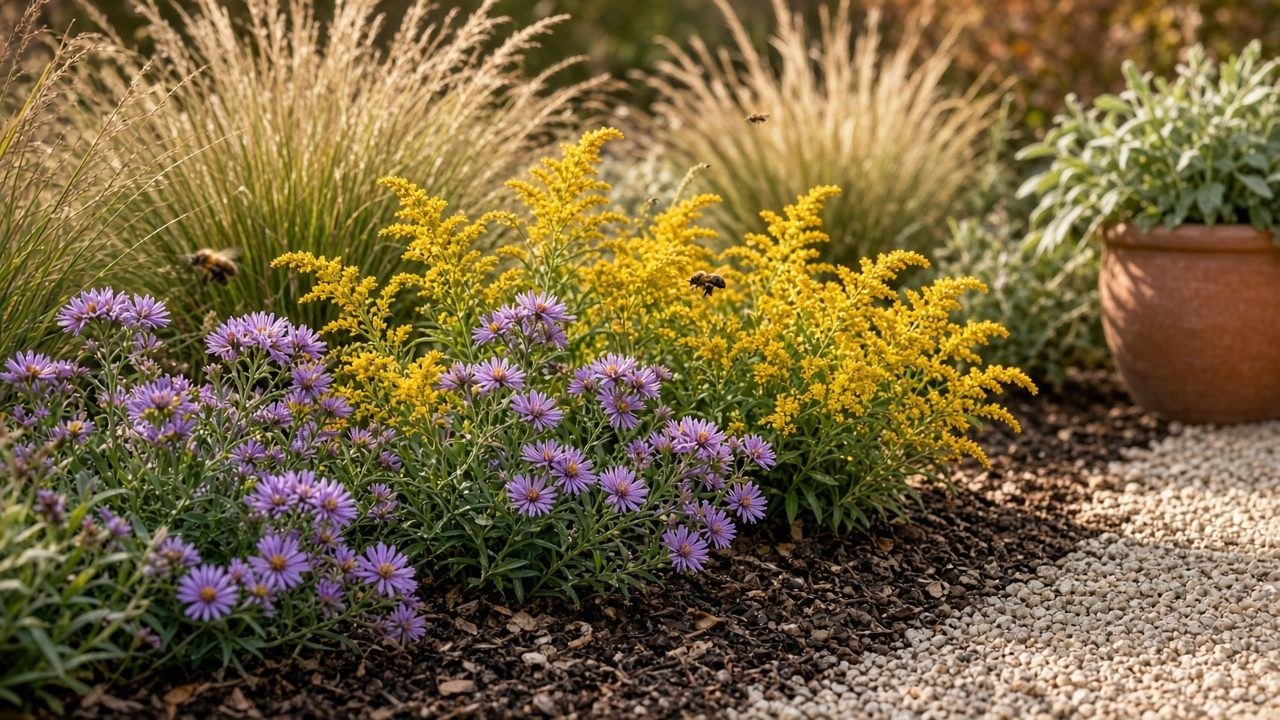
Many gardeners treat spring as the only plant sale season. Nurseries push that habit with colorful pots. Yet planting natives in fall often matches how wild meadows establish after seed drop. Cool nights slow transplant shock in a fall pollinator garden. Weeds still pressure you, but heat stress drops. You also see bloom structure of late asters and goldenrods in situ before you buy.
A spring-only mindset leaves nectar gaps in August and September. Fall installs let you plug those gaps with late bloomers while you still remember the bare spots. You walk the yard after work and mark sunny strips that stayed empty. Then you dig while memory stays fresh.
Patience still matters. Tops may look sparse the first season. Roots do the real work underground. Trust that quiet phase when you build a fall pollinator garden for the long haul. Neighbors who wait until May often chase water and wilt instead. For related fall bed work, see our plant garlic in fall zone guide.
Plan Your Native Pollinator Garden Before You Dig
Start with sun, soil, and water. Skip the shopping cart first. Most flowering natives for bees and butterflies want six or more hours of sun. Partial shade works for some woodland edges, yet dense shade limits nectar volume. Walk the site at 9 a.m., noon, and 3 p.m. Note shade from fences and eaves.
Soil texture guides your plant shortlist. Sandy beds drain fast and favor prairie types. Heavy clay holds water and suits moisture-loving Joe-Pye weed or swamp milkweed where wet pockets persist. Dig a test hole. Watch how long water sits after a storm. That simple check beats guessing from a catalog photo.
Sketch bloom succession across months. Early spring needs nectar for emerging bees. Midsummer needs continuous color. Late summer into fall feeds migrating butterflies and late-season bees. Layer heights too. Tall stems, mid fillers, and low edges create structure. Leave lightly mulched ground for ground-nesting bees when rules allow.
Water access matters for year one. New plugs and pots need steady moisture while roots expand. Place beds near a hose or rain barrel. A native pollinator garden thrives on the right site more than on fancy fertilizer. Match plants to your moisture pattern instead of fighting it with constant irrigation later. Write sun, soil moisture, and bloom months on a card before you shop. That card keeps impulse buys from wrecking your fall pollinator garden plan.
Planting Natives in Fall by US Region and Zone
Timing follows frost more than a holiday date. Aim for soil that still digs easily, roughly four to six weeks before hard freeze in colder zones. Warmer zones stretch later. Use the table as typical guidance. Elevation, coast fog, and raised beds shift windows. Check your county extension when storms arrive early.
Typical Fall Windows by USDA Zone
Use these ranges as a starting map.
| USDA zones (typical). | Fall planting window. | Example natives (verify local spp.). |
|---|---|---|
| 3–4. | Early to mid September–early October. | New England aster, stiff goldenrod, little bluestem. |
| 5–6. | Mid September–mid October. | Purple coneflower, blazing star, Joe-Pye weed. |
| 7–8. | October–early November. | Butterfly weed, wild bergamot, switchgrass. |
| 9–10. | November–early December* | Regional milkweeds, native salvias, muhly grass. |

*Mild winters still reward planting natives in fall so roots settle before spring heat.
Northeast gardeners often plant through early October and mulch before deep freezes. Midwest growers watch early hard freezes and favor mid-September starts for small plugs. Southern beds can plant later, yet they still benefit from cooler rooting weeks. West and Mountain sites vary by elevation. High valleys freeze early. Low deserts need local native plant societies.
Wherever you live, planting natives in fall works best when pots look healthy and roots are not circling hard. Tease roots gently. Set crowns at the same depth they sat in the pot. Water to settle soil. Then mulch. That sequence beats racing a calendar alone when you shape a fall pollinator garden across uneven microclimates.
If a hard freeze arrives early, wait for a thaw window. Or hold pots in a sheltered spot. Then plant at the next mild stretch. The USDA Forest Service pollinator gardening tips also stress regional plant choices over one-size lists.
Start Your Fall Pollinator Garden With Smart Plant Picks
Choose regional natives over random seed cans. Asters and goldenrods headline many fall displays. They feed late bees when annual beds fade. Joe-Pye weed brings height and moisture tolerance in richer soils. Blazing star (Liatris) adds vertical nectar spikes. Purple coneflower supports a wide insect list in sunny Midwestern and Eastern beds.
Milkweed deserves care, not panic. Monarchs need regional host species. Common milkweed suits many Eastern meadows. Butterfly weed prefers sharper drainage. Tropical milkweed can disrupt migration cues in some warm regions—ask local experts first. Confirm your county’s preferred species.
Native grasses stitch the planting. Little bluestem, switchgrass, and prairie dropseed add winter structure and cover for insects. They also stop a bed from looking like scattered flowers on bare dirt. Mix bloom shapes: daisy forms, tubular flowers for long-tongued bees, and flat landing pads for butterflies.
Buy from native-focused nurseries when you can. Ask for straight species or regionally adapted selections. Skip cultivars that trade nectar for oversized double blooms unless a trusted source confirms insect value. Cross-check names with Native Plant Finder–style tools, your extension office, or a native plant society sale. Those sources keep your fall pollinator garden honest to your ecoregion. Start with five to seven solid plants rather than thirty untested names.
Useful starter plant roles:
- Late nectar: native asters and goldenrods.
- Midseason color: coneflower, wild bergamot, blazing star.
- Structure: little bluestem or switchgrass.
- Host support: region-correct milkweed where appropriate.
Host Plants Versus Nectar Plants
Pollinators need both food and nurseries. Nectar plants fuel adult bees and butterflies. Host plants feed caterpillars of specific butterflies and moths. A bed of only showy nectar flowers still helps adults. It may leave butterfly life cycles incomplete without hosts.
Milkweed hosts monarch caterpillars. Spicebush and native cherries support other butterfly groups in Eastern woods edges. Parsley-family natives help swallowtails in some regions—verify safe local species before you plant kitchen lookalikes. Grasses host skippers and other specialists. You do not need dozens of hosts on day one. Add one or two that match butterflies you already see nearby.
Keep pesticide sprays off blooms and foliage. Caterpillars eat leaves. That is the point of a host plant. Spot-treat only when a true pest threatens the whole bed, and never while flowers buzz with bees.
A balanced native pollinator garden pairs nectar succession with a few intentional hosts rather than a pesticide-perfect lawn aesthetic. When you expand next year, add hosts before you add more pure ornamentals. That order strengthens a fall pollinator garden as living habitat, not only a flower show. For calm outdoor time near planted beds, try our forest bathing starter guide outdoors.
Soil Prep, Spacing, and Mulch for Fall Installs
Clear weeds first. Perennial weeds steal moisture from new natives. Dig or smother them before planting day. Work finished compost into the top few inches if soil looks lifeless. Skip heavy tilling that shreds soil structure and wakes a deeper weed bank.
Space for mature size, not the tiny pot today. Crowded plugs look full in month one and choke by year three. Read tags for height and spread. Leave walking gaps so you can pull weeds without crushing crowns. Group plants in odd-number clusters of three or five for a natural meadow look.
Mulch after planting. Use shredded leaves, clean arborist chips, or other organic cover at about two inches. Keep mulch off stems and crowns. Mulch buffers freeze-thaw heave, slows winter weeds, and holds moisture. Avoid thick plastic sheets that block ground-nesting bees. A fall pollinator garden needs living soil contact more than a sealed landscape-fabric look.
Quick prep checklist:
- Remove perennial weeds and turf from the footprint.
- Loosen the top few inches and mix in finished compost.
- Set plants at nursery depth with teased roots.
- Water deeply, then mulch two inches off the crowns.
Water and First-Season Establishment
Water deep after planting. Then check soil weekly through fall dry spells. New roots cannot yet reach far. A slow soak beats daily light sprinkles that wet only the surface. In rainy regions, watch for soggy clay. Raise beds or choose wet-tolerant natives instead of drowning prairie types.
First summer usually demands the most hose time for a fall pollinator garden. Many natives turn tougher after year one. Still, treat year one as establishment, not a drought contest. Mark a calendar reminder for hot weeks. Mulch helps, yet it does not replace water for fresh transplants. Container plants and raised beds dry faster—check them more often.
Stop fertilizing for “faster blooms.” Excess nitrogen pushes floppy growth and weeds. Compost at planting usually covers year-one needs. If leaves look pale after a soil test confirms a real deficit, follow extension rates. Otherwise, let roots explore. Steady moisture and sun grow a stronger fall pollinator garden than miracle feeds. Track rainfall with a simple gauge so you do not guess after cloudy weeks that barely wet the mulch. Pair beds with kitchen harvests using our start organic vegetable garden guide.
First-Year Care Without Overdoing It
Expect a sparse look. Native perennials often spend energy underground. Flowering may stay modest until year two. Resist the urge to overplant every gap with annual fillers that need weekly care. A few intentional annuals for nectar are fine. A full exotic carpet defeats the point.
Weed pressure peaks early in a fall pollinator garden. Pull while weeds stay small. Mulch and dense planting reduce later work. Know common invaders in your county so you do not mistake seedlings of desired natives for weeds. Photo labels help in spring when stems look alike.
Leave standing stems through winter where fire codes and HOA rules allow. Hollow stems shelter overwintering insects. Cut back in late winter or early spring in sections, not all at once, so some cover remains. Compost soft debris. Keep woody piles tidy if neighbors worry about “mess.”
You can stay neat and still leave habitat. That balance defines first-year care for a fall pollinator garden more than constant trimming. Snap monthly photos so sparse early growth does not trick you into ripping out living crowns.
Small Yards and Container Starter Beds
You do not need an acre. A sunny strip along a fence can host three to five native perennials and one grass. Patio containers work for compact picks when you use wide pots with real drainage. Group containers so pollinators find a nectar patch, not lonely pots across a deck.
Choose drought-tolerant natives for pots in hot zones, and water them more than in-ground beds. Replace potting mix every couple of years as organic matter breaks down. Elevate pots slightly so drainage holes stay clear. Even a balcony can support planting natives in fall if frost dates still allow rooting time.
HOA rules sometimes limit height or seed heads. Pick shorter asters, compact coneflowers, and tidy grasses. Frame the bed with a simple edge so it reads as intentional design. Document plant names for board conversations. A small native pollinator garden still feeds insects when you plant with purpose and keep paths clear. One well-watered fall pollinator garden strip along a driveway often outperforms a large neglected lawn corner. The Fish and Wildlife Service pollinator garden steps also favor compact, pesticide-free patches.
Mistakes That Starve Pollinators
Avoid invasive lookalikes. Some “butterfly bush” and exotic olive relatives spread where they do not belong. Confirm Latin names. Ask native retailers which lookalikes cause trouble in your state. Pretty flowers that escape into wildlands create long-term harm.
Do not spray insecticides on open blooms. Neonicotinoid-treated nursery stock can also pose risks—ask sellers about systemic treatments before you buy. Hand-pick pests when you can. Accept minor leaf damage on host plants as part of the system.
Skip a yard of only exotic annuals with long nectar gaps. Petunias and similar beds may look bright yet leave bees short in shoulder seasons. Pair any annual color with native perennials that cover spring through fall. Mow less at edges when safe. Those soft borders feed more life than a hard-clipped strip every weekend.
Fix these habits and your fall pollinator garden works harder without extra gadgets. Keep a short “do not buy” list on your phone. Note invasive lookalikes in your county so your fall pollinator garden stays truly helpful.

Fall Pollinator Garden FAQ
When should I start planting natives in fall?
Plant while soil still digs easily. Cold zones often mean September into early October. Milder zones stretch into November. Finish before hard freeze so roots settle. Local extension frost dates beat generic tips.
Will a fall pollinator garden bloom the first spring?
Some plants flower lightly in year one. Many peak in year two after roots expand. Mature late-season pots may still show color soon after planting. Judge success by survival and new basal growth, not only early petals.
Which USDA zones suit fall planting best?
Most temperate US zones benefit. Zones 3–6 need earlier windows and thicker mulch. Zones 7–8 enjoy longer fall dig seasons. Zones 9–10 use cool months before heat returns. Mountain and desert sites need local advice beyond a zone number.
How do I help bees and butterflies the first year?
Offer continuous bloom, shallow water with stones, and pesticide-free foliage. Include one host plant for butterflies you see locally. Leave some stems standing in winter. Avoid blanket sprays on flowering beds.
Can I mix natives with vegetables?
Yes, if sun and spacing allow. Herb edges can support insects near tomatoes. Keep aggressive spreaders out of tight crop rows. Do not spray shared bloom strips. Borders can still act like a native pollinator garden.
What if my soil is poor clay or sand?
Match plants to the soil you have. Add compost for structure, not truckloads that fight your climate. Raised beds help clay drain. Sandy sites need mulch and drought-adapted prairie species. Partner with your soil to save water later.
Keep Your Fall Pollinator Garden Growing Next Season
Walk the bed in late winter with a notebook. Note empty pockets, weed hotspots, and stems you left for insects. Order plugs early from native nurseries before spring sellouts. Add one new host plant and one late bloomer each year instead of redesigning everything.
Share extras with neighbors. Divide tough clumps after year three when crowns thicken. Track bloom weeks with phone photos so succession gaps stay obvious. Celebrate sparse year-one growth as root investment, not failure.
Practical patience turns a starter bed into habitat that feeds bees through heat and frost. Keep notes on what thrived in your fall pollinator garden. Next season’s list then stays honest to your microclimate, not a distant catalog zone map.
Gardening disclaimer: This guide offers general home-gardening information for US climates. It is not site-specific advice. Plant choices, invasive risks, and watering needs vary by ecoregion, soil, and local rules. Confirm species with your cooperative extension service, a native plant society, or other regional experts before you buy or dig. Follow product labels if you use any garden treatments. Keep children and pets in mind around tools, water features, and plant material.
You may also like
Clover Lawn: How to Overseed in Fall for a Low-Mow Yard
This clover lawn guide covers fall overseeding timing, microclover vs white clover, six planting steps, watering, mowing…
Plant Propagation for Beginners: 8 Easy Houseplants From Cuttings
New to plant propagation? Learn water and soil rooting, eight easy houseplants to grow from cuttings, an indoor fall set…
Fall Foraging for Beginners: Wild Plant IDs, Ethics & October
A beginner fall foraging guide: build field guides, learn edible wild plants, spot poisonous berries, follow land rules,…