Plant Propagation for Beginners: 8 Easy Houseplants From Cuttings
New to plant propagation? Learn water and soil rooting, eight easy houseplants to grow from cuttings, an indoor fall setup, and key safety notes for pets.
In this article
- What Plant Propagation Means
- Is Fall a Good Time to Take Cuttings?
- Tools and Supplies You Need
- How to Take a Stem Cutting
- Indoor Setup for Cold Months
- 8 Easy Plants to Propagate From Cuttings
- The Other 4: Runners, Leaves, and Segments
- Caring for New Roots and Potting Up
- A Simple Plant Propagation Timeline
- Common Plant Propagation Mistakes
- Who Should Be Careful
- When to See a Doctor
- Plant Propagation FAQ
- Your Next Plant Propagation Project
Plant propagation lets you turn one healthy houseplant into several new ones for free. With basic plant propagation skills, a few snips this fall can fill your windowsills by spring. You need clean tools, a jar or small pot, and a bright spot indoors.
This guide keeps things simple and honest. First, you learn how cuttings work and how to choose between water and soil. Then you meet eight forgiving plants, each with a clear method.
You also get an indoor setup for cold months and practical safety notes. After all, some common houseplants have irritating sap, and several can harm curious pets.
What you will get from this guide:
- A plain explanation of how cuttings form roots.
- A fair comparison of water and soil rooting.
- Step-by-step methods for eight beginner-friendly plants.
- An indoor setup that works when days turn short.
- Safety notes on sap, pets, children, and tools.
- Quick FAQ answers for common beginner questions.
What Plant Propagation Means
Plant propagation simply means making new plants from existing ones. Cuttings make it easy.
According to Illinois Extension, vegetative propagation creates a new plant that matches its parent genetically. In other words, your cutting grows into a copy of the original. That makes this kind of plant propagation reliable for favorite colors and leaf patterns.
Also, houseplants use several routes. For example, Illinois Extension lists stem cuttings, leaf cuttings, division, layering, and specialized structures such as runners and offsets. Many plants respond to more than one method.
Still, most beginners start with stem cuttings. You snip a piece of stem, remove the lower leaves, and give the cut end water or a moist rooting mix. Over time, roots form at the nodes, the small bumps where leaves meet the stem.
Here is why plant propagation appeals to so many people:
- It costs almost nothing.
- It turns overgrown plants into tidy new ones.
- It gives you gifts for friends and family.
- It teaches you how plants grow.
Is Fall a Good Time to Take Cuttings?
Fall works, but expect slower results. Honest timing helps you stay patient with fall plant propagation.
The University of Nevada, Reno Extension says the best time to propagate houseplants is while the plant is actively growing. Similarly, MU Extension notes that spring and early summer usually bring the quickest rooting for pothos and philodendron.
So why try plant propagation in fall? First, many houseplants still grow indoors, especially in warm, bright rooms. Second, fall is a natural time to trim leggy plants before winter. Instead of tossing those trimmings, you can root them. Outdoors, you can also plan a fall pollinator garden.
Ultimately, the key lies in your setup. With enough light, warmth, and humidity, many cuttings still root during cooler months. However, they may take longer than in summer.
Therefore, choose fast, forgiving plants for your first fall batch. The eight plants later in this guide fit that goal well.
Tools and Supplies You Need
You need very little to start. Above all, clean gear matters more than fancy gear.
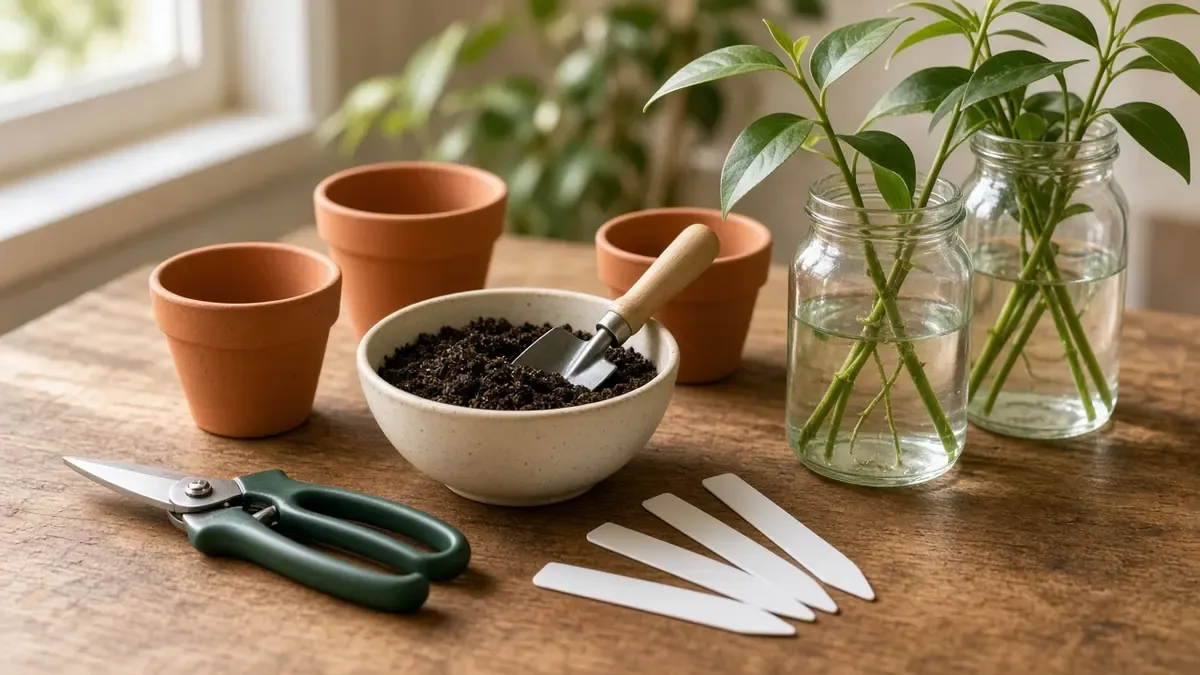
Gather these basics for plant propagation at home:
- Sharp pruners, scissors, or a clean knife.
- Clear glass jars or small vases for water rooting.
- Small pots with drainage holes.
- Fresh potting mix or a rooting mix such as perlite and peat.
- Clear plastic bags or a humidity dome.
- Labels and a marker.
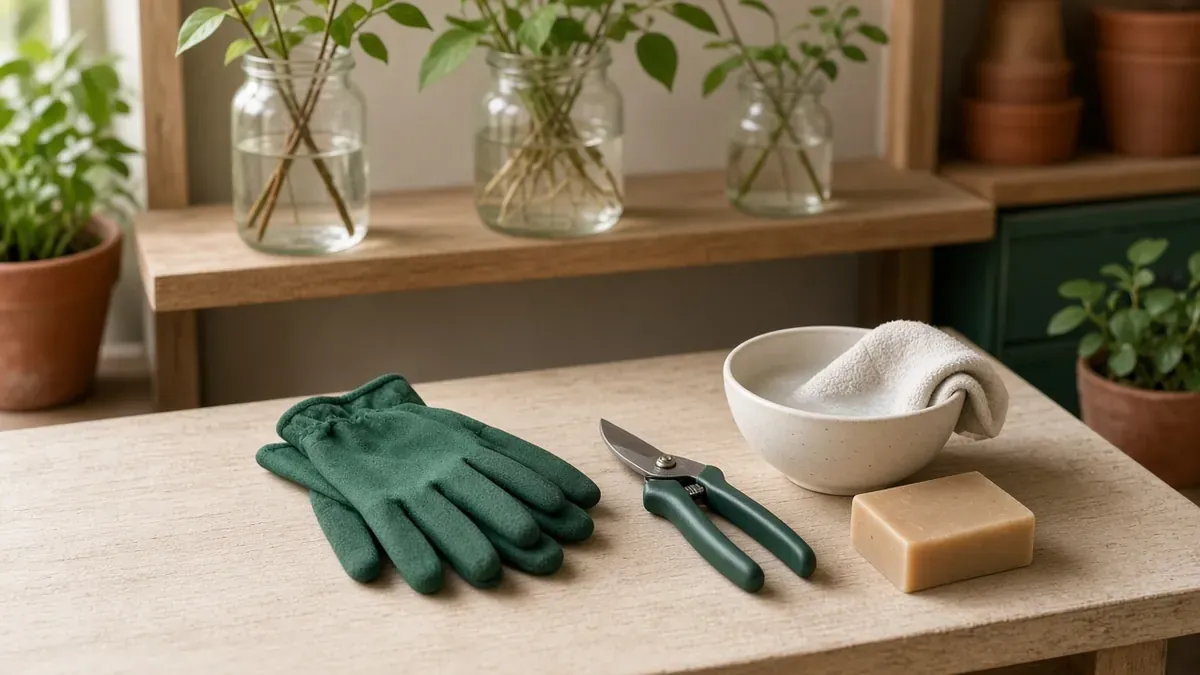
- Gloves for plants with irritating sap.
Above all, cleanliness comes first. Illinois Extension advises sterilizing cutting tools before and between each cut. Likewise, MU Extension says pots, media, and equipment for rooting cuttings must be clean and sterile, and it suggests washing pots with a household cleaner and disinfectant.
Also, avoid garden soil. In fact, MU Extension warns that field soil packs too tightly when wet and tends to develop diseases. Instead, use fresh, bagged mix.
Meanwhile, rooting hormone stays optional for most easy plants. Illinois Extension notes that many houseplants root so easily that rooting hormones are not important. If you do use one, follow the label directions exactly.
How to Take a Stem Cutting
Good plant propagation starts with healthy parent plants. So pick firm, green stems without pests.
- Clean your cutting tool before you begin.
- Choose a healthy stem with several leaves.
- Cut just below a node, the bump where a leaf joins the stem.
- Aim for a cutting about 4 to 6 inches long, as MU Extension suggests.
- Remove the leaves from the lower half of the cutting.
- Place the cutting in water or moist rooting mix right away.
- Label the jar or pot with the plant name and date.
Next, keep the cutting out of direct sun. Bright, indirect light works best, according to Illinois Extension.
Again, patience matters here. Rooting time varies widely among plants, as MU Extension points out. So check your cuttings gently rather than pulling them up every day.
Water Propagation vs. Soil Rooting
Both methods work for most plant propagation projects. However, each one has trade-offs.
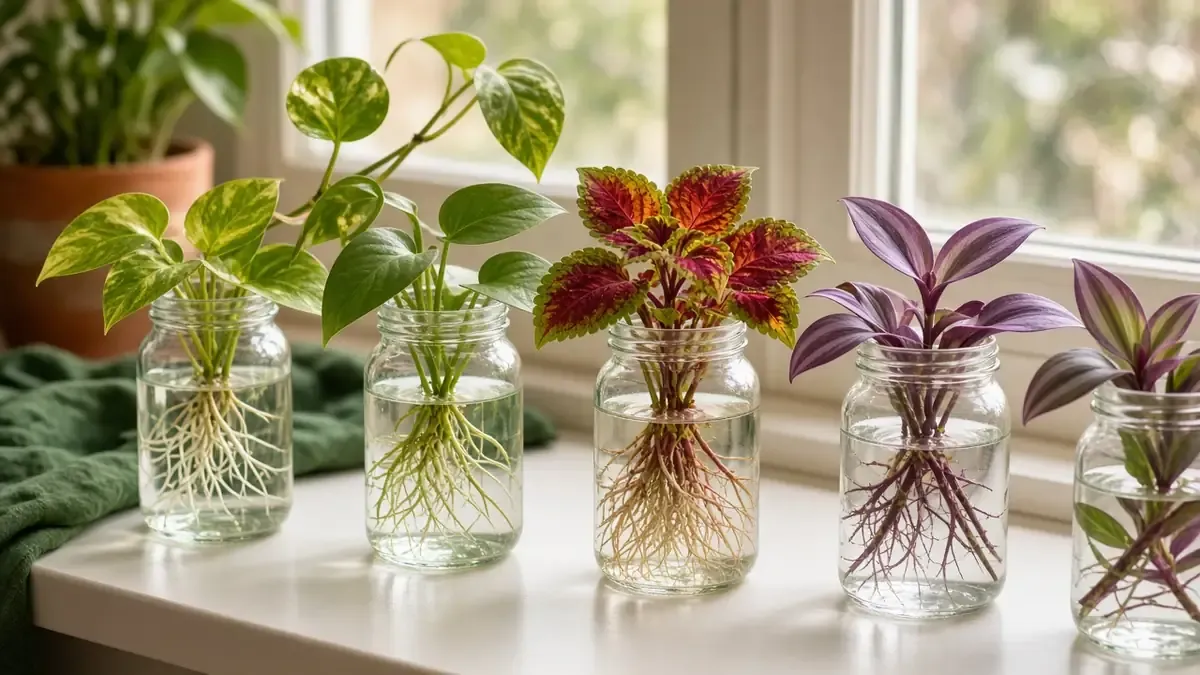
Water propagation lets you watch roots grow through clear glass. Naturally, that feedback helps beginners. Moreover, UNR Extension lists pothos and some philodendrons among plants that root well in water.
However, water propagation has downsides. Illinois Extension says roots that develop in water are often weak and adapt less easily to potting mix. Similarly, UNR Extension notes that cuttings may suffer or go into shock when you move them from water into soil.
By contrast, soil rooting skips that transition. You place the cutting directly in moist mix, often under a plastic cover for humidity. As a result, roots form in the same material they will grow in.
| Factor | Water propagation | Soil rooting |
|---|---|---|
| Visibility | You can see roots form | Roots stay hidden |
| Setup | A clean jar and fresh water | A pot, rooting mix, and cover |
| Upkeep | Change water every few days | Keep mix moist, not soggy |
| Transplant | Move to soil later; some shock possible | No transfer from water needed |
| Best for | Pothos, philodendron, tradescantia, coleus | African violet, snake plant, spider plant, most others |
In short, water propagation suits curious beginners and vining plants. Soil suits gardeners who want sturdier roots from day one.
Indoor Setup for Cold Months
Short days and dry air challenge plant propagation indoors. Fortunately, a simple setup closes the gap.
First, find bright, indirect light. An east-facing window or a spot near a south window often works. If daylight runs short, a basic grow light can help.
Next, add humidity, since dry indoor air slows rooting. Illinois Extension suggests enclosing the container in plastic or clear glass. MU Extension recommends sealing a pot inside a large plastic bag. However, MU warns never to place a plastic-covered container in direct sunlight, because heat builds up and burns the foliage.
Meanwhile, warmth matters, too. Illinois Extension recommends keeping rooting media warm, around 75 to 80°F. So avoid cold windowsills at night, and keep cuttings away from drafty doors.
Finally, ventilate covered cuttings as needed, as Illinois Extension advises. If drops form constantly inside the bag, open it for a while.
For more ideas on growing indoors through winter, see the naturalbio.space guide to building an indoor herb garden. The same light and placement tips help your new cuttings.
8 Easy Plants to Propagate From Cuttings
These eight plants forgive beginner mistakes. Each one roots with simple methods.
Many lists of easy plants to propagate from cuttings repeat the same favorites for good reason. These plants root quickly, show progress, and tolerate indoor conditions. Below, each profile gives you a method you can start today. This first group covers stem cuttings, the simplest form of plant propagation.
Pothos
First, pothos ranks among the easiest vining plants. MU Extension notes that it will root in water. Cut below a node, remove the lower leaves, and set the stem in a jar. Change the water every few days. Keep in mind that the ASPCA lists pothos as toxic to dogs and cats.
Heartleaf Philodendron
Similarly, heartleaf philodendron behaves much like pothos. MU Extension says philodendron may root in water. Take a vine tip with two or three nodes, strip the lowest leaves, and root it in water or moist mix.
Tradescantia (Inch Plant)
Next, tradescantia grows fast and trails beautifully. MU Extension calls wandering jew, an older common name for this group, very easy and notes that it may root in water. Pinch off a few stem tips and place them in a jar or moist mix.
Coleus
Then there is coleus, perhaps the fastest choice of all. In fact, MU Extension describes it as the easiest of all and suggests rooting it in water. It also lists coleus among plants that do not need rooting hormone.
The Other 4: Runners, Leaves, and Segments
The second group uses different plant parts. Still, each method stays beginner friendly.
These four round out your list of eight. Two root from leaves, one from runners, and one from stem segments. As a result, they teach you a wider range of plant propagation skills.
Spider Plant
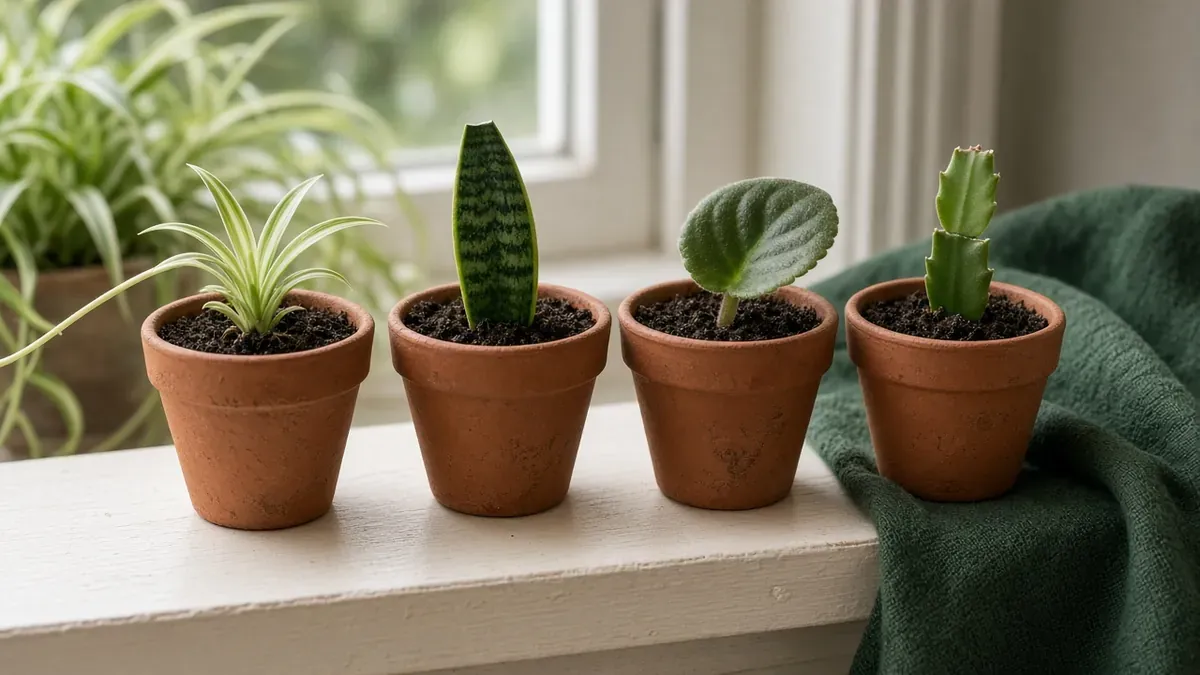
Next, spider plants make it simple. MU Extension says runners root very easily and suggests potting them directly in soil mix. Snip a plantlet from its runner and press its base into moist mix.
Snake Plant
Snake plants, by contrast, root from leaf sections. Cut a leaf into pieces, and keep track of which end pointed down. MU Extension warns that pieces must stay in the same orientation they grew and will not root upside down. Insert them in slightly moist mix.
African Violet
Likewise, African violets root from single leaves. MU Extension recommends trimming the leaf stalk to no more than 1/2 inch and placing potted leaf cuttings in a plastic bag. Keep the mix lightly moist.
Christmas Cactus
Finally, Christmas cactus suits fall perfectly. MU Extension lists it for stem cuttings and advises keeping the mix moist but avoiding overwatering during rooting. Twist off a short stem piece with a few segments, and set it upright in moist mix.
Caring for New Roots and Potting Up
Rooted cuttings need a gentle move. In fact, this step often decides whether plant propagation succeeds long term.
MU Extension suggests transplanting a cutting once its roots reach at least 1 inch long. Then plant it in a separate container with fresh potting mix for houseplants, and water it gently.
The move from humid conditions to drier air poses the biggest challenge. MU Extension calls this transition the most critical step in growing new plants from cuttings. Therefore, watch young plants closely for the first few weeks after potting.
Try these habits:
- Water lightly right after potting, then let the top of the mix dry slightly.
- Keep new plants in bright, indirect light.
- Slip a loose plastic bag over the pot for a few days if leaves droop.
- Hold off on fertilizer until the plant shows steady growth.
Also, keep labels on every pot. Months later, you will want to remember which cuttings came from which parent plant.
Ready to grow food next? Learn how to start an organic vegetable garden.
A Simple Plant Propagation Timeline
Rooting rarely follows a strict schedule. Still, a rough sequence helps you plan.
During the first days, cuttings may look a little tired. That droop often fades as they settle. Meanwhile, keep water fresh or mix lightly moist.
Next, small roots or new growth usually appear. UNR Extension notes that roots may begin to show within about ten days for plants that root well in water. However, slower plants and cooler rooms can stretch that window considerably.
Once roots reach about 1 inch, MU Extension suggests moving each cutting to its own pot. After that, a few weeks of careful watering and steady light help the young plant adjust.
Use this simple checklist as you go:
- Week one: watch for wilting and keep conditions stable.
- Following weeks: look for roots or fresh leaves.
- Root stage: pot up once roots reach about 1 inch.
- After potting: keep humidity higher for a short period.
Above all, track dates on your labels. That habit shows you which plants root fastest in your home, so your next round of plant propagation goes even more smoothly.
Common Plant Propagation Mistakes
Most failures trace back to a few habits. Luckily, each one has an easy fix.
- Cutting between nodes. Roots form at nodes, so cut just below one.
- Leaving leaves underwater. Submerged leaves rot. Instead, strip the lower leaves.
- Ignoring cloudy water. Change it every few days, as UNR Extension advises.
- Using dirty tools. Clean and disinfect tools between cuts.
- Placing covered pots in direct sun. Trapped heat can burn foliage.
- Overwatering soil cuttings. Keep the mix moist, not soggy.
- Giving up too soon. Fall rooting often takes longer, so stay patient.
- Using garden soil. It packs down and can carry disease.
Another common slip involves expectations. After all, not every cutting succeeds, even in perfect conditions. So take a few extra cuttings of each plant. That way, plant propagation feels like a fun experiment rather than a test.
Who Should Be Careful
Houseplants look harmless, yet some deserve caution. So review these points before any plant propagation session.
- Irritating sap: Poison Control explains that dieffenbachia and philodendron contain calcium oxalate, which can cause swelling, redness, and irritation if sap reaches skin or eyes. So wear gloves, avoid touching your face, and wash your hands after handling cuttings.
- Children and pets: The ASPCA lists golden pothos and dieffenbachia as toxic to dogs and cats. It also lists heartleaf philodendron, coleus, snake plant, and inch plant as toxic to pets. Therefore, keep jars and trimmings out of reach.
- Pet-friendlier picks: The ASPCA lists spider plant, African violet, and Christmas cactus as non-toxic to dogs and cats. Still, keep all plant debris away from pets.
- Tools: Sharp blades cause cuts. Work slowly, cut away from your hand, and clean blades between plants.
- Rooting hormone: Read and follow label directions, as MU Extension advises. Keep the container closed and away from children.
- Water hygiene: Replace cloudy water promptly, and clean jars between batches.
When to See a Doctor
Most sap contact causes only brief irritation. Still, some situations need help right away.
Poison Control advises washing skin that touched dieffenbachia or philodendron sap with soap and water for 15 minutes. If sap reaches your eyes, rinse them with water for at least 15 minutes. Afterward, seek medical attention if symptoms are severe or do not improve.
Call 911 if someone drools heavily, has severe mouth swelling, or struggles to swallow or breathe, as Poison Control advises. For other plant exposures in people, call Poison Control at 1-800-222-1222. Poison Control describes that service as free, confidential, and available 24 hours a day.
If a pet chews a toxic plant, the ASPCA advises calling its Animal Poison Control Center at (888) 426-4435 or your local veterinarian as soon as possible. Note that a consultation fee may apply.
Finally, contact a clinician for deep cuts from tools, bleeding that will not stop, or a wound that turns red, warm, or painful. Above all, trust your instincts when an exposure worries you.
Plant Propagation FAQ
Here are quick answers to common questions. Each one stays short.
How long does plant propagation take?
Honestly, it varies by plant and season. Some cuttings root within days or weeks, while others take longer, especially in fall.
Is water propagation better than soil?
Neither wins outright. Water lets you watch roots, while Illinois Extension notes that soil-grown roots often adapt better.
Is plant propagation hard for beginners?
Not with forgiving plants. Start with coleus or pothos, and keep tools clean.
What are some easy plants to propagate from cuttings?
Coleus, pothos, tradescantia, and heartleaf philodendron rank among the most forgiving. Spider plants also root easily from runners.
Do you need rooting hormone?
Usually not for easy plants. If you use it, follow the label directions.
How often should you change the water?
Every few days, as UNR Extension suggests. Also change it whenever it looks cloudy.
Can you propagate plants in winter?
Yes, with bright light, warmth, and humidity. However, expect slower rooting than in spring.
Your Next Plant Propagation Project
Start small, stay patient, and enjoy the process. Free plants reward a little care.
You now know how cuttings work, how to choose between water and soil, and how to set up a warm indoor corner. You also have eight easy plants to propagate from cuttings and a method for each.
Before you take your first snip, run through this checklist:
- Clean, sharp tools and fresh mix.
- Clear jars or small pots with drainage.
- A bright spot out of direct sun.
- Gloves for sappy plants and a safe shelf away from pets.
Take a few extra cuttings, label everything, and check progress weekly. Meanwhile, keep toxic plants away from children and pets. With a little practice, plant propagation becomes one of the most satisfying habits in indoor gardening.
You may also like
Clover Lawn: How to Overseed in Fall for a Low-Mow Yard
This clover lawn guide covers fall overseeding timing, microclover vs white clover, six planting steps, watering, mowing…

Fall Foraging for Beginners: Wild Plant IDs, Ethics & October
A beginner fall foraging guide: build field guides, learn edible wild plants, spot poisonous berries, follow land rules,…
Indoor Herb Garden Before Frost: Cuttings and Light
Pot one clean herb or root a few green stems this weekend, then set it in real sun or under a basic lamp before nights t…