Indoor Herb Garden Before Frost: Cuttings and Light
Pot one clean herb or root a few green stems this weekend, then set it in real sun or under a basic lamp before nights turn hard.
In this article
- Why You Move Herbs Before a Hard Frost
- Bring the Whole Plant or Take a Cutting
- Use Plant Propagation for Stem Cuttings
- Root in Water or in a Damp Mix
- A Starter Table for Common Kitchen Herbs
- Place Windowsill Herbs in Real Sun
- Add a Lamp When the Sill Falls Short
- Balance Water, Humidity, and Air
- Use Fresh Potting Mix and Real Drainage
- Inspect Leaves Before They Come Inside
- Plan for Slower Winter Growth
- Who Should Be Careful
- When to See a Doctor
- Indoor Herb Garden FAQ
- Give Your Indoor Herb Garden a Winter Job
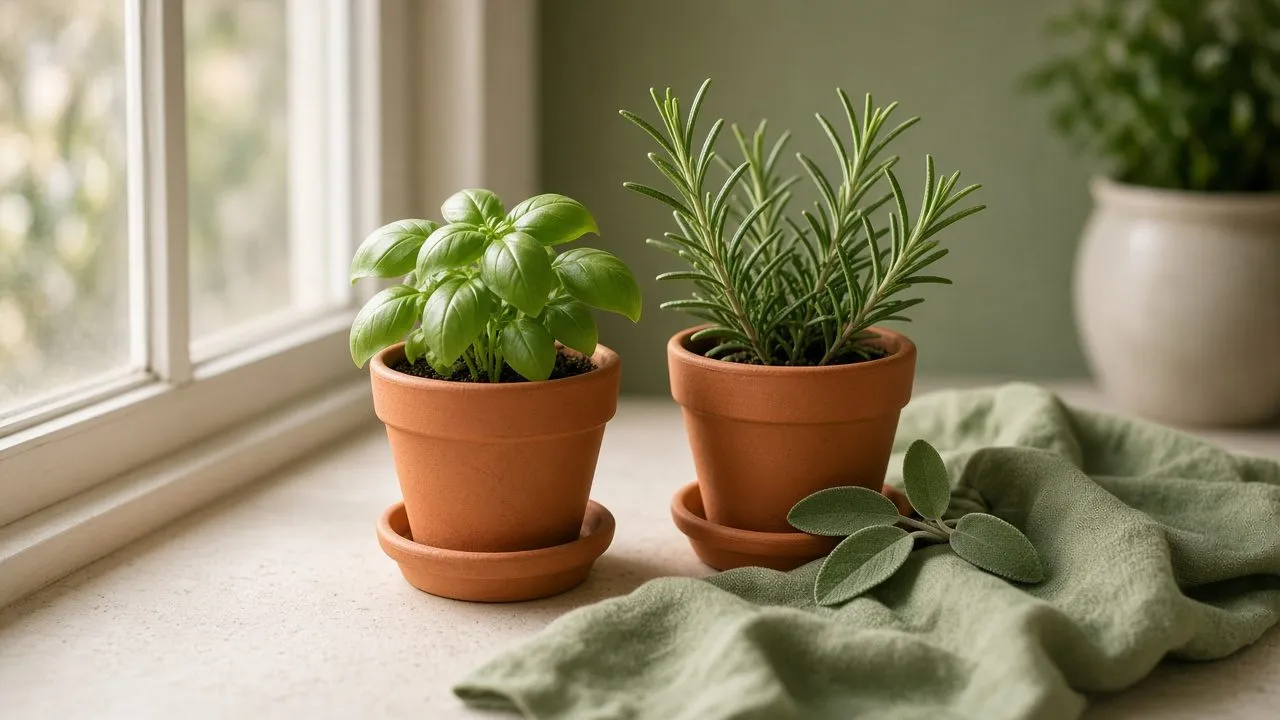
You can start an indoor herb garden before a hard frost by potting a plant or rooting a cutting. An indoor herb garden keeps kitchen leaves in reach when outdoor basil would fold in a cold snap. Cold tolerance varies by herb and by town, so your local extension office stays the real check.
Penn State notes on indoor herbs say basil cannot survive below 50°F and should stay off cold winter glass. Cornell Cooperative Extension says most herbs can survive down to almost 40°F, while basil needs air above 50°F.
University of Maryland Extension says to bring herbs in before a frost. A light frost may also suit container mint and chives. Instead, skip tarragon if pets share the room.
Cook with the leaves. Do not treat a pot as medicine, and do not expect every cutting to root. You can also stock a kitchen herbal apothecary with the sprigs you will cook.
What you will get from this guide:
- A frost-time choice between a whole potted plant and a stem cutting.
- Plant propagation steps for water or a damp, sterile mix.
- A light plan for windowsill herbs, plus a basic lamp for a dark room.
- Water, humidity, and drainage habits that limit soggy mix and mold.
- A stop rule for skin irritation, pets, and any plant you cannot name.
From Our Garden
I kept a pot on the windowsill.
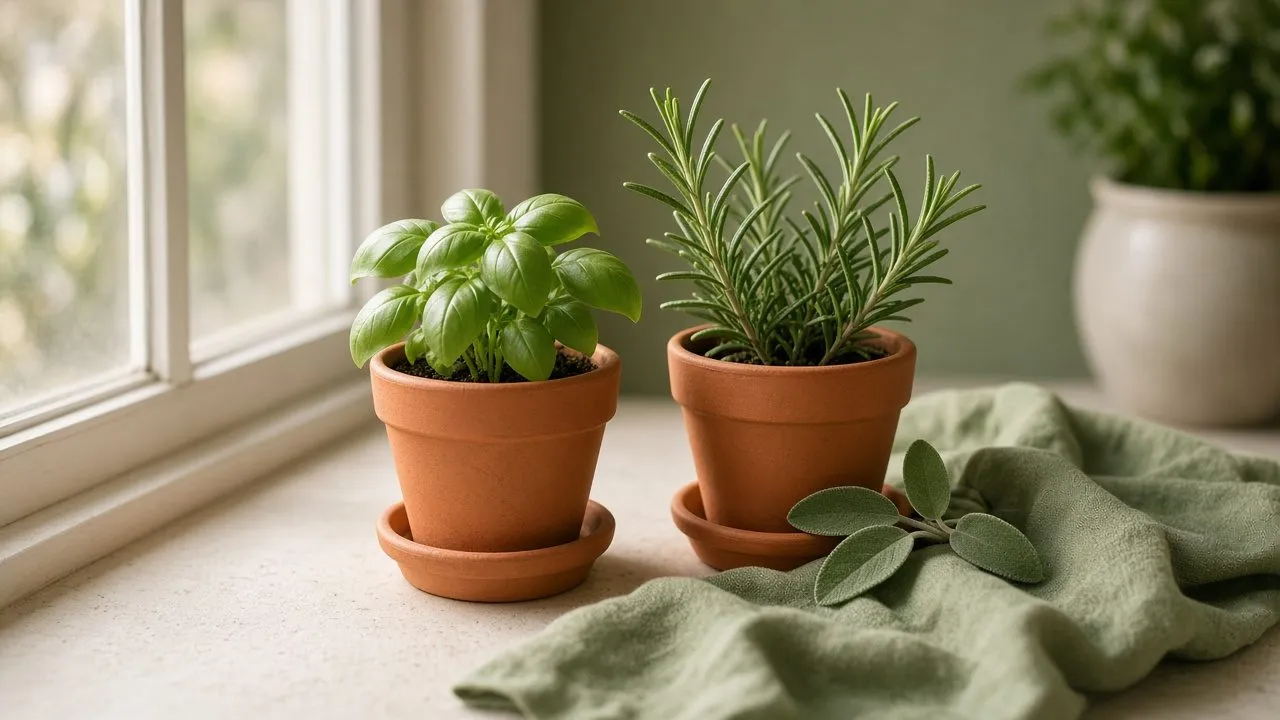
Why You Move Herbs Before a Hard Frost
Frost dates change from county to county.
A tender basil plant can blacken after one cold night. The same night may still only slow a woodier herb.
Cornell also says to keep basil above 50°F and off cold glass. Penn State says not to park basil on a winter sill. Neither page gives thyme or sage its own frost number.
Treat thyme and sage as common cutting candidates, not as frost-proof. Cold tolerance varies, so ask your county extension office before you wait one more week.
Maryland says to bring herbs in before a frost. Container mint and chives may prefer a light frost first. That page links the pause to a short rest and firmer new growth. A light frost is still not a hard freeze. Move plants while growth is still green.
Still leave some outdoor blooms, and plan a fall pollinator garden in the beds you do not empty.
A frozen stem makes a poor start for an indoor herb garden. Then cut only live green growth.
Bring the Whole Plant or Take a Cutting
Cornell calls a whole plant the easier move.
Lift a plant that already lives in a pot, or divide a clump that splits cleanly. Switch to cuttings when the plant is large or when insects might come inside with it.
Cornell also divides chives, mint, and lemon balm. Tease the roots apart and pot a clump. Chives still need at least four to six bulbs.
Check leaves and roots for insects and eggs, then rinse them. Trim leggy shoots if you want stockier growth.
Use moist, sterile, well-drained mix in a pot with holes. Move the whole plant when you want leaves soon and the pot fits the sill. Take cuttings when the parent is huge or buggy. Then work on a mild day.
While a garden bed is still open, plant garlic before hard frost.
That choice decides whether your indoor herb garden starts as a mature plant or as a jar of stems. Write the herb name on the pot before you forget which cutting is which.
Use Plant Propagation for Stem Cuttings
A stem cutting can become a new plant.
Plant propagation here means one job: make a new herb from a herb you already grow.
Montana State University Extension explains the cut. A node is where a leaf or bud meets the stem. Most new roots still start at that spot.
Cornell lists basil, oregano, lavender, rosemary, thyme, and sage as cutting herbs. Montana State adds basil and mint as plants that tend to root in water or soilless mix. Take several pieces, because Cornell says some cuttings fail. No page states a success rate for an indoor herb garden.
Next, take each cutting in this order. The steps below follow Cornell and Montana State.
- Cut a 4- to 6-inch stem at a node with clean scissors.
- On rosemary, pick a green, flexible stem with no flowers.
- On lavender, cut just after flowering.
- Keep three to five nodes and cut just below the lowest one.
- Strip the lower leaves so foliage remains only on the top inch or two.
Root in Water or in a Damp Mix
You can root in water or in mix.
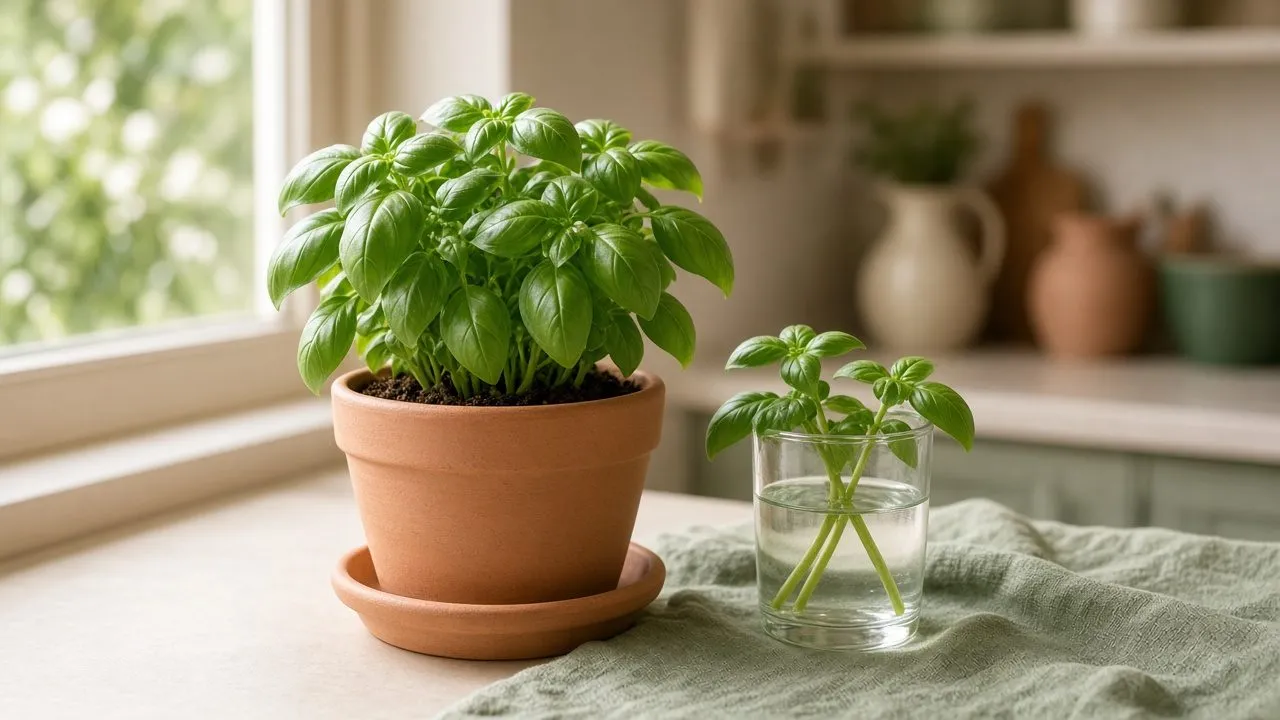
Montana State says to set a water cutting in room-temperature tap water. Keep at least one node under the surface and no leaves in the jar.
Use bright, indirect light, change the water weekly, and skip fertilizer. The page says the cutting already holds enough stored food, so pot up once roots reach 1 to 2 inches.
For mix, use a pot with holes and moist, sterile, well-drained mix. Montana State also names peat, coir, or seed-starting mix. Bury at least one node, right-side up, and leave an inch or two between cuttings. Check every couple of days so the mix stays moist.
A loose plastic tent can raise humidity if it stays off the leaves. You can skip it and follow Cornell's bright, moist routine.
Roots may still take a week to six weeks. Basil can root within two weeks, and rosemary can take almost two months. Montana State says cuttings in mix often root in two to four weeks, depending on the species.
A black, limp stem has failed, so try a fresh piece for the indoor herb garden. Rooting powder is optional, and many houseplants root without it. Keep powder off skin and away from pets.
A Starter Table for Common Kitchen Herbs
Use this table as a starting map only.
It collects fetched notes for an indoor herb garden. It does not score your climate, and it does not promise roots.
| Herb | Start | Light and water |
|---|---|---|
| Basil. | Cornell lists cuttings, and roots may show in about two weeks. | Keep basil above 50°F, so do not let the mix dry fully. |
| Rosemary. | Use a green, flexible, flower-free stem, because roots may take almost two months. | Give it direct sun, then let the mix dry slightly, while Iowa notes spider mites. |
| Thyme. | Thyme also does well from cuttings. | Give it direct sun, then let the mix dry slightly between waterings. |
| Sage. | Sage also does well from cuttings. | Let sage dry between waterings, as Penn State and Maryland suggest. |
| Oregano. | Oregano also does well from cuttings. | Let the mix dry slightly between waterings. |
| Mint. | Divide and pot it, while Montana State says cuttings can work too. | Iowa State lists mint among stronger indoor starters. |
| Chives. | Divide the clump, and keep four to six bulbs. | About 2 to 6 hours of direct sun can be enough. |
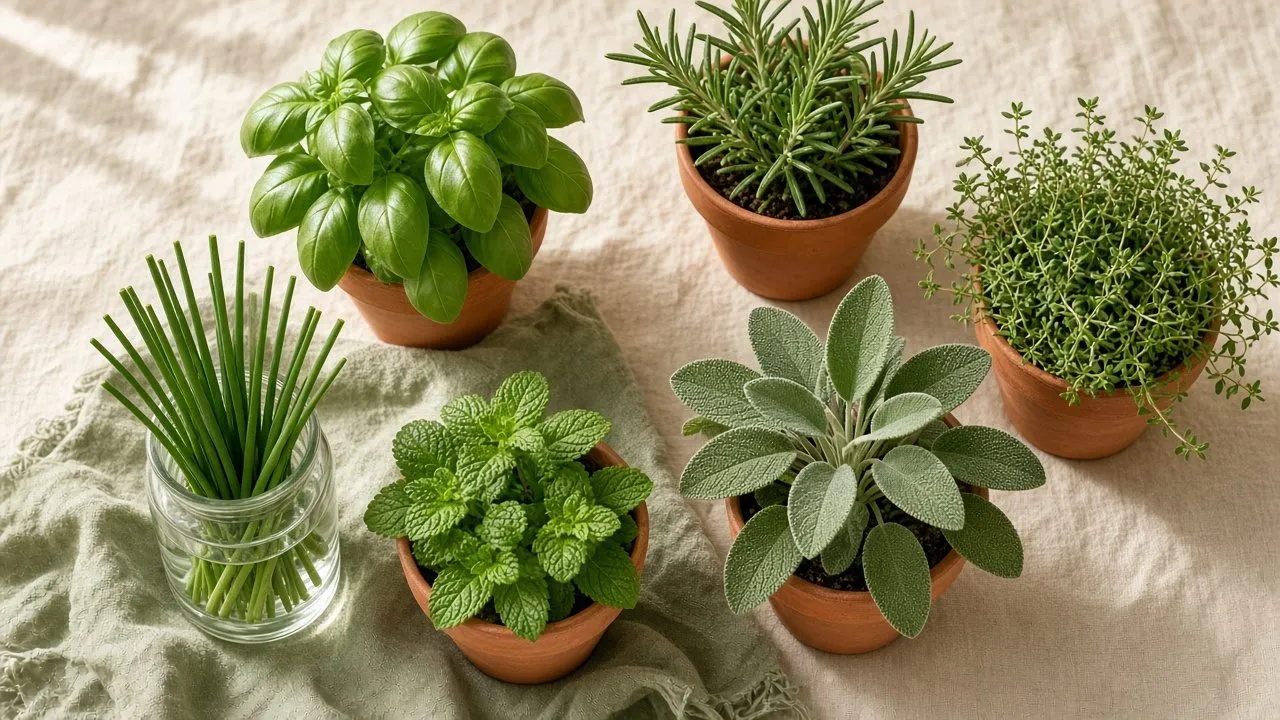
Iowa State steps for indoor herbs also name parsley, cilantro, basil, and thyme for typical indoor light. Rosemary, sage, and bay need more light and a pest check.
Place Windowsill Herbs in Real Sun
Windowsill herbs need the brightest glass you have.
Penn State says most herbs need 6 hours of direct sun, often from a south window. Iowa State says most need around eight hours, while some tolerate six.
Start with a south window, or a bright east or west window. Maryland says a south or west window with at least five hours of sun is the indoor pick.
If midday light never throws a hard shadow, you have bright shade, not full sun. Rotate windowsill herbs every few days so each side gets light.
Keep basil off icy glass, even in a 68°F room. Penn State likes days around 65 to 70°F and nights around 55 to 60°F.
Most herbs can take a short dip into the 40s, but basil cannot. So keep pots off heat vents and drafts. That steady glass is what makes windowsill herbs useful in an indoor herb garden.
Add a Lamp When the Sill Falls Short
Short winter days leave many sills short.
Cornell says a south window helps at first, then extra light becomes likely. A grow light or cool-white fluorescent bulbs can fill the gap. Cornell sets pots 6 to 12 inches from two 40-watt cool-white bulbs for 14 to 16 hours.
Penn State uses that distance and a 14- to 16-hour day when bulbs replace the window. Maryland also matches those lamp hours. Iowa State says a few herbs live on six hours of direct light, but most want eight or more.
A basic LED shop light or compact fluorescent lamp is enough in a dark apartment. Keep a full-spectrum bulb 6 to 12 inches from the leaves. Run it 12 to 16 hours on a timer. Skip brand names.
Thin, spindly growth means the light fell short. So move that part of the indoor herb garden closer to the lamp before you change the soil.
Balance Water, Humidity, and Air
Let the mix dry on the herb's schedule.
Iowa State says most herbs do not tolerate wet soils. So let the mix dry between waterings, and avoid a pot that stays wet for days.
Penn State says to water when the mix starts to dry. Bay, marjoram, oregano, sage, thyme, and rosemary should dry slightly between drinks, but never let basil go bone dry.
Empty the saucer. Water parked under the pot wicks back up and turns the mix soggy. Standing water feeds mold and fungus gnats. Penn State links those gnats to wet habits and suggests yellow sticky traps beside the plants.
Penn State says very dry air shrivels leaves, while extra humidity can bring root rot and other fungal trouble. Group pots, or set them on pebbles above a little water. Maryland also suggests a daily mist.
If leaves stay wet, run a fan. Do not water an indoor herb garden on a fixed weekday when the pot still feels heavy.
Use Fresh Potting Mix and Real Drainage
Outdoor garden soil stays too dense in a pot.
Cornell asks for a moist, well-drained, sterile mix. Penn State wants a mix that sheds water, plus a real drainage hole. Maryland suggests a commercial soilless mix, two parts mix to one part perlite.
Garden soil packs down and can bring insects inside. Instead, buy a fresh bag. Iowa State warns that oversized pots stay wet, and clay dries faster. Also give each herb its own pot.
Use room-temperature water. Repot in early spring if roots escape the hole, as Penn State suggests. Dill and borage need depth for a taproot. Drainage will do more for an indoor herb garden than a pretty outer pot that holds a puddle.
Inspect Leaves Before They Come Inside
Insects ride indoors on outdoor leaves.
Cornell says to check cuttings for insects and disease, and to check divisions for insects and eggs. Rinse with a hose before the pot crosses the door. Look under leaves, where aphids cluster.
Penn State says to trim aphid-covered shoots and trash them, then wash leaves before you cook. It rarely recommends neem or Bt on herbs you eat, and only with the label.
Keep a new pot apart for a week or two. Iowa State names spider mites on rosemary and other fussier indoor herbs.
Discard a plant that keeps failing, and root a clean cutting. Fungus gnats mean the mix is too wet, so let it dry. That pause protects the indoor herb garden you already have.
Plan for Slower Winter Growth
Winter plants grow slower than July plants.
Short days cut the pace even after a careful move. Harvest lightly. Iowa State says to cut just above a leaf pair, with a sharp knife or shears, as you cook.
Leave about 4 to 6 inches on basil, chervil, and parsley. On chives, mint, oregano, and thyme, take only the top third. Iowa State says to retire tired annuals after repeated hard cuts. Rosemary, bay, and marjoram can go back out after frost risk ends.
Iowa State says many indoor herbs taste milder than outdoor plants. Basil still tastes like basil. Cornell allows a low fertilizer dose every two weeks at most, because heavy feed can dull flavor. Iowa State says to skip fertilizer in winter. Fix the lamp before you feed an indoor herb garden that is only reaching for the window.
Who Should Be Careful
Some plants irritate skin or upset pets.
This indoor herb garden is for cooking, not for home treatment. A pot on a sill is not automatically safe for a cat or dog.
North Carolina Extension says garden rue (Ruta graveolens) causes contact dermatitis. Skin contact causes short-term irritation, so wear gloves. The leaves are the poisonous part. Large amounts by mouth can bring stomach pain, vomiting, exhaustion, confusion, and convulsions. The page calls that risk potentially fatal.
The same page says small dried amounts are generally safe to use. This guide still leaves rue out of a starter pot. Wear gloves and sleeves if you must prune a plant you already have.
The ASPCA plant list is not complete. Any plant material may cause vomiting and stomach upset in dogs and cats. The ASPCA tarragon page lists French tarragon as toxic to dogs, cats, and horses. It names essential oils as the toxic principle. It also lists mild vomiting and diarrhea. Penn State says to skip tarragon around pets.
Dump mix that grows fuzz, and keep it out of a bedroom. If a herb already rashes your skin, leave it outside.
When to See a Doctor
Call for help if a person or pet eats an unknown plant.
Poison Control says to use its online tool or call 1-800-222-1222. Both options are free, expert, and confidential. Call 911 if the person collapses, has a seizure, or has trouble breathing. Also call 911 if the person does not wake.
That includes a child who chewed a mystery leaf. It also includes an adult who feels sick after a taste that was not food. Do not wait on rue, and do not answer with oil. This is a call list, not a treatment plan. That still holds for a leaf from an indoor herb garden.
For a pet, call a veterinarian or ASPCA Poison Control at (888) 426-4435. Call if the animal may have eaten a risky plant or already looks ill. A fee may apply. Have the plant name or a photo.
Call a clinician if a rash after handling a plant worries you or swells. Breathing trouble means 911. Call a clinician if cough, wheeze, or fever follows moldy indoor soil, and move that pot out of the bedroom.
Indoor Herb Garden FAQ
These answers stay short and practical.
Each one rests on a page already cited above.
Can I root basil in a jar?
Montana State says basil often roots in water.
Herbaceous plants such as basil tend to root in water or soilless mix. Keep a node underwater, change the water weekly, and use bright indirect light. In mix, Cornell says basil may root in about two weeks, while rosemary can take far longer. Some pieces still fail in an indoor herb garden.
Do windowsill herbs need a grow light?
Add one when the glass falls short.
Penn State cites about 6 hours of direct sun, Iowa State about eight, and Maryland at least five. Those pages run lamps about 12 to 16 hours, 6 to 12 inches from the leaves.
Why do stems look leggy?
Thin stems usually mean too little light.
Penn State ties thin growth, small leaves, and a weak aroma to too little light. Move the pot or add a lamp. Do not answer with extra fertilizer.
Can I use garden soil in the pot?
No, because garden soil stays too dense.
Cornell, Penn State, and Maryland want sterile or soilless mix that drains. Garden soil packs tight and can carry insects.
Will flavor match the outdoor plant?
Often the indoor taste is milder.
Iowa State says many indoor herbs taste milder. Basil still tastes like basil. Take the top third of perennial herbs. Leave 4 to 6 inches on leafy annuals.
Should plant propagation include tarragon around pets?
No, so keep tarragon away from pets.
The ASPCA lists it as toxic to dogs, cats, and horses. Penn State says to keep it out of pet homes.
Give Your Indoor Herb Garden a Winter Job
Pick one sill and one herb this weekend.
One healthy pot beats a tray of failing cuttings. Follow this order.
- Choose green growth before a hard frost, not after the stems blacken.
- Pot the whole plant if it is small and clean, or take cuttings if it is large or buggy.
- Snip extra stems at a node, then strip the lower leaves.
- Start the stems in water or in damp sterile mix.
- Set the pot in the brightest window, or clip on a basic lamp with a timer.
- Water for that herb, then empty the saucer the same day.
- Keep pets away from tarragon, skip rue, and call for help after an unknown nibble.
An indoor herb garden in winter is a slow pot, not a summer row. Check the light, lift the pot to judge the weight, and cut only the sprig you will cook tonight.
You may also like
Clover Lawn: How to Overseed in Fall for a Low-Mow Yard
This clover lawn guide covers fall overseeding timing, microclover vs white clover, six planting steps, watering, mowing…
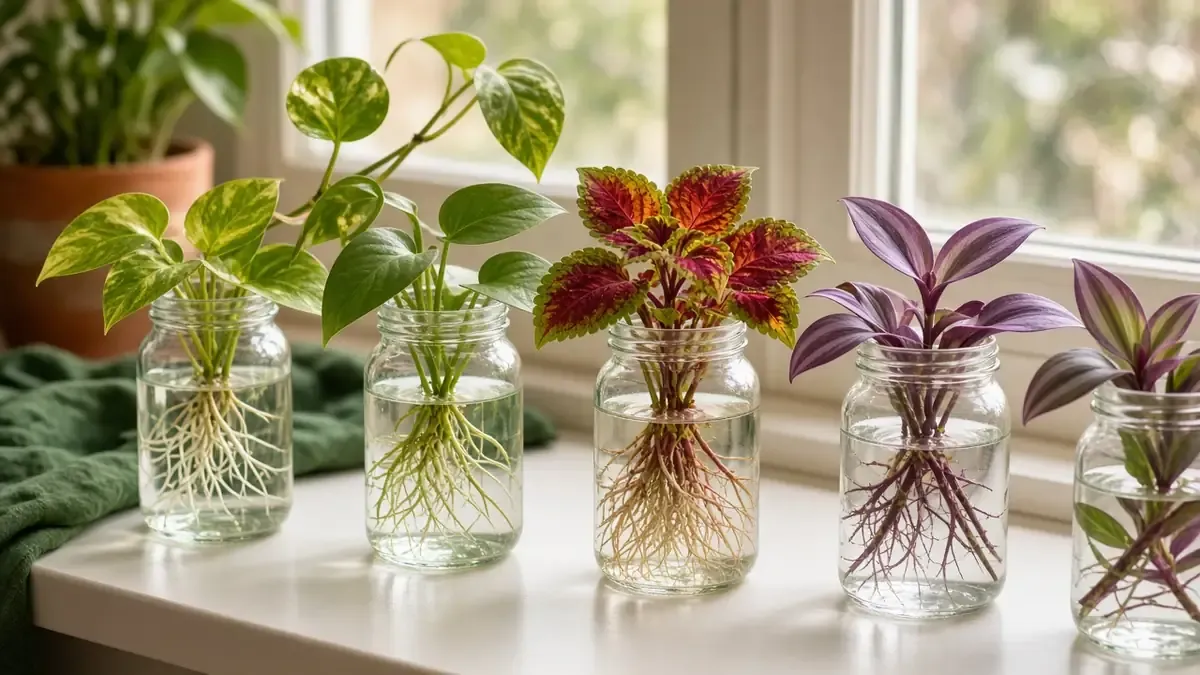
Plant Propagation for Beginners: 8 Easy Houseplants From Cuttings
New to plant propagation? Learn water and soil rooting, eight easy houseplants to grow from cuttings, an indoor fall set…
Fall Foraging for Beginners: Wild Plant IDs, Ethics & October
A beginner fall foraging guide: build field guides, learn edible wild plants, spot poisonous berries, follow land rules,…