How to Hygge This Fall: 15 Cozy, Low-Cost Rituals for Shorter Days
Hygge is the Danish habit of slowing down for warm, simple moments. Try 15 low-cost fall rituals, from soup nights to golden-hour walks, plus safety basics.

In this article
- What Does Hygge Mean?
- Where the Word Comes From
- How to Hygge: The Core Ideas
- Rituals 1–5: Light, Warmth, and Texture
- Rituals 6–10: Slow Food and Quiet Evenings
- Rituals 11–15: Walks, Books, and Good Company
- A Cozy Home on a Budget
- A Simple Weekly Hygge Plan
- Making Cozy Rituals Work in Any Home
- Common Hygge Mistakes
- Who Should Be Careful
- When to See a Doctor
- Hygge FAQ
- Your Coziest Fall Starts Tonight
Hygge is the Danish idea of slowing down and enjoying simple, warm moments. As the days get shorter, it gives you a friendly way to make fall evenings feel softer and more inviting.
You do not need a new sofa or a pile of shopping bags. Instead, you need a lamp, a blanket, a hot drink, and a little time. So this guide keeps every idea cheap, practical, and easy to start tonight.
First, you get the hygge meaning in plain words, plus where the word comes from. Then you get exactly 15 low-cost rituals for fall. Finally, you get safety notes for candles, heaters, and hot drinks, and honest advice on when cozy habits are not enough.
What you will get from this guide:
- The hygge meaning, origin, and pronunciation.
- Exactly 15 numbered, low-cost fall rituals.
- Ideas for a cozy home on a small budget.
- A simple weekly plan you can copy.
- Candle, heater, and hot drink safety tips.
- Clear signs it is time to talk to a doctor.
What Does Hygge Mean?
Hygge describes a warm, relaxed feeling of comfort. Danes use it for moments, places, and gatherings.
According to the official denmark.dk guide, hygge is about taking time away from the daily rush to be with people you care about, or even by yourself, to relax and enjoy life's quieter pleasures. That is the core hygge meaning in one sentence.
The same page spells the pronunciation as "hooga." It also notes that the word is hard to explain, which makes sense. After all, it is more of a feeling than a checklist.
In practice, the hygge meaning often shows up as:
- Informal time with family or close friends.
- A quiet setting, usually at home.
- A shared meal or a hot drink.
- Soft light and a slower pace.
So think of it as an atmosphere you create, not a product you buy. That shift alone keeps costs low.
Where the Word Comes From
The word has deep roots. Its modern sense is about two centuries old.
Denmark.dk explains that the word dates back to around 1800, at least in the meaning it has today. Even earlier, a similar Old Norse word meant "protected from the outside world." That older sense fits fall perfectly, since shorter days push many people indoors.
Over time, the idea traveled far beyond Denmark. The official guide mentions books on the topic and housewares such as cuddly blankets and candles. However, the original idea never required special products.
That point matters for your budget. Because the hygge meaning centers on time, people, and pace, you can practice it with what you already own. In fact, the simplest version often feels the most genuine. A pot of tea and a good conversation already capture the spirit.
How to Hygge: The Core Ideas
Learning how to hygge starts with a few simple principles. Everything else builds on them.
- Slow down. Give one evening activity your full attention.
- Soften the space. Use warm light, soft textures, and fewer screens.
- Share it. Invite a friend, or enjoy solo time on purpose.
- Keep it simple. Choose comfort over perfection.
- Spend little. Use what you have before buying anything.
These ideas also explain how to hygge without pressure. There is no right way to do it. Instead, there is just a calmer, warmer version of your usual evening.
Next come the 15 rituals. Pick two or three to start, then add more as fall goes on.
Also, notice that none of them require special skills. If you can switch on a lamp, heat water, or open a book, you can begin tonight.
Rituals 1–5: Light, Warmth, and Texture
Light and touch set the mood first. These five rituals cost little or nothing.
1. Switch to Warm, Low Light
Turn off bright overhead lights after dark. Then use one or two lamps with warm-toned bulbs. Low, pooled light instantly makes a room feel calmer. If you have string lights, drape them over a shelf for an extra glow.
2. Use Candles With Care, or Go Flameless
Candles are a classic cozy touch. Yet an open flame needs care.
The U.S. Fire Administration suggests considering battery-operated flameless candles. If you use real ones, place them in stable holders, at least 12 inches from anything that burns. Also, blow them out whenever you leave the room. If you want to pour your own, see this beginner candle making guide.
3. Build a Blanket Basket
Gather throws, cushions, and soft layers into one basket by the sofa. As a result, comfort stays within arm's reach. Old sweaters and flannel sheets work too. Wash them first, then fold them loosely so they invite use.
4. Make a Cozy Corner
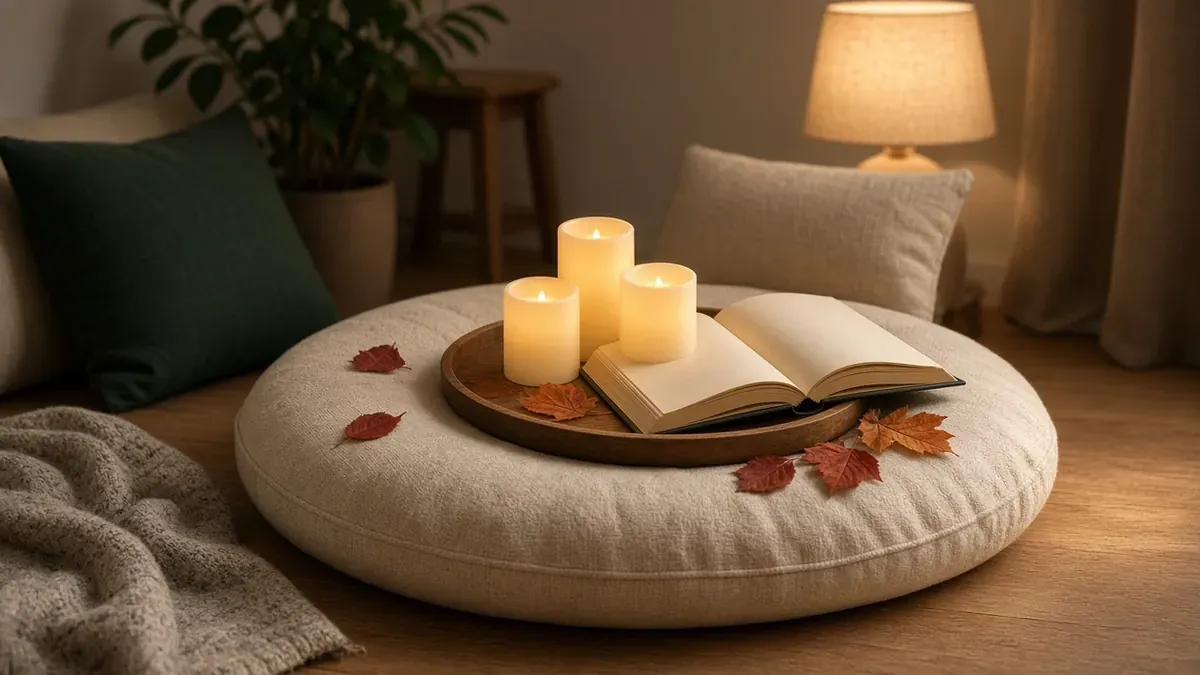
Choose one chair or a floor cushion near a window or lamp. Add a blanket, a small table, and a book. Then call it your spot for slow evenings. Even a small apartment has room for one corner like this.
5. Dress for Comfort
Put on wool socks, a soft sweater, or your oldest, comfiest layers. Warm clothes let you keep the heat moderate. Plus, they signal that the workday is over. Changing clothes right after work makes a simple, clear transition.
Rituals 6–10: Slow Food and Quiet Evenings
Food and pace come next. These rituals turn ordinary evenings into small events.
6. Host a Soup Night
Make one big pot of soup or stew from pantry staples. Seasonal vegetables, beans, and lentils keep costs low. Then let it simmer while the house fills with a warm smell. Freeze extra portions for busy nights later in the week.
7. Create a Hot Drink Ritual
Brew tea, cocoa, warm milk, or warm (non-alcoholic) apple cider slowly. Do not rush it. Choose a favorite mug every time. Also, favor caffeine-free options in the evening if late caffeine keeps you awake. A pinch of cinnamon or a slice of orange adds a seasonal note for pennies.
8. Bake Something Simple
Try a basic bread, oat cookies, or baked apples. Baking takes time, so it naturally slows the evening. Even better, the leftovers make a small gift for a neighbor. Simple recipes with flour, oats, and apples keep the cost down.
9. Plan a Screen-Free Hour
Pick one hour each evening to put phones and screens away. Instead, talk, read, stretch, or simply sit with a hot drink. Start small, then extend it if you enjoy it. Moreover, a basket by the door gives phones a clear place to rest.
10. Bring Out Games and Puzzles
Card games, board games, and jigsaw puzzles invite easy conversation. Plus, they cost little after the first purchase, and thrift stores often sell them cheaply. They also work well for one person. So keep a puzzle on a side table and add a few pieces each night.
Rituals 11–15: Walks, Books, and Good Company
Coziness also happens outside and with others. These final five rituals round out your fall.
11. Take a Golden-Hour Walk
Walk in the late afternoon while there is still daylight. Notice leaves, cool air, and early lamplight in windows. Then come home to a warm drink. A friend or a dog makes the walk even more enjoyable. For regular company, try these tips to find a walking club.
12. Start a Fall Reading Habit
Borrow books from your local library to keep costs at zero. Read a chapter in your cozy corner each evening. Likewise, audiobooks pair well with knitting or folding laundry. Many libraries also lend audiobooks and e-books for free.
13. Share a Potluck Gathering
Invite a few friends and ask each person to bring one dish. Keep the table simple and the guest list small. That way, hosting stays relaxed and affordable. Candles can stay flameless, and the music can stay low.
14. Make Something With Your Hands
Knit, draw, write letters, or press autumn leaves. Handwork keeps your hands busy while your mind settles. Besides, a handwritten note often means more than a text. Free materials like leaves, twigs, and scrap paper work fine. For a keepsake project, follow this simple guide to pressed flowers.
15. Close the Day With a Wind-Down Routine
Tidy one surface and dim the lights. Blow out any candles before bed.
Then write three small good things from the day. This quiet finish ends the evening on a gentle note. Over time, the routine becomes a signal that rest is near.
That completes the 15 rituals. Mix and match them freely.
A Cozy Home on a Budget
You can create a cozy home without a shopping spree. Start with what you already have.
First, rearrange before you buy. Move a lamp closer to a chair, or turn the sofa toward a window. Small changes often matter more than new items.
Next, shop your closets. Spare blankets, scarves, and pillows can become a throw pile. Similarly, old jars can hold dried leaves, pinecones, or a flameless candle.
Then bring the outdoors in. Branches, acorns, and seasonal squash add color for free or for very little. Just wash anything you bring inside and keep it away from heat sources.
Finally, declutter one area. A clear surface feels calmer than a crowded one. So clear the coffee table, add one blanket and one book, and stop there.
Also, think about sound and scent. Soft music at low volume adds warmth for free. Meanwhile, a simmering pot of cinnamon sticks and orange peel on the stove can scent the kitchen without candles, as long as you stay in the room while it heats.
Budget-friendly swaps:
- Overhead light → a lamp with a warm bulb.
- New decor → nature finds and rearranged furniture.
- Restaurant dinner → soup night or potluck.
- Streaming marathon → library books and puzzles.

A Simple Weekly Hygge Plan
A plan makes new habits easier. Use this table as a starting point.
| Day | Ritual | Approximate cost |
|---|---|---|
| Monday | Warm light and a screen-free hour | Free |
| Tuesday | Hot drink ritual and a chapter of a book | Very low |
| Wednesday | Soup night with pantry staples | Low |
| Thursday | Golden-hour walk | Free |
| Friday | Games or a jigsaw puzzle | Free if you own one |
| Saturday | Small potluck with friends | Shared |
| Sunday | Baking plus a wind-down routine | Low |
Of course, you do not need to follow it exactly. Busy weeks happen, and a single cozy evening still counts. Instead, choose the rituals that suit your schedule and energy. That flexibility is part of how to hygge well.
Also, notice which evenings feel best. Then repeat those. Over a few weeks, your own version will take shape.
Making Cozy Rituals Work in Any Home
Every home can feel warm. The approach just changes with your space and household.
Renters and small apartments. Use lamps, plug-in string lights, and removable hooks instead of new fixtures. Then let one corner carry the mood. A rug and a throw can soften even a bare room.
Families with kids. Choose flameless candles and child-friendly rituals, such as puzzles, baking, and reading aloud. Also, let kids pick the soup or the game. That way, they feel part of the evening.
Homes with pets. Keep flames and hot drinks out of reach of curious paws and tails. Instead, rely on lamps and blankets for warmth and glow.
Living alone. Solo time counts too. So set the table for yourself, light a lamp, and enjoy a slow meal. Then call or message a friend afterward.
Shared homes and roommates. Agree on one shared evening a week. For example, take turns choosing a meal or a movie. Even one shared hour can make a busy home feel warmer.
Above all, adapt the ideas instead of copying them. The best version fits your life, your budget, and your space.
Common Hygge Mistakes
A few habits can undo the cozy feeling. Fortunately, each one has an easy fix.
- Buying instead of doing. Products are optional. Time and attention matter more.
- Trying every ritual at once. Start with two or three, then build slowly.
- Leaving candles unattended. Blow them out before leaving a room or going to sleep.
- Turning it into a performance. Coziness does not need photos or a perfect setup.
- Skipping company entirely. Solo time is lovely, yet shared time is part of the idea too.
- Forgetting fresh air. A short daytime walk balances long evenings indoors.
- Overheating the room. A cooler room plus a blanket often feels cozier than cranking up the heat.
- Ignoring the mess. A cluttered table pulls attention away. So clear one surface before you settle in.
Another mistake is expecting cozy habits to fix everything. Comfort helps, yet it has limits.
These rituals offer a way to enjoy comfort, not a solution for every hard season. So keep expectations gentle and realistic. Some evenings will feel cozy, and others will just feel ordinary. That is completely normal.
Who Should Be Careful
Cozy should also mean safe. Review these points before you light up or heat up.
- Candles: Never leave candles unattended. The USFA advises keeping them at least 12 inches from anything that burns, blowing them out when you leave a room or go to bed, and not using lit candles in bedrooms or sleeping areas. The NFPA also suggests flameless candles. Keep flames away from curtains, kids, and pets.
- Space heaters and fireplaces: The USFA heating guide says to keep anything that can burn at least 3 feet from heat sources and to turn space heaters off when you leave the room or go to bed.
- Carbon monoxide: The USFA carbon monoxide page recommends CO alarms outside each sleeping area and on every level, plus clear vents for the furnace and fireplace.
- Hot drinks: Let drinks cool slightly, and keep mugs away from small children.
- Caffeine and alcohol: The FDA notes wide variation in caffeine sensitivity. Non-alcoholic drinks suit these evenings well; if you drink alcohol, keep it moderate.
- Walking after dark: NHTSA advises walking on sidewalks, facing traffic if there is none, and crossing at crosswalks or intersections, or in a well-lit area if none is available.
When to See a Doctor
Cozy rituals bring comfort, but they are not medical care. Watch for signs that need more support.
The National Institute of Mental Health explains that seasonal affective disorder (SAD) symptoms often start in late fall or early winter. Its listed signs include:
- A persistent sad or "empty" mood most of the day, nearly every day, for at least 2 weeks.
- Loss of interest or pleasure in hobbies and activities.
- Changes in sleep or appetite.
- Low energy, oversleeping, or social withdrawal.
If you notice signs like these, NIMH advises talking to a health care provider or a mental health specialist. Hygge is not a substitute for that care.
If you or someone you know is struggling or having thoughts of suicide, NIMH says to call or text the 988 Suicide and Crisis Lifeline at 988. The Lifeline is available 24/7. In life-threatening situations, call 911.

Hygge FAQ
How do you pronounce hygge?
Denmark's official site spells it as "hooga" in English. So say it softly, and do not worry about perfection.
What is the simplest hygge meaning?
It means slowing down for warm moments. You can enjoy them alone or with people you care about.
How to hygge on a tight budget?
Use lamps, blankets, library books, and pantry meals. Most rituals in this guide cost little or nothing. Start with what you own before buying anything.
Do you need candles?
No. Warm lamps or flameless candles create a similar glow with less fire risk.
Can you practice hygge alone?
Yes. The official Danish description includes time by yourself. So a quiet evening with a book and a hot drink counts.
Is hygge only for fall and winter?
No. Denmark.dk mentions summer picnics too. Still, shorter days make it especially appealing in fall.
Your Coziest Fall Starts Tonight
You do not need to wait for the perfect setup. Instead, choose one ritual and try it this evening.
Now you know the hygge meaning, where the word comes from, and how to start with what you already own. You also have 15 rituals, a weekly plan, and the safety basics for candles, heaters, and hot drinks.
So dim the lights, pour something warm, and put the phone away for an hour. Then invite someone over, or simply enjoy the quiet.
Above all, keep it simple, safe, and kind to yourself. The darker months last a while, so pace yourself and let the rituals grow slowly. Before long, the shorter days may feel like something to look forward to.
You may also like

Earthing 101: How to Try Grounding and What Research Says
Curious about earthing? Learn what grounding involves, six simple daily rituals, safety tips for every season, and what…

Candle Making for Beginners: Soy Wax, Wicks & Safety Basics
A calm beginner guide to candle making: pick soy wax, size a candle wick, set a safe workspace, pour and rest the jar, t…
A Slow Fall Guide to Pressed Flowers
Set aside one dry hour, press a few legal stems, and write five lines before you go inside. Leave the rest of the patch…