Earthing 101: How to Try Grounding and What Research Says
Curious about earthing? Learn what grounding involves, six simple daily rituals, safety tips for every season, and what the small published studies show.
In this article
- What Earthing Means
- Earthing vs. Grounding: Same Idea, Different Names
- How to Try Earthing Safely
- Simple Daily Earthing Rituals
- Grounding Outside Through the Seasons
- Indoor Products: Mats, Sheets, and Patches
- Is Grounding Real? What the Studies Show
- Hype vs. Honest Takeaways
- From Our Garden
- Who Should Be Careful
- When to See a Doctor
- Why Barefoot Time Can Feel Pleasant
- Common Earthing Mistakes
- Earthing FAQ
- The Bottom Line on Earthing
Earthing means letting your bare skin touch the ground, such as grass, soil, or sand. Fans say this simple contact feels calming, and the idea has spread fast online. However, popular posts often promise far more than the research can support.
So this guide takes a balanced path. First, you learn what the practice involves and how to try it with care. Then you see what the published studies actually report, who ran them, and why the results remain preliminary.
You also get practical safety notes. After all, bare feet meet broken glass, ticks, and cold ground. Some people, including many with diabetes, should skip barefoot walking entirely.
What you will get from this guide:
- A plain-language definition of earthing and grounding.
- Simple daily rituals for barefoot time outdoors.
- An honest look at the studies behind the claims.
- A clear table separating hype from what the evidence shows.
- Safety notes on sharp objects, ticks, cold, and storms.
- Short FAQ answers to common questions.
What Earthing Means
Earthing describes direct skin contact with the earth's surface. Most people call it grounding, too, and both names point to one simple habit.
In practice, it usually means standing or walking barefoot on grass, soil, sand, or stone. Some people also sit with their hands in the dirt or lie on a blanket-free patch of lawn. Meanwhile, others use indoor products that connect to the ground through wires.
Interestingly, the idea behind this practice comes from physics. The earth's surface carries electrons, and the human body conducts electricity. Supporters propose that skin contact lets those electrons move into the body. According to a 2012 review on PubMed Central, that proposed mechanism forms the core theory behind the practice.
Still, a theory differs from proof. As a result, this guide frames it as a pleasant outdoor habit rather than a medical tool. That framing keeps your expectations realistic and your feet safe.
Here is what earthing involves at its simplest:
- Bare skin touching natural ground.
- Time spent outside, often in quiet surroundings.
- No special equipment for the outdoor version.
- A slower pace than your usual day.
Earthing vs. Grounding: Same Idea, Different Names
Both words describe the same basic practice. In fact, writers swap them freely.
"Grounding" borrows from electrical language, where a grounded wire connects to the earth. "Earthing" carries the same meaning in British English. Therefore, articles, products, and studies often use either word.
However, the terms can blur two very different things. Barefoot earthing outdoors costs nothing and requires nothing. Indoor grounding, by contrast, relies on mats, sheets, or patches sold by companies.
That difference matters when you read research. The 2012 PMC review notes that the studies it summarized used indoor testing methods under controlled conditions that simulate being barefoot outdoors. In other words, much of the research tested products, not a walk on your lawn.
Keep that distinction in mind as you read on. Above all, remember that a pleasant barefoot stroll and a product claim deserve different levels of trust.
How to Try Earthing Safely
Start small, choose a safe spot, and check your feet afterward. These steps keep your first try simple.
- Pick a clean, familiar patch of grass, sand, or soil.
- Scan the ground for glass, nails, thorns, and animal waste.
- Check the weather forecast, and stay indoors if storms threaten.
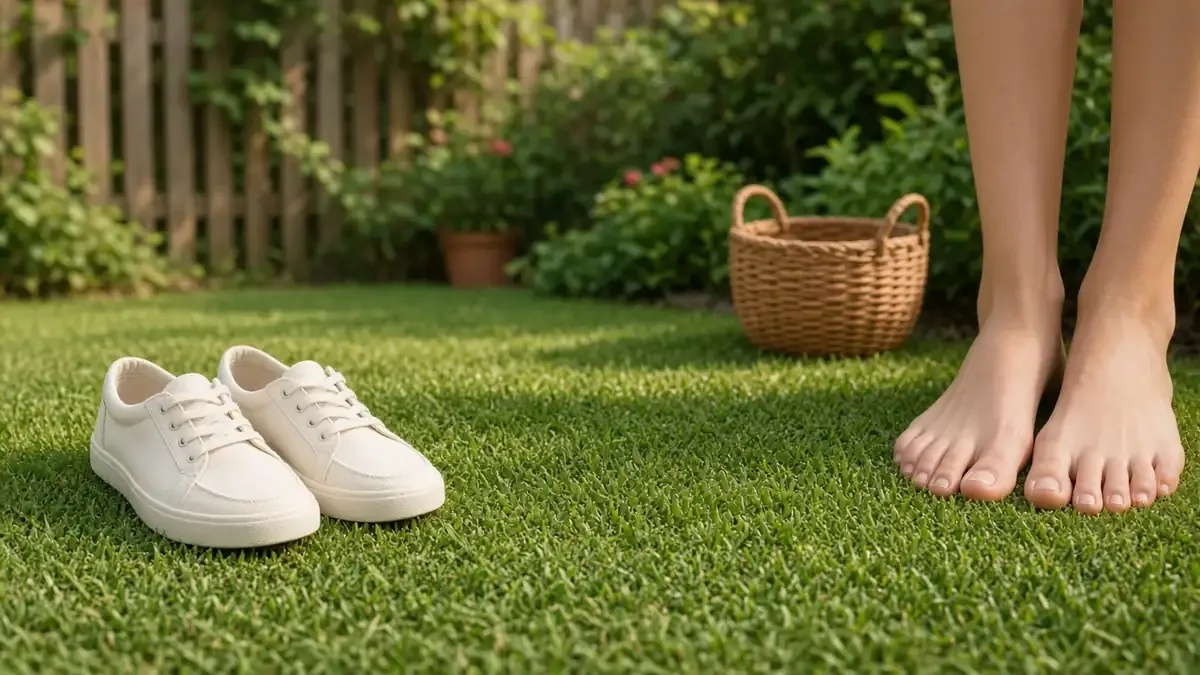
- Take off your shoes and stand still for a few minutes.
- Next, walk slowly, paying attention to texture and temperature.
- Then breathe calmly and notice your surroundings.
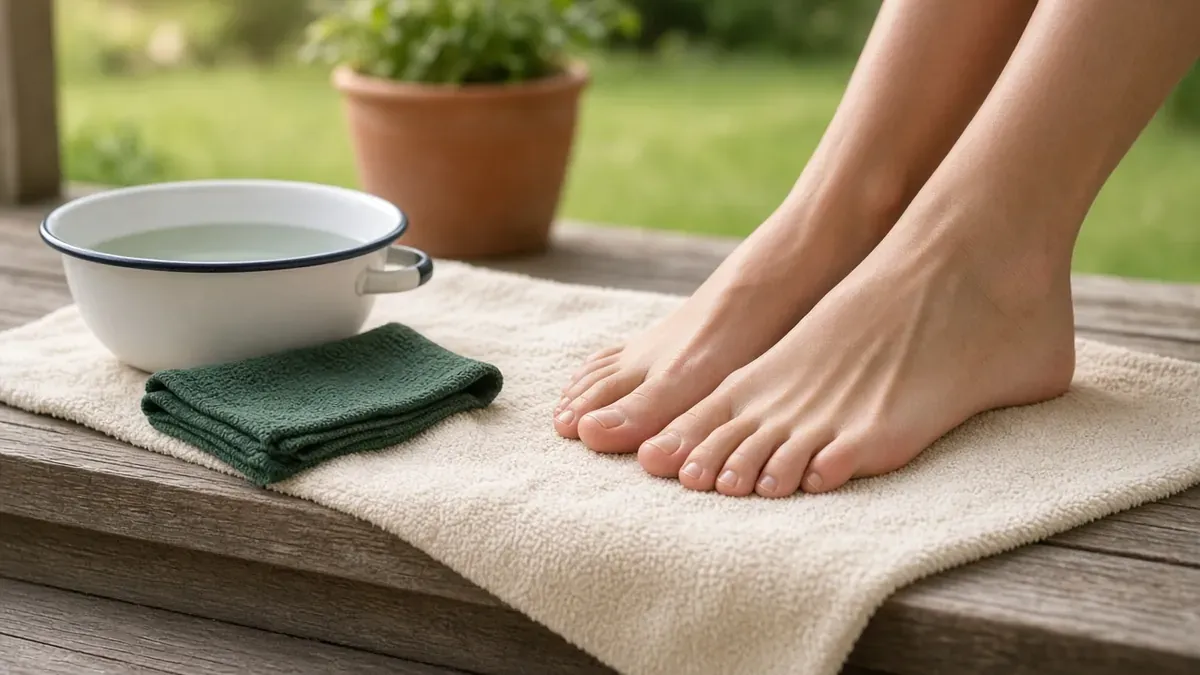
- Afterward, wash your feet and look for cuts or splinters.
- Do a tick check if you spent time near tall grass or brush.
At first, keep sessions short, especially if your feet feel tender. Over time, your soles may grow more used to natural surfaces. Nevertheless, comfort should always guide you.
Your own backyard often works best. You know its hazards, and you can clear debris ahead of time. Likewise, a well-kept park lawn or a clean beach can serve the same purpose.
Simple Daily Earthing Rituals
Rituals turn a one-time experiment into an easy habit. Ideally, keep them short and enjoyable.
Try these ideas:
- Drink your morning coffee standing barefoot on the lawn.
- Stretch on the grass for a few minutes after work.
- Walk along the waterline on a clean beach.
- Sit on a garden bench with your feet on the soil.
- Pull weeds by hand and enjoy the feel of the dirt.
- Read a book outside with your shoes off.
Notably, none of these rituals needs a timer or a goal. Instead, they invite you to slow down and notice where you are. Many people simply enjoy that pause.
Like time among plants? Read our beginner guide to safe foraging.
Pair barefoot time with something you already do. For example, step outside barefoot while your tea steeps. That way, the habit attaches to an existing routine and sticks more easily.
Also, keep realistic expectations. These rituals offer fresh air, a change of scene, and a quiet break. Any feeling beyond that varies from person to person.
Grounding Outside Through the Seasons
Each season changes how grounding outside feels and what risks you face. So adjust your habit as the weather shifts.
In spring and summer, grass and soil feel inviting. However, ticks stay most active during warmer months, according to the CDC's tick bite page. Therefore, walk in the center of trails and avoid high grass and leaf litter.
Meanwhile, hot pavement and sun-baked sand can burn bare skin. So test surfaces with your hand first, and choose shaded or damp spots on hot days.
Later, in autumn, fallen leaves can hide sharp twigs, acorns, and debris. So rake a small patch or stick to open lawn. Meanwhile, morning dew can make grass slippery, so step carefully.
Finally, winter calls for the most caution. The CDC's winter weather page warns that frostbite can happen with exposure to extremely cold temperatures. As a result, grounding outside on frozen or snowy ground makes little sense. Instead, wait for milder days or keep sessions extremely brief.
Ultimately, grounding outside should feel pleasant. If it hurts or numbs your feet, stop and warm up.
Indoor Products: Mats, Sheets, and Patches
Companies sell many indoor earthing products. Typically, they promise convenience, but they also cost money.
The 2012 PMC review describes studies that used conductive mattress pads, adhesive patches, and copper plates connected to the earth. According to the review, these systems aim to simulate barefoot contact while people sleep, work, or relax indoors.
Before you buy anything, ask a few questions:
- Does the seller make medical promises? If so, see that as a red flag.
- Does the company cite independent research, or only its own?
- Can you return the product if you dislike it?
- Do you actually prefer indoor time over a walk outside?
Notice that the outdoor version costs nothing. Consequently, many people start barefoot outside and decide later whether a product interests them at all.
If you do buy a product, follow the manufacturer's instructions exactly. If a product plugs into a wall outlet, use only a properly wired, grounded outlet, and stop using it if a cord or plug looks damaged. If you are unsure about your home wiring, ask a licensed electrician. Above all, never let any product replace care from your clinician.
Is Grounding Real? What the Studies Show
Many people ask one big question. Is grounding real? The honest answer stays complicated, so it helps to look closely at the studies.
First, consider the best-known overview, a 2012 review in the Journal of Environmental and Public Health. It summarizes several grounding studies, and it describes many of them as pilot studies. For example, one involved 12 subjects, another 58 healthy adults, and another 60 people with sleep and pain complaints.
Some small studies reported changes in self-reported sleep, pain, and stress measures. However, many relied on what participants said they felt, which makes results harder to judge. The review itself mentions that future studies could use a larger subject base.
There is also another important detail. The review's disclosure states that three of its authors work as independent contractors for the company that sponsors earthing research, and they own a small share of it. That conflict does not prove the findings wrong. Still, it means you should read the results with caution.
So, is grounding real as a health intervention? Researchers have not shown that clearly. Larger, independent trials would help answer that question. Until then, think of it as a pleasant habit, not a medical solution.

Hype vs. Honest Takeaways
Online claims often outrun the evidence. For that reason, this table sorts common messages from careful ones.
| Online claim (not supported) | What the evidence supports | Honest way to say it |
|---|---|---|
| Big promises about sleep | Some small pilot studies reported self-reported sleep changes (2012 PMC review) | Some small studies reported sleep changes; larger trials would help |
| Big promises about chronic pain | Small studies relied largely on self-reports (2012 PMC review) | Results remain preliminary and uncertain |
| Claims of scientific proof | Key review authors had company ties | Evidence is early and partly industry-linked |
| Claims that indoor mats equal outdoor contact | Studies mostly tested indoor products | Product research does not cover every product |
| Claims that everyone should go barefoot | NIDDK advises people with diabetes to avoid barefoot walking | Barefoot time does not suit everyone |
Notice the pattern. In short, strong claims rarely match the size and independence of the studies. Therefore, use cautious language, and question anyone who promises certainty.
If you still want to know "is grounding real" for you personally, try a safe barefoot walk. Then judge it as an experience, not a medical result.
Curious about another popular sleep topic? See our magnesium glycinate for sleep guide.
From Our Garden
This short note comes from the site owner. It describes a personal feeling only.
From Our Garden
I sometimes walk barefoot on bare earth, and my legs feel good afterward.
That is one person's experience, not proof, and your results may vary.
Read this note as a simple description of a pleasant moment outdoors. It does not show that earthing changes anything in the body. In fact, fresh air, movement, and a slower pace could explain why a barefoot walk feels nice.
Who Should Be Careful
Bare feet face real hazards. So review these cautions before your first session.
- Sharp objects: Broken glass, nails, thorns, and stones can cut your feet. Scan the ground first, and choose familiar, well-kept spots.
- Ticks: The CDC notes that ticks live in grassy, brushy, or wooded areas, and many people pick them up in their own yard. Afterward, check your body, shower soon, and examine pets and clothing.
- Cold surfaces: Frozen ground can harm bare skin. According to the CDC, frostbite can happen in extremely cold temperatures, so limit your time outside.
- Diabetes or foot neuropathy: The NIDDK advises people with diabetes not to walk barefoot, even indoors, because nerve damage can hide injuries. It also recommends checking your feet every day. So talk with your clinician before trying any barefoot practice.
- Thunderstorms: The National Weather Service says the only completely safe action during a thunderstorm is to get inside a safe building or vehicle. Wait 30 minutes after the last thunder before heading back out.
- Downed power lines: The National Weather Service warns that power lines lying on the ground may be live. Never go near them.
Also, anyone with circulation problems, open wounds, or skin conditions on the feet should ask a clinician first. Likewise, ask before starting if you feel unsure about your balance.
When to See a Doctor
Fortunately, most barefoot walks end without trouble. Still, some signs need medical attention.
Contact a clinician if you notice:
- A cut, blister, or bruise on your foot that is not getting better after a few days.
- Skin that turns red, warm, or painful, which the NIDDK lists as possible signs of infection.
- A rash or fever within several weeks after removing a tick, as the CDC's tick bite guidance advises.
- New numbness, tingling, or loss of feeling in your feet.
- Pale, hard, or numb skin after time on cold ground.
If you have diabetes, call your provider right away about foot problems, as NIDDK recommends. Also, tell your doctor about any recent tick bite, when it happened, and where you were.
Above all, earthing never replaces medical care. If you live with any health condition, keep following your care plan. Then mention barefoot habits at your next visit so your clinician knows the full picture.
Why Barefoot Time Can Feel Pleasant
You do not need a theory to enjoy the outdoors. Simple factors often explain the appeal.
First, barefoot time usually happens outside, away from screens. That change of scene alone can feel refreshing. In addition, you tend to move slowly and pay attention to texture, temperature, and sound.
Second, the ritual itself creates a pause. For instance, standing on the lawn with your morning coffee gives you a few quiet minutes before the day starts. Many people simply value that break, whatever they call it.
Third, earthing often pairs with gentle movement. A slow walk on grass or sand feels different from a walk in shoes. As a result, you may notice your feet and posture more than usual. For company on longer strolls, see our guide to finding a walking club.
None of this requires electrons or special products. However, it does explain why so many people enjoy barefoot time without needing a scientific claim. So if you like how it feels, that reason alone can justify a safe, short session.
Still, keep the line clear between feeling and proof. After all, a pleasant experience tells you about your day, not about your biology. That honest framing lets you enjoy the habit without buying into hype.
Here are a few ways to make barefoot time more enjoyable:
- Choose a quiet time of day with few distractions.
- Leave your phone inside for a few minutes.
- Notice five things you can hear, see, or feel.
- End with a short stretch before you put your shoes back on.
Common Earthing Mistakes
A few simple slips cause most barefoot problems. Avoid these, and your sessions stay comfortable.
- Skipping the ground check. Glass and thorns hide in grass, so scan first.
- Going out during storms. Lightning risk outweighs any barefoot ritual.
- Ignoring ticks. Grassy spots can carry ticks, so do a full body check afterward.
- Walking on hot pavement. Bare skin burns quickly, especially on sun-baked surfaces.
- Staying out on frozen ground. Cold surfaces can damage skin fast.
- Believing big promises. Earthing research remains small and preliminary.
- Buying products on impulse. The outdoor version costs nothing, so try it first.
- Replacing care with grounding. Keep every appointment and follow your clinician's advice.
Another common slip involves pace. Some people jump into long sessions on rough ground and end up sore. Instead, start with a few minutes on soft grass. Gradually, you will learn what feels comfortable for your feet.
Earthing FAQ
Here are quick answers to common questions. Each one stays short.
Is grounding real or just hype?
The evidence remains early and uncertain. Some small studies reported changes, but samples stayed small and some authors had industry ties. Therefore, larger independent trials would help.
How long should an earthing session last?
No proven ideal length exists. Instead, start with a few minutes and stop whenever you feel uncomfortable.
Does grounding outside work on concrete?
Supporters often name grass, soil, sand, and unsealed stone. However, research has not settled which surfaces matter.
Can people with diabetes try earthing?
NIDDK advises against barefoot walking for people with diabetes, so talk with your clinician first.
Do I need an earthing mat?
No. Barefoot time outdoors costs nothing, so any product remains optional.
Can earthing replace medical care?
No. Earthing never replaces medical care, so keep following your care plan.
The Bottom Line on Earthing
Earthing offers a simple excuse to slow down outdoors. Keep it safe and honest.
You now know what grounding means, how to try it, and what the research actually shows. The studies remain small, preliminary, and partly tied to industry. Therefore, enjoy barefoot time as an experience, not a medical fix.
Before your next session, run through this quick checklist:
- A clean, familiar patch of ground.
- A clear weather forecast with no storms.
- Comfortable, mild temperatures.
- A plan to check your feet and skin afterward.
Above all, protect your feet and respect your health needs. If you have diabetes, foot problems, or any condition, ask your clinician first. Then step outside, take off your shoes if it suits you, and enjoy a quiet few minutes of earthing.
You may also like

How to Hygge This Fall: 15 Cozy, Low-Cost Rituals for Shorter Days
Hygge is the Danish habit of slowing down for warm, simple moments. Try 15 low-cost fall rituals, from soup nights to go…

Candle Making for Beginners: Soy Wax, Wicks & Safety Basics
A calm beginner guide to candle making: pick soy wax, size a candle wick, set a safe workspace, pour and rest the jar, t…

A Slow Fall Guide to Pressed Flowers
Set aside one dry hour, press a few legal stems, and write five lines before you go inside. Leave the rest of the patch…