A Slow Fall Guide to Pressed Flowers
Set aside one dry hour, press a few legal stems, and write five lines before you go inside. Leave the rest of the patch standing for bees.
In this article
- Why Pressed Flowers Fit a Fall Weekend
- Walk Before You Choose a Stem
- Take Only What Rules and Hosts Allow
- Build a Press From a Book or Boards
- Layer Each Stem and Keep It Dry
- Handle Thin Petals and Thick Centers
- Use Nature Journaling While You Wait
- Turn Flat Blooms Into Pressed Flower Art
- Store the Stack Dry and Dark
- Who Should Be Careful
- When to See a Doctor
- Pressed Flowers FAQ
- Keep the Next Walk Short
You can make pressed flowers this fall without a craft room. Pressed flowers need only legal plants, a heavy book or two boards, and one quiet hour off your phone.
Start with a walk, and look before you pick. One common stem can become a flat bloom, a notebook page, and a card you keep. Fall still offers color in many yards, from asters and goldenrod to seed heads and colored leaves.
You do not need a rare wildflower. You need a plant you may take, a dry day, and a few lines about what you saw. Skip wet stems, because water in the paper invites mold. Never taste a leaf to test a name you do not trust.
What you will get from this guide:
- A three-part ritual: observe, press, and write.
- A book method and a board-and-strap method.
- Timing notes for thin blooms and thick centers.
- A nature journaling page you can repeat each week.
- Simple pressed flower art for cards, bookmarks, and frames.
- Clear stops for rash, allergies, mold, kids, and pets.
From Our Garden
I spent a weekend outside in nature at my aunt’s, with no screen.
Why Pressed Flowers Fit a Fall Weekend
Fall gives you a reason to slow down.
Pressed flowers reward that slower look, because you notice shape and color before the stem goes flat.
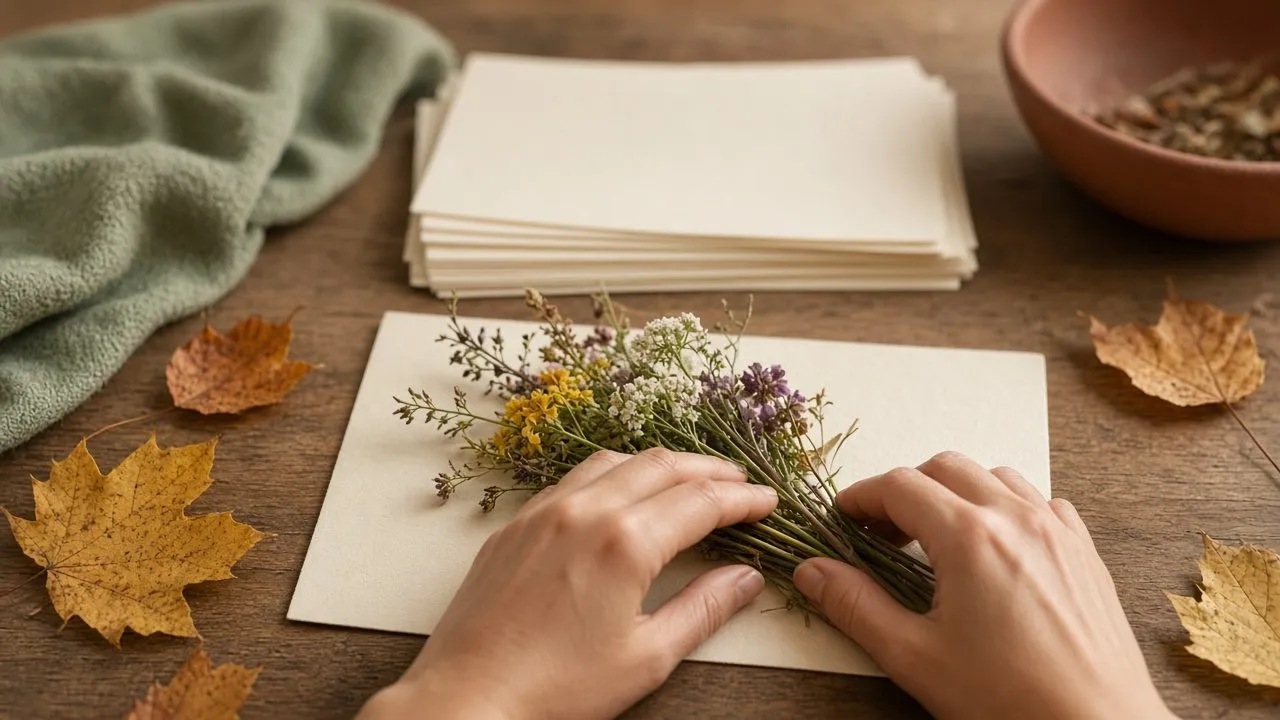
Keep the ritual in three steps. Walk and observe first. Then press only what you may take, and write a page while the paper dries.
You can set up the stack in one afternoon. The drying still takes days.
Leave your phone in the house for the walk. Write the date, name the spot, and sketch what you see. A handful of stems beats a bucket. Pollinators still need the flowers you leave outside, so see our fall pollinator garden at home.
Saturday can hold the walk and the press. Sunday can hold a short check of your pressed flowers and five written lines. Stop while the task still feels light. A browned petal can still show you when that plant flowered.
Walk Before You Choose a Stem
Give the yard ten unhurried minutes first.
Note what blooms, what has gone to seed, and which insects still visit. Those three notes will feed your page later. You can also join a local walking club on another weekend.
Pick a dry window if you plan to cut stems for pressed flowers. Morning dew and rain leave water on petals. The UC ANR garden notes page says water on flowers can lead them to rot or mold.
It suggests you pick after dew dries, or in the evening before dew returns. Then press before the stems wilt. See the UC ANR notes on pressing flowers.
Choose common plants you can spare. Flat flowers and single leaves lie smoother than dense heads. Look at the leaf underside, the petal edge, and the way the stem branches.
Carry questions, not a shopping list. Which plant still feeds bees this late, and what color hides under that leaf? If you feel unsure of the species, write "unknown yellow composite". Do not pretend you identified a plant you only half remember.
Take Only What Rules and Hosts Allow
Ask before you pick on private land.
The University of Connecticut herbarium lesson tells students to get the landowner's permission and any permit the site requires. That rule fits a home ritual too.
Public land can ban collecting even when plants look common. Shenandoah National Park says the law protects park plants. The park bars visitors from disturbing or collecting them under 36 CFR §2.1(c).
Flowers, seeds, leaves, branches, and roots all fall under that rule on the park page. Some fruits have a narrow exception there, and research collecting needs a permit. Read Shenandoah rules for collecting plants before you assume another park matches it.
Skip plants that are scarce in your region. Take one stem from a large patch, not the last bloom, and leave flowers for pollinators. When you doubt the rule, press nothing that day. Save pressed flowers for plants you can honestly spare.
Build a Press From a Book or Boards
You can press with tools you already own.
Pick one setup and keep it for the whole batch. A match between tools and plant thickness matters more than a fancy kit.
| Press. | Pieces. | Good use. | Main risk. |
|---|---|---|---|
| Heavy book. | Old book, blotter or newspaper, and more weight on top. | A few thin blooms. | Ink can transfer, and pages can stain. |
| Boards and straps. | Two flat boards, cardboard, blotter, and two straps. | A small weekend batch. | Loose straps let stems curl. |
| Bolt press. | Two boards, bolts, wing nuts, and smooth cardboard. | A ritual you repeat. | Ridged cardboard can print lines. |
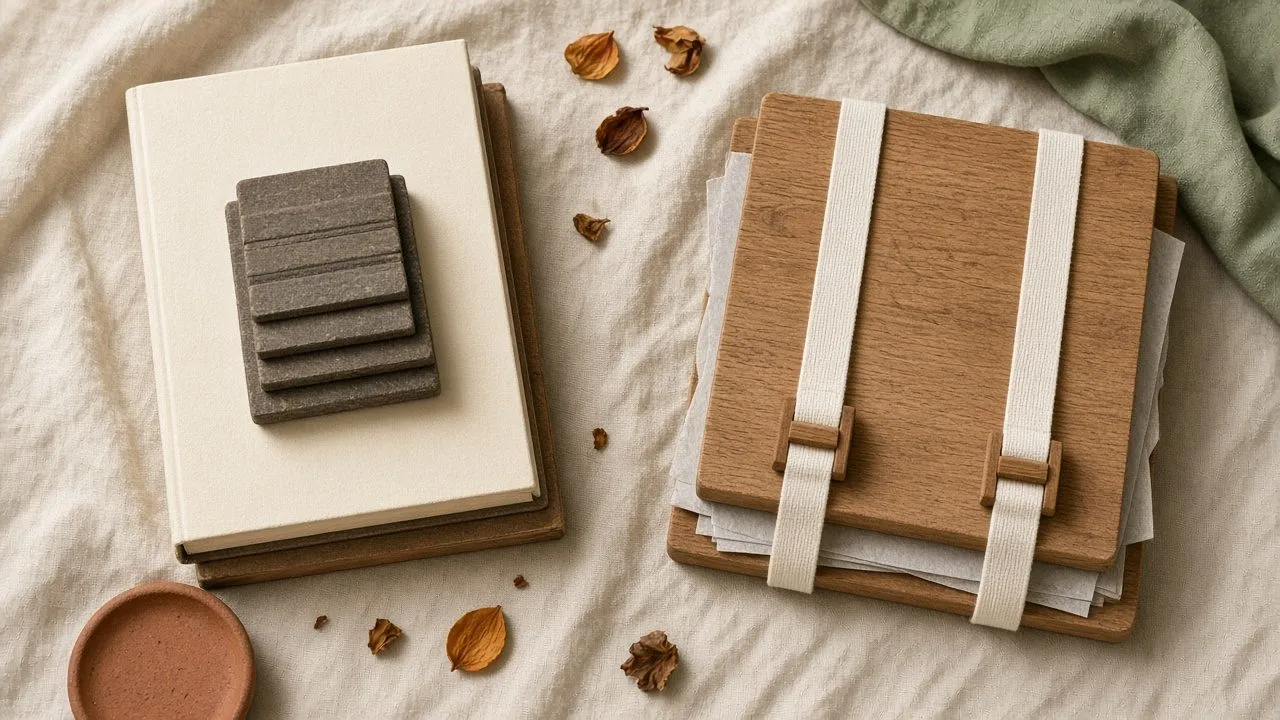
UC ANR suggests blotting paper, watercolor paper, or plain construction paper. Patterned paper towels can transfer the pattern onto petals. That page also says corrugated cardboard can leave lines, so use smooth board for a clean craft face.
UConn builds a science press in another way. It places corrugated cardboard between blotters and newsprint so air can move, then pulls straps tight to limit mold.
Newspaper can stand in for blotter. Ink may mark pale petals, so slip a clean sheet between dark newsprint and the bloom. Use an old book you will not read again.
UC ANR notes that flowers can stain and warp pages. Set this press in a warm, dry room, off a damp floor, before you layer pressed flowers inside it.
Layer Each Stem and Keep It Dry
Do not press wet plants at all.
Shake off dirt, and wait if a petal still glistens. Do not pat extra water into the bloom.
Lay down the bottom board, or open the book. Add cardboard, then blotter or clean paper. Set each flower face down with space between pieces.
UC ANR says the flowers should not touch, and it says to group similar thickness on one sheet. A thick head beside a tiny floret holds the paper off the small piece.
Fold the paper over the plants, then add blotter and cardboard again. Close the book or add the top board. Pull straps firm, or add weight.
Tighten again as the plants shrink. UC ANR suggests a check every couple of days when you use wing nuts.
UConn shows a similar sandwich for specimens. Arrange each part you hope to see, and turn one leaf to show the underside. Fold or trim a long stem so it fits, but keep parts you may study later.
A warm attic can speed drying. Thorough drying helps you avoid mold.
Check pressed flowers after a few days. Swap damp paper for dry blotter, then close the press. Crisp leaves can come out. Soft centers stay in longer.
Handle Thin Petals and Thick Centers
Thinner blooms flatten faster than thick ones.
Small violets, single cosmos, fern tips, and many leaves can dry into clean shapes. Give them space and even pressure.
Thick centers need more time, or a careful trim. A rose, a zinnia, or a dense mum holds water in the middle. UC ANR notes that thick flowers tend to rot and mold before they dry, and it favors flatter centers. Split a thick head, lift out some inner petals, or press a few outer petals next to one leaf.
Keep thick pieces off the same sheet as paper-thin petals. The tall center holds the boards apart, and the thin pieces wrinkle. Expect color to shift as water leaves.
Reds may darken, and whites may turn cream. Write the fresh color in your notes. UConn suggests you record color, texture, and scent while the plant is fresh, because drying can erase them.
If a center stays soft, give that layer more days. Do not frame a damp center. Patience here protects the rest of your pressed flowers.
Use Nature Journaling While You Wait
Nature journaling starts the day you pick.
Open the notebook before the walk fades. Waiting until the press dries will blur the details you meant to keep.
Give each outing its own page. Put the date, the place, and the weather on the first lines. Add traits you can see, such as leaf edge, plant height, and any insects that visited. Sketch stems you may keep as pressed flowers.
Leave two open questions under the sketch. Use prompts like these, and answer only what you saw.
- Note where the color looked strongest on the plant.
- Note whether the leaf felt smooth, rough, or hairy.
- Note what still bloomed nearby and what had gone to seed.
- Note what you will look for on this route next week.
Do not lock in a species name you only half trust. Write "looks like goldenrod" and revise it later with a field guide. UConn asks collectors to record the date and a clear place while they collect. Also record traits that fade as plants dry.
"North fence under the maple" is enough for a home page. Treat nature journaling as a record, not a quiz. Nature journaling improves when you repeat the route and answer last week's questions in one new line.
Turn Flat Blooms Into Pressed Flower Art
Wait until every petal feels fully dry.
Pressed flower art starts only then. A petal that still bends needs more time, and a brittle, paper-dry piece is ready to move.
Try three small projects before you attempt a larger piece. Stop after one if the petals start to crack.
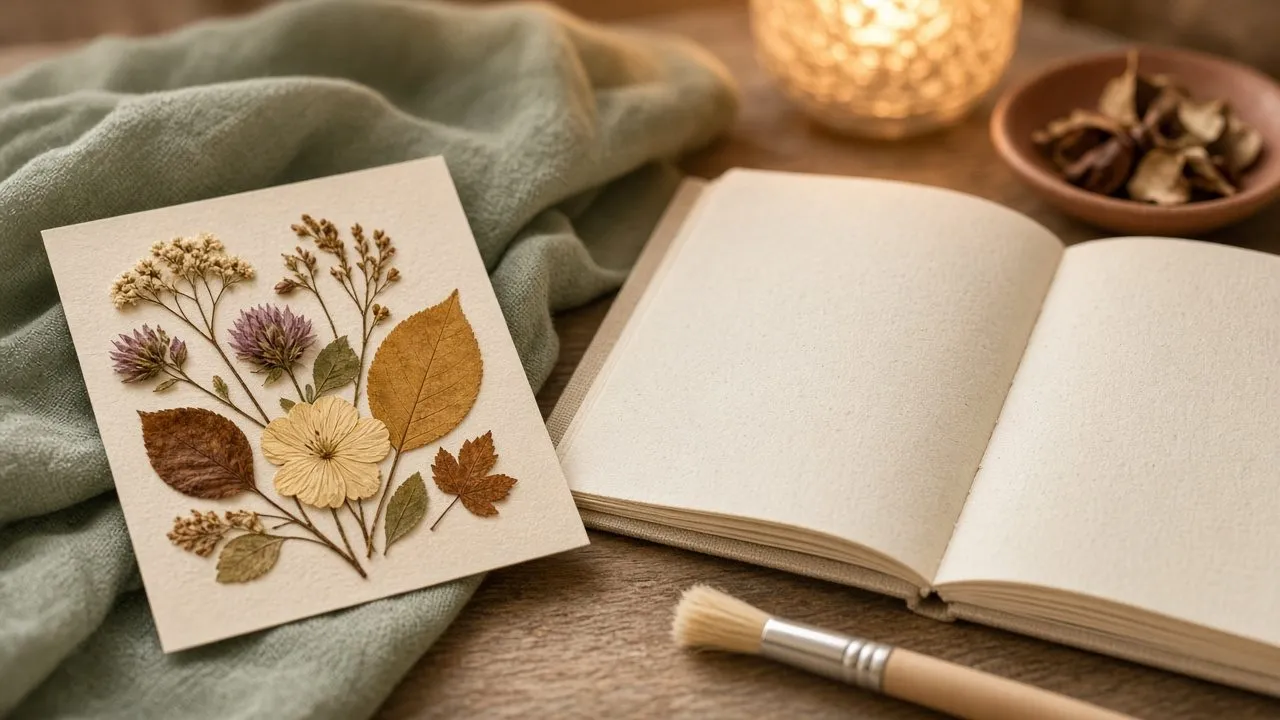
- A folded card with one leaf and one small bloom.
- A bookmark inside a laminate pouch, or between wax paper and cardstock.
- A glass frame with blooms on plain paper, covered so fingers do not rub them.
Plan the layout before any glue. Slide pressed flowers with tweezers. A tiny dot of white glue at the stem is enough, because a heavy coat can warp a petal.
UC ANR describes frames, bookmarks, and greeting cards. It also says to practice the layout first, since dry petals tear easily.
Keep pressed flower art out of steamy rooms and direct sun. Light fades color, and damp invites mold back. A drawer suits this work better than a kitchen window.
Pressed flower art should stay a light craft. One honest card beats a crowded frame, and you can keep a second piece at home.
Store the Stack Dry and Dark
Finished blooms still fail in damp air.
Mold uses leftover moisture and still air, so move each dry piece the day you open the press.
Slip cards and loose pressed flowers between clean sheets in a box or a large book. Leave a little space so pieces do not stick. Skip a musty basement and skip the refrigerator, because condensation wets paper.
Check the box once in the first week. If you see fuzzy spots or smell a sour odor, do not lean in to sniff. Seal that sheet in a bag, trash it, and wash your hands. Do not scrape mold off a bloom and still glue it to a card.
Write the month on the box so next year you can match pages to walks. Keep the box away from food, radiators, and sunny sills. Heat can crack petals, and sun can bleach them.
A closet shelf in a heated room is often enough. Open the box with dry hands, and shut it before steam from cooking reaches the paper. Dry storage lets pressed flowers last past the season.
Who Should Be Careful
Some plants irritate skin on contact.
Others cause harm if someone eats them. Poison Control explains that all parts of a plant may be risky, or only certain parts. Harm can run from mild irritation to severe illness.
Even plants on its non-poisonous cards can cause choking if eaten. The lists are a guide, not a free pass. Poison Control publishes a plant guide for this question.
Take extra care when any of these fit your household. A little caution beats a ruined weekend.
- You get a rash, itchy eyes, or tingling from weeds, pollen, or sap.
- You might touch poison ivy, poison oak, or poison sumac, which Poison Control lists as Toxicodendron.
- Children join the walk or can reach fresh stems and the press.
- Pets chew leaves, petals, or glued pieces you bring inside.
- You react strongly to mold and might open a damp press.
Poison Control tells families to watch young children outdoors. Also teach them to ask an adult before they eat or drink anything. Keep glue, fresh stems, and pressed flowers where small hands and pets cannot snack. Wash up after you pick and after you open the paper. Do not rub your eyes while sap stays on your fingers.
Do not taste unknown plants. Poison Control says to eat wild plants only when you know for certain what they are. People have died after mistaking hemlock for wild carrots.
When to See a Doctor
Call for help if someone eats a plant picked for pressed flowers.
This section tells you when to contact Poison Control or a clinician. It does not tell you how to treat a reaction at home.
Use 1-800-222-1222 if a person eats something from the walk. You can also use the web tool on Poison Control's plant page. Expert help depends on an accurate name, so bring a sample or a clear photo. Include the leaf, the stem, and the flower when you can do that safely. Do not invent a name to speed the call.
Seek urgent clinical care for trouble breathing or swelling of the face or mouth. Also seek care for a widespread blistering rash, or if a person seems very ill after plant contact. Call Poison Control right away if anyone eats a wild mushroom. Any amount of any wild mushroom could be very dangerous, because similar looks can hide real differences.
Call a veterinarian if a pet chews a stem or a piece of pressed flowers. Bring a plant sample, and do not offer kitchen mixes or oils as care. If moldy paper brings breathing trouble, chest tightness, or a rash, contact a clinician and throw the sheet away.
Pressed Flowers FAQ
Most pressed flowers need a fully dry start.
Soak a bloom and you fight mold from the first hour.
Can I press flowers after rain?
Wait until they dry on their own.
UC ANR warns that water on a flower can lead to rot or mold. A dry hour on your patio beats a wet ditch. Do not towel a soaked bloom and hope the stack will save it.
How long should the press stay closed?
Check after a few days, then decide.
Thin leaves may feel crisp within a week. UC ANR often waits about two weeks and says to tighten the press as plants shrink. Thick centers may need longer, or a trim before you start. If the center still bends, close the stack again.
What if I cannot name the plant?
Leave the name blank and keep the traits.
Write the place, the date, and what you see. Nature journaling can hold that open question. A guessed species can hide a toxic look-alike, so change the line later if a field guide corrects you.
May I pick flowers in a national park?
Do not assume the park allows pressed flowers.
Shenandoah National Park bars collecting flowers, leaves, and other plant parts. Limited fruit rules and a research permit are not a general pass. Check the park you will visit, because rules differ.
Can children help with the press?
Yes, with an adult who watches every hand.
That adult picks the plants and watches mouths too. Teach them not to taste the stems. Keep pets off the table while glue and loose petals sit out.
Keep the Next Walk Short
Repeat a smaller loop next weekend.
You do not need a bigger stack. You need a ritual you will actually run again.
Choose one route, one press, and one notebook page. Walk for about twenty minutes. Pick a few legal stems, or pick none and only sketch, then write five lines before you go inside. You can also follow a simple fall plan for garlic if a bed is open.
If last week's paper molded, change the setup first. Use drier paper, a warmer room, and a tighter strap, and discard the spoiled sheet.
Leave your phone in a drawer for that loop. Your notes can hold the color, the place, and the questions you still want to answer. Stop while the work feels light.
A small stack you open next month beats a huge press you forget. That habit is how pressed flowers stay part of fall instead of one crowded day.
You may also like
How to Hygge This Fall: 15 Cozy, Low-Cost Rituals for Shorter Days
Hygge is the Danish habit of slowing down for warm, simple moments. Try 15 low-cost fall rituals, from soup nights to go…
Earthing 101: How to Try Grounding and What Research Says
Curious about earthing? Learn what grounding involves, six simple daily rituals, safety tips for every season, and what…
Candle Making for Beginners: Soy Wax, Wicks & Safety Basics
A calm beginner guide to candle making: pick soy wax, size a candle wick, set a safe workspace, pour and rest the jar, t…