Fall Skin Barrier Reset When Indoor Heat Starts
Indoor heat dries skin fast. Use this autumn barrier reset for gentle cleansers, rich creams, humidifiers, and two-week progress tracking.
In this article
- Why Your Fall Skin Barrier Struggles When Heat Kicks On
- What Indoor Heat Dry Skin Really Means for Moisture Loss
- Signs You Need a Fall Skincare Reset Now
- Core Ingredients That Support a Fall Skin Barrier
- Switch Your Cleanser Without Stripping
- Layer Leave-Ons: Humectants Then Barrier Cream Then Occlusives
- Humidifier and Room Habits That Cut Water Loss
- Morning and Night Routines for Heated Rooms
- Natural Oils, Shea Butter, and Squalane: When They Help
- Common Mistakes That Worsen Indoor Heat Dryness
- How to Track Progress Over Two Weeks
- Fall Skin Barrier FAQ
- Keep Your Barrier Steady Through the Whole Season
When radiators click on, your fall skin barrier faces a sudden dry challenge. Cool outdoor air meets warm indoor air. That clash pulls water from your skin fast. You notice tightness after a shower. Flakes show up on your cheeks. Makeup sits oddly. Your usual summer gel no longer feels enough.
A smart fall skincare reset does not mean buying every jar on the shelf. It means matching cleanser, leave-ons, and room habits to heated air. You support lipids, hold water, and slow transepidermal water loss before irritation builds. You also rethink shower heat and how long skin sits bare after cleansing.
What you will get from this guide:
- Clear signs that indoor heat dry skin needs attention now.
- Ingredient picks that reinforce a fall skin barrier without harsh claims.
- Step-by-step morning and night routines for heated rooms.
- Humidifier and habit tips that cut moisture escape.
- Common mistakes with quick, practical fixes.
- FAQ answers you can apply the same week.

Why Your Fall Skin Barrier Struggles When Heat Kicks On
Heated rooms pull moisture from air and skin together. Outdoor humidity often drops in autumn. Then forced-air systems or radiators warm rooms and dry them further. Your stratum corneum loses water faster than it can replace it. That process drives transepidermal water loss. Comfort fades within days for many people.
Your fall skin barrier relies on lipids, natural moisturizing factors, and a steady surface. When air stays dry for hours, those supports strain. Gentle cleanser habits that worked in humid summer can suddenly feel too sharp. Rich moisturizer becomes useful again, not optional. Also, lips and hands often warn you first because they face open air all day.
Meanwhile, hot showers feel tempting when nights turn cold. However, very hot water loosens lipids and worsens dryness. Lukewarm water protects comfort better. So you adjust both products and habits when heat first turns on. After that switch, many people notice less tightness by the second week.
For a broader daily framework that pairs with this season shift, see our natural skin care routine guide. It keeps steps simple while you thicken textures for heated air.
What Indoor Heat Dry Skin Really Means for Moisture Loss
Indoor heat dry skin describes a pattern, not a diagnosis. Warm rooms hold less relative humidity. Skin then sheds water into the air. You feel tight, rough, or itchy even when you still use summer-weight lotion. Cheeks may look dull. Fine lines can look sharper by evening.
Transepidermal water loss rises when the humidity gap widens. Occlusives help seal water in after you apply humectants. Without that seal, hyaluronic acid and glycerin can pull from deeper layers in very dry rooms. Pairing them with a barrier cream or natural oils keeps the stack working with you, not against you. Squalane or shea butter can finish the seal on the driest zones.
Meanwhile, central heating runs for long stretches. Your face, hands, and lips take the hit first. A fall skincare reset addresses both leave-ons and the room climate so results stick. Also watch office vents. Sitting under a blast of dry air for eight hours can undo a careful morning routine before lunch.
Dermatologists often stress gentle cleansing, short lukewarm showers, and moisturizing while skin is still damp. Those same habits protect indoor heat dry skin at home. You can review clear dry-skin tips from the American Academy of Dermatology dry skin advice and then match them to your heated rooms.
Signs You Need a Fall Skincare Reset Now
Early signals tell you to switch before redness spreads. Watch for these markers over a few days of heated indoor air.
- Skin feels tight within an hour after cleansing.
- Flakes appear around the nose, brows, or cheeks.
- Stinging follows simple serums that once felt fine.
- Makeup pills or sits on dry patches.
- Hands crack near knuckles after washing.
- Lips chap even with basic balm.
When two or more signs show up after heat starts, start your fall skincare reset. You do not wait for a full flare. Small shifts in cleanser, moisturizer thickness, and humidifier use often restore comfort within two weeks. Then you refine textures as nights grow colder.
Also notice timing. Dryness that arrives the same week radiators run points to environment, not only product failure. Still, swap formulas that strip. Keep what hydrates and seals. Write a short note on your phone when tightness peaks so you can link it to heat and shower habits.
Core Ingredients That Support a Fall Skin Barrier
Smart formulas rebuild comfort with lipids and water binders. You choose ceramides, humectants, and gentle lipids first. Then you add occlusives for heated nights. This mix supports a fall skin barrier without stacking ten new bottles at once.
Ceramides refill lipid support between skin cells. Hyaluronic acid holds water near the surface when humidity allows. Glycerin draws and holds moisture in a steady way. Niacinamide supports barrier calm for many people. Shea butter and squalane soften and reduce water escape. Occlusives like plant butters or similar seals lock the stack after cream.
How to read a fall skin barrier ingredient label
Scan the first half of the INCI list for proof. Look for ceramides, glycerin, hyaluronic acid, niacinamide, shea butter, or squalane near the top. Skip long fragrance lists when skin already stings. Prefer a barrier cream with lipids over alcohol-heavy gels in dry rooms. Also check texture: cream and balm often beat watery gel when heat runs overnight.
Ingredient comparison for heated rooms
Use this chart before you shop or declutter.
| Ingredient | Main role | Best timing | Pair with |
|---|---|---|---|
| Ceramides | Rebuild lipid support | Morning and night | Humectants + occlusives |
| Hyaluronic acid | Bind surface water | On damp skin | Rich moisturizer |
| Glycerin | Steady hydration pull | Any leave-on step | Barrier cream |
| Niacinamide | Support barrier calm | Serum before cream | Gentle cleanser |
| Shea butter | Soften and seal lightly | Night or cold days | Natural oils |
| Squalane | Lightweight lipid comfort | Day under SPF | Cream or serum |
| Occlusives | Slow water escape | Final night step | After humectants |
Match texture to how dry your rooms feel. Thick cream wins over light gel when heat runs all night. Also keep one travel cream for offices with strong vents so midday tightness does not build.

Switch Your Cleanser Without Stripping
Cleanser choice shapes your whole fall skin barrier day. A foaming summer wash can leave skin squeaky. That squeak signals lipid loss. Switch to a gentle cleanser with cream, milk, or soft gel texture. Your face should feel clean, not tight.
Use lukewarm water only. Hot water feels cozy, yet it worsens indoor heat dry skin. Massage for under a minute. Then rinse fully and pat dry. Leave skin slightly damp before serum so humectants work better. After cleansing, move to leave-ons within a few minutes so water does not evaporate unused.
Also drop double cleansing every night unless you wear heavy sunscreen or makeup. One thorough gentle cleanse often covers evenings at home. Over-washing multiplies dryness when heat stays on. For mornings, rinse with water or use a tiny amount of cleanser if you feel oily around the T-zone. Night remains the main cleanse. Your fall skin barrier thanks you for less friction and less foam.
Layer Leave-Ons: Humectants Then Barrier Cream Then Occlusives
Order matters as much as ingredients. Apply thinnest watery layers first. Then cream. Then seal. That sequence supports a fall skin barrier through dry nights and long workdays indoors.
Start with hyaluronic acid or glycerin on damp skin. Next add niacinamide if you use it. Then spread a rich moisturizer or barrier cream while skin still feels slightly moist. Finally press a thin occlusive or oil on the driest zones. Cheeks, around the nose, and the corners of the mouth often need that last seal.
Night layering for very dry rooms
Follow this short stack when radiators run hard.
- Cleanse gently with lukewarm water.
- Mist or splash so skin stays damp.
- Apply humectant serum with glycerin or hyaluronic acid.
- Smooth barrier cream across face and neck.
- Seal cheeks, around the nose, and hands with occlusives or shea butter.
- Add a humidifier nearby before sleep.
Also keep SPF in the morning even on cloudy autumn days. Day cream can stay slightly lighter than night cream. Still choose richer textures than midsummer lotion when indoor heat dry skin shows up. If sting appears after a new serum, pause that step and keep cream plus seal only until calm returns.
Humidifier and Room Habits That Cut Water Loss
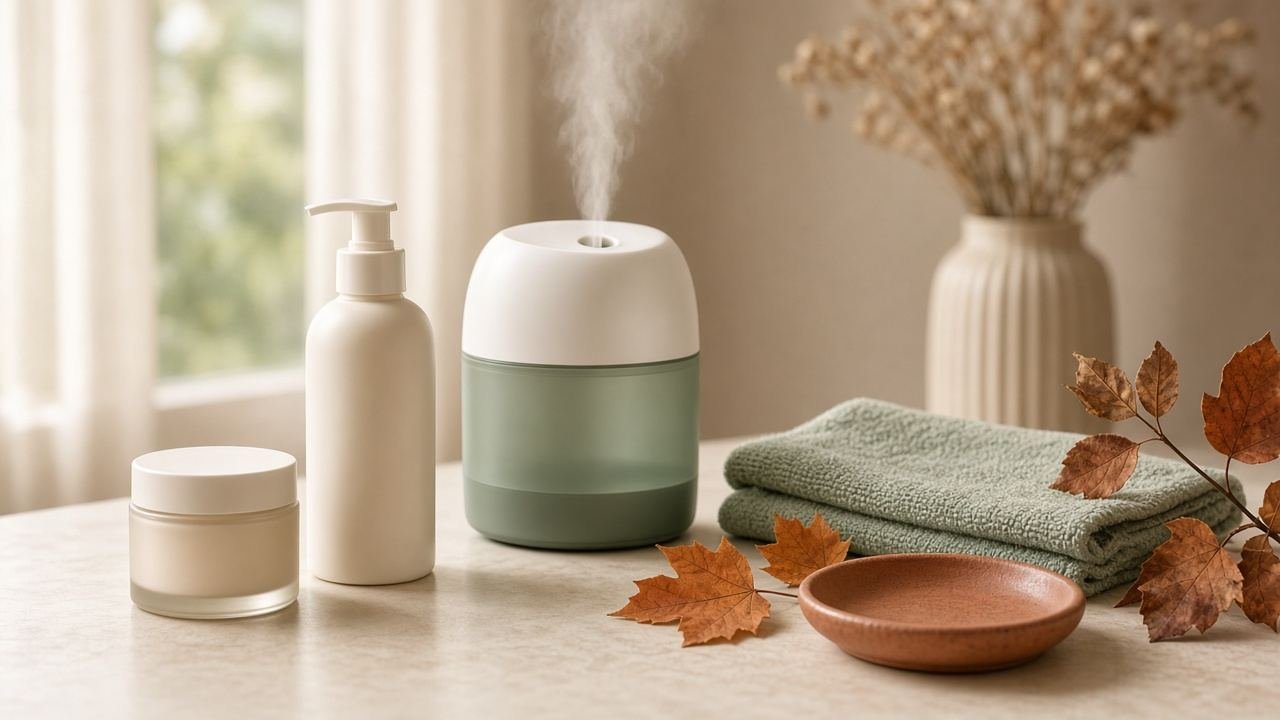
Room air fixes half the problem products alone cannot solve. A cool-mist humidifier near your desk or bed raises local humidity. That change slows transepidermal water loss while you sleep or work. Skin then holds the water you apply with cream.
Clean the tank often so mist stays fresh. Place the unit a few feet from your face, not blasting directly. Aim for comfortable humidity rather than a humid tropical feel. Skin and sinuses usually feel better when air stops feeling bone-dry. Empty standing water if you leave town for days.
Meanwhile, seal drafts near windows if cold air rushes in. Avoid sitting under a strong heater vent for hours. Move chairs or redirect vents when you can. Also open a window briefly for fresh air when outdoor conditions allow. Then close it and remoisten the room with the humidifier. These habits make your fall skincare reset last. Products hold better when the air stops stealing water every minute.
Quiet outdoor time can also lower stress that shows up on skin. A short walk in green space pairs well with this reset. Try ideas from our forest bathing guide for calm outdoor time when heated rooms feel stuffy.
Morning and Night Routines for Heated Rooms
Simple routines beat complicated shelves and protect your fall skin barrier. Use numbered steps so you repeat them without guesswork. Keep products within arm’s reach of the sink so you do not skip cream on busy mornings.
Morning routine for heated rooms
Start with this short sequence each day.
- Rinse or use a gentle cleanser with lukewarm water.
- Pat damp, then apply hyaluronic acid or glycerin serum.
- Add niacinamide if your skin tolerates it well.
- Lock in with a rich moisturizer or light barrier cream.
- Finish with broad-spectrum SPF suited to daytime.
- Optional: one drop of squalane on dry patches only.
Night routine for heated rooms
End the day with this comfort-focused stack.
- Remove sunscreen or makeup with a gentle cleanser.
- Rinse with lukewarm water and leave skin slightly damp.
- Layer humectants, then barrier cream.
- Seal with shea butter, squalane, or another occlusive on dry zones.
- Apply hand cream and lip balm before bed.
- Run a humidifier and keep room heat moderate when possible.
Also keep a travel mini of cream near heaters at work. Reapply once if tightness returns mid-afternoon. Consistency over two weeks beats weekend-only rescue masks. When travel disrupts sleep, still protect the night seal even if you skip optional serums.
Natural Oils, Shea Butter, and Squalane: When They Help
Oils and butters seal dry spots in heated air. Squalane feels light and suits daytime under cream. Shea butter suits night and very dry cheeks. Natural oils with jojoba-like slip can sit as the last thin layer. Use a pea-sized amount; more is rarely better.
However, oils alone rarely fix a stripped surface. Use them after water-binding steps. Otherwise they sit on dehydrated skin and feel greasy without comfort. Pair oil with ceramides and glycerin in a barrier cream for better results. Then your fall skin barrier gets both water hold and lipid support.
Patch-test new oils on the jaw for a few nights. If stinging starts, stop that oil and return to your bland cream. Prefer steady, mild support over rotating experiments every day. Also avoid essential-oil-heavy blends when skin already flakes. Fragrance-free or low-scent options usually feel safer during a reset. Store butters away from hot radiators so texture stays stable.
If you keep dried herbs for teas and kitchen care, a tidy shelf habit helps you restock shea and oils on time too. Browse our kitchen herbal apothecary jar setup for simple labeling and restock cues that transfer well to bathroom balms.
Common Mistakes That Worsen Indoor Heat Dryness
Small habits undo good products fast. Fix them early and comfort returns sooner. This section pairs each error with a quick fix you can apply tonight.
Mistake: scalding showers after cold days
Hot water strips lipids quickly. Switch to lukewarm water and shorter showers. Then moisturize within three minutes while skin stays damp.
Mistake: strong foaming cleansers twice daily
Squeaky skin means over-cleansing. Move to a gentle cleanser and cleanse thoroughly once at night. Rinse only in the morning unless you need a light cleanse.
Mistake: humectants without a seal in dry air
Hyaluronic acid needs a cream on top. Add an occlusive on the driest zones in heated rooms. That order keeps water from escaping into dry air.
Mistake: skipping humidifier care
Stale tanks frustrate people into quitting. Clean regularly so you keep using the device. Fresh mist supports your whole fall skincare reset.
Mistake: stacking actives during a flare of dryness
Pause strong exfoliants until comfort returns. Rebuild first with cream and seal. Then reintroduce actives slowly, one at a time, on non-stinging skin.
Quick fixes stay simple: lukewarm water, gentle cleanser, rich moisturizer, occlusives, and humid air. That combo targets indoor heat dry skin without drama. Also resist the urge to scrub flakes; soften them with cream instead.

How to Track Progress Over Two Weeks
Tracking keeps your fall skincare reset honest. Take a soft-light photo on day one. Note tightness after cleansing on a 1–5 scale. Recheck on day seven and day fourteen. Keep notes short so you actually continue them.
Also log room habits. Note humidifier use, shower temperature, and cream thickness. When comfort improves, keep the winning stack. When progress stalls, thicken the night cream or add a seal before you add more actives. Do not chase five new serums in one weekend.
Look for these wins: less morning tightness, fewer flakes, smoother makeup, calmer hands. Your fall skin barrier rarely flips overnight. Steady care over fourteen days gives a clear signal. Share the plan with a household partner if they control the thermostat, because cooler set points plus humidifiers often help more than another jar.
If burning, swelling, or infection signs appear, pause experiments and talk with a clinician. Education guides home care. It does not replace medical care. For deeper reading on inflamed, itchy barrier issues, the NIAMS atopic dermatitis overview explains how dry, irritated skin can escalate and when professional care matters.
Fall Skin Barrier FAQ
Short answers follow each common heated-room question.
How does indoor heating affect your skin barrier?
Heating dries room air and pulls water from skin. Transepidermal water loss then rises, so the surface feels tight and flaky. Lipids strain under that climate. Update cleanser and cream when radiators start.
How do I repair my skin barrier in the fall?
Simplify right away. Use a gentle cleanser, lukewarm water, humectants, ceramides, and a rich moisturizer. Add occlusives at night and run a humidifier. Pause harsh exfoliants until comfort returns.
Should I change my skincare when the heat turns on?
Yes, plan a fall skincare reset when heat starts. Swap stripping gels for cream cleansers. Move from light lotion to richer cream. Keep SPF by day. Match texture to how dry your rooms feel.
What ingredients help repair a damaged skin barrier?
Ceramides, glycerin, and hyaluronic acid help most. Niacinamide, shea butter, squalane, and occlusives also support comfort. A barrier cream with lipids and humectants often works well.
Does a humidifier help dry heated-room skin?
Yes, clean humidifiers often help dry rooms. They raise local humidity and slow water escape from skin. Place the unit near your bed or desk. Clean the tank on a schedule. Pair mist with leave-ons so your fall skin barrier keeps the moisture you apply.
Why does my skin get dry when the heat is on?
Warm indoor air holds less moisture. Water then leaves your skin faster. Hot showers and strong cleansers amplify that loss. Indoor heat dry skin shows up as tightness, flakes, and sting. Fix air, cleanser, and cream together for the best shift.
Keep Your Barrier Steady Through the Whole Season
Autumn heat season lasts for months, so your plan must last too. Keep the gentle cleanser. Keep the layered leave-ons. Keep the humidifier clean. Check textures again when temperatures drop further in late fall. A cream that felt perfect in early October may need a thicker partner by December.
Also revisit your fall skin barrier stack after travel or illness, when routines slip. A two-minute night seal on cheeks and hands prevents backsliding. When friends ask why your skin looks calmer, share the practical trio: soft cleanse, barrier cream, humid air. That message fits natural living without harsh promises.
Start tonight. Switch one stripper for a gentler step, add a richer cream, and set the humidifier before bed. Small moves protect comfort all season with naturalbio.space-minded care: simple, natural-leaning, and consistent.
This article is for general education only. It does not replace medical advice. Talk to your doctor or a qualified clinician before you change skincare if you have a skin condition, use prescription topicals, or notice burning, swelling, or infection.
You may also like
Sea Buckthorn Oil: A Beginner Guide for Winter-Dry Skin
This sea buckthorn oil guide explains fruit vs seed oil, why it can tint skin orange, how to blend it into cream, storag…
How to Use Gua Sha on Your Face: A Beginner's Step-by-Step Guide
How to use gua sha on your face: pick a jade gua sha or steel tool, find the best oil for gua sha, follow light strokes…
Hypochlorous Acid Spray for Sensitive Skin: A Simple Routine Guide
Learn how to place a hypochlorous acid spray in a short AM/PM routine, read the label, and know when to stop and ask a c…